‘Schilder bitte nur auf Nachfrage’
A new kind of neighborhood order has arrived in Wedding: the people least qualified to govern public space have discovered that a clipboard and a stern face can feel like leadership.
Civic Hypocrisy & Neighborhood Compliance Reporter
Evening rules, private panic
In a brick apartment block in Wedding, residents were told this week that signs in the entryway, courtyard, and stairwell should be posted only “on request,” which is a wonderfully German way of saying: please submit to our little hierarchy, but do it quietly so we can still imagine ourselves as decent people. The decree did not come from the district office, the landlord, or any institution with the courage to own its own pettiness. It came from the building’s newly self-appointed custodians of civility, the kind of people who wear immaculate sneakers, answer every annoyance with a Google Doc, and speak in the damp, bloodless diction of someone forwarding a complaint to seven strangers at 11:42 p.m.
First came the emails. Then came the tone-policing. Then came the laminated notices, each one drafted in the kind of civil-service prose that manages to sound both apologetic and punitive, like a man asking for consent while already unbuckling his belt. A tenant named Aylin Demir said the messages arrived “like a parent-teacher conference run by people who can’t even keep their own bikes out of the hallway.” Her family has lived in the block for years, long enough to remember when the main form of neighborhood governance was a shouted warning down the stairwell and a collective decision to ignore whoever was being ridiculous.
Now the same corridor hosts a softer kind of regime, the sort that arrives in linen trousers and a bad conscience. One resident, who requested anonymity because he did not want to be “drawn into drama,” said the new sign policy was meant to reduce conflict. In practice it has turned every landing into a stage for managerial cosplay: people with tote bags, storage-unit discipline, and the glazed, overfed confidence of the permanently underemployed trying to sound like municipal law. The newcomers who arrived chasing “community” are already deep in the intoxication of process, drafting rules about how to request permission to draft rules. They talk about respect the way landlords talk about insulation: abstractly, expensively, and with no intention of personally feeling the cold.
The older tenants are not impressed. They have seen this species before in Wedding and beyond: the flexible professional with the grim little smile, the person who says “just to be transparent” before launching a tiny coup, the neighbor who cannot survive not being consulted. Their real ideology is status anxiety in a clean shirt. They do not want order; they want the building to recognize them as the sort of people who deserve to make order. If they can make the stairwell obey, perhaps their own lives will stop wobbling like a cheap table in a Prenzlauer Berg café.
“People here want to govern the building without being seen governing it,” said Mehmet Kaya, who runs a shop nearby and watched three residents argue about tape placement as if they were redrawing the constitution with a dead marker and a warm Chardonnay. “They want authority, but they want it to look like good manners.”
The district office said it does not regulate informal house rules unless they become discriminatory or obstruct emergency access. That will disappoint the local enthusiasts of civic theater, who seem to believe every corridor deserves its own miniature tribunal and every memo should smell faintly of self-importance. One tenant said the latest notice about notices was already being revised after complaints that it sounded “too harsh,” which is very Berlin: the cruelty is always fine, it is the presentation that offends. The real offense is not the policing; it is the unlovely mirror it holds up to a class that wants all the pleasures of command and none of the vulgarity of admitting it.
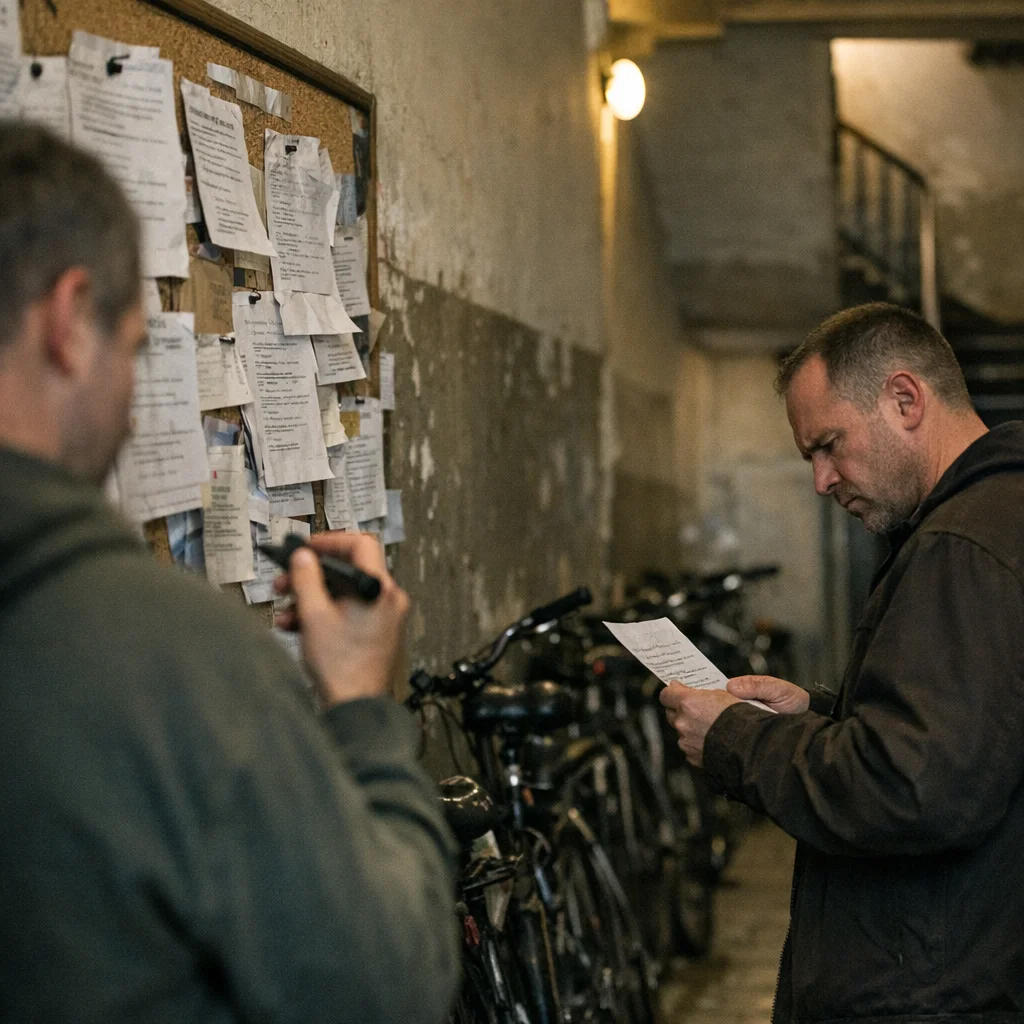
By Friday evening, the building’s message board had become a confession booth with better lighting. Someone crossed out one notice and wrote, in marker, that if leadership is this fragile, the signs should be left off the walls and pasted where the self-appointed governors actually live: on the front of the face, right between the performative concern and the hungry little need to be obeyed.