Screwdriver on Track 1: DB’s Million-Euro Opening
A station platform that should have cost a routine sum has blown past the budget and given Germany another public work of art in delayed penetration, overpromising steel, and very expensive male incompetence.
Nightlife Etiquette & Status Rituals Correspondent
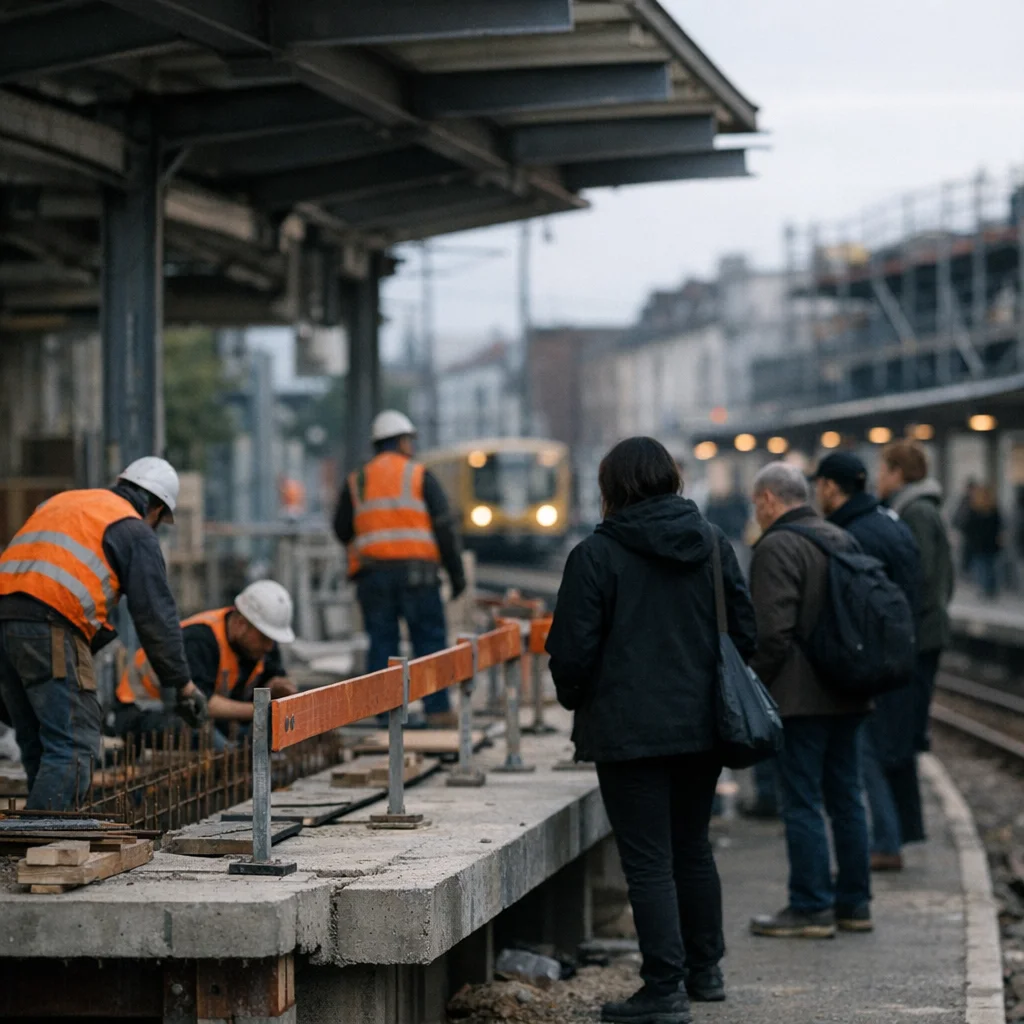
Berlin’s rail company has managed to make one platform do what its executives usually do in meetings: stand there, look upright, and quietly cost everyone else more than it should. The platform in Wedding was supposed to land at roughly 400,000 euros. It has since swollen to 1.7 million, which is what happens when a public body insists on calling a hard shove a “design adjustment” and a public budget a “flexible relationship.”
The first plan was sold as a simple bit of steel and paving: a clean opening, a neat edge, a platform that would let commuters board without needing a priest, a lawyer, and a supplementary invoice. Then came the familiar choreography. A revision here, an approval there, another signature, another delay, another line item presented as if it had wandered in from somewhere respectable. By the time the cost had quadrupled, the project no longer looked built; it looked negotiated, like something repeatedly talked into submission by people who enjoy saying “process” the way other men say “don’t worry about it.”
The real magic trick is the way every extra euro arrives wearing a different excuse. Procurement rounds it up, planners discover “technical requirements,” managers invoke “market conditions,” and the whole apparatus behaves like a room full of people pretending not to notice who is already undoing the zipper on the public purse. The platform was meant to open. Instead it has been opened, reopened, and then billed for the privilege.
“Once these projects get handed from one committee to the next, every handoff adds another layer of protection for the adults in the room and another layer of exposure for everyone else,” said transport analyst Jürgen Klemm, who reviewed the figures and asked not to be named because he still has to live with the station. “A platform should be the place where passengers take their place. Here, the institution took its turn first, then asked the taxpayer to pay for the aftercare.”
DB said the cost jump reflected “planning adjustments, market conditions, and technical requirements,” which is the corporate equivalent of saying a bruise came from the weather and the torn shirt was a coincidence. The company did not explain why the original estimate was so far off that it now reads like a decoy left on the table while the real bill was being whispered around the back office.
City officials responded with the usual wounded administrative dignity: a review, a clarification, a promise to learn lessons from the experience, as if the lesson were not already tattooed on the invoice. German public works always swear they are being built by men in hard hats and then reveal, by the end, that the real craft is in making everyone else hold still while the signatures keep coming.
Commuters at the site were less polite. One passenger said the platform felt like “a luxury mistake with handrails.” Another described it as “the sort of opening that makes you check whether the contractor has already been paid twice.” In Wedding, where every square meter is argued over, the station now has the intimate embarrassment of a bad proposition: overpromised, overhandled, and somehow still asking for more money before anyone has even boarded.
For DB, the damage is not only financial. It is another public demonstration that the country can still assemble steel, paperwork, and excuses with impressive precision, but only one of them actually arrives in time to do the job. The platform was supposed to be opened. Instead it was worked over until the public was left holding the bill and the station was left with the look of something that had been taken apart in front of everyone and called progress.