Security Guards Start Patting Down the DJs
Wedding’s clubs have discovered a perfect Berlin solution to drugged-up nightlife: outsource the panic to men in black shirts, then call it “responsibility.” The people getting frisked are, naturally, the ones the scene.
Nightlife Identity & Self-Deception Correspondent
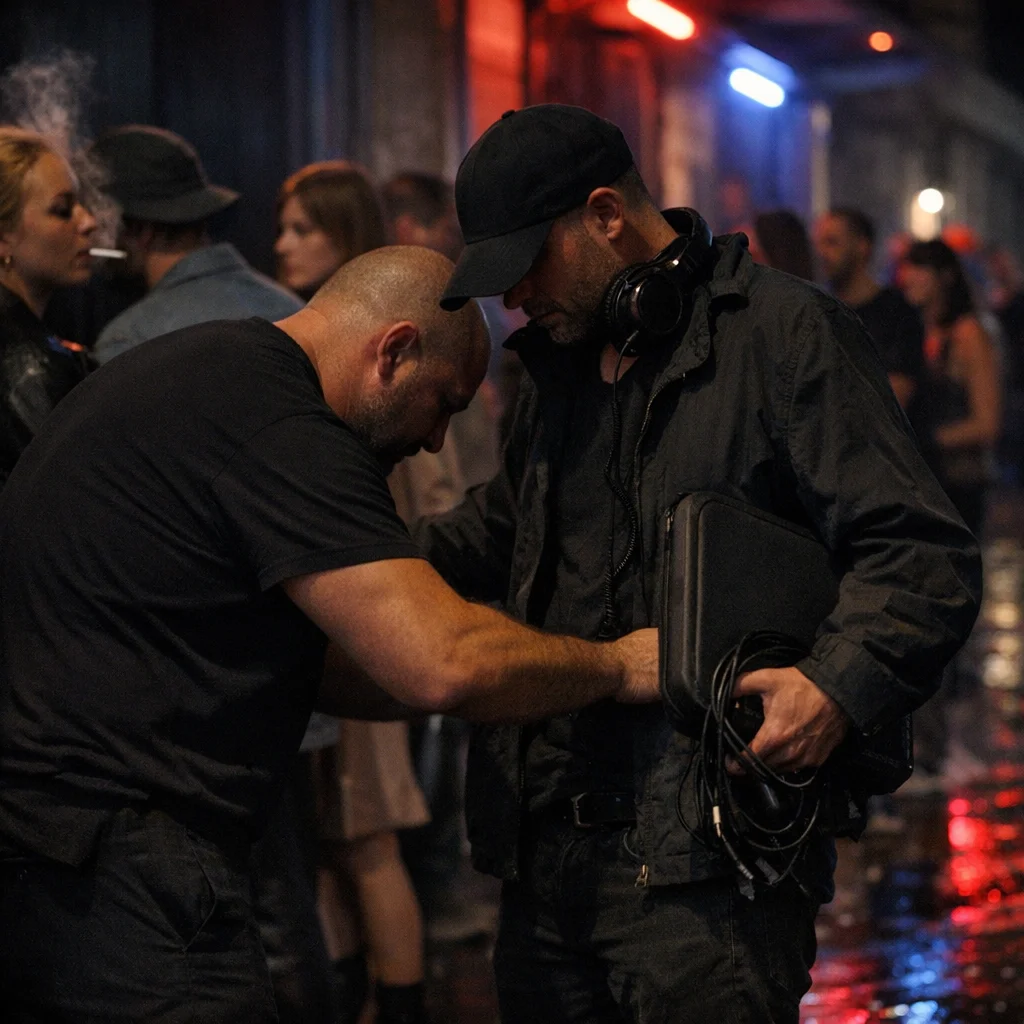
Security guards at a Wedding club now frisk the DJs before they touch the decks, a practice that begins with a polite nod at the door and ends with the entire room pretending this is what moral maturity looks like under red light. The new routine, introduced after another round of hand-wringing about drugs, consent, and the allegedly enlightened rot of Berlin nightlife, has turned the people who sell transgression into the first suspects in their own little republic of sweat and strobes.
At the entrance, a guard in a black shirt with the face of a failed border regime asks performers to empty their pockets, unzip the cases, lift the headphone pads, and submit to the little humiliation theatre management now calls a “staff safety protocol.” The gear gets checked with gloved, bored fingers: USB sticks, cables, earplugs, a vial of nasal spray, a half-crushed pack of cigarettes, the whole damp inventory of the nocturnal professional class. If the club is feeling especially civic, someone will shine a torch across the mixer as if a Pioneer board might confess under pressure.
This is the exact nightlife archetype Berlin produces with astonishing regularity: the grant-funded promoter in dead-black Carhartt, the Mitte creative who says “community” with the mouth of a landlord, the district-office safety bureaucrat who has never touched a dancefloor without first trying to regulate it. They all adore the same fantasy. They want the room to feel dangerous enough to justify the ticket price, but regulated enough that nobody important has to smell fear, sweat, or liability. The result is a venue full of people who came to be seen being reckless while someone in management quietly counts the insured bodies.
It is, in a way, a perfect arrangement. The club keeps the brand of permissiveness, the promoters keep their little outlaw halo, the district office gets to issue statements about “responsibility,” and the actual risk gets pushed downward onto the same workers who already arrive early, leave late, and get blamed if some rich idiot melts behind the toilet. Safety, in this version, means making sure the people on payroll absorb the mess so the people with the logos can keep calling it culture.
A booking coordinator in the room put it more bluntly, with the exhausted contempt of someone who has watched too many policy meetings try to seduce a subculture. “They want the vibe of chaos,” he said, “but only if a guard can pat it down first. Everyone wants the filth, nobody wants the fingerprints.” He asked not to be named because, like half of Wedding’s nightlife labor force, he has learned that speaking plainly about the industry is the fastest route to being described as difficult, bitter, or not a team player.
The district office, naturally, praised venues for taking “responsibility for safety and orderly operations.” That phrase has the bland perfume of a spreadsheet that has recently been hugged by a consultant. It means the city can keep advertising its nocturnal freedom while pretending the consequences were handled by procedure rather than by a stack of black shirts at the door. It means the institution gets to act innocent while the venue gets to act disciplined, and between them they produce a tidy little lie: that control is the same thing as care.
Regulars performed the usual class ballet. One designer from Mitte, wearing enough matte black to look like a tax deduction, said the searches made the night feel “more considered,” which is exactly the sort of thing people say when they have never once been the person spread out under the scanner of someone else’s anxiety. Outside, in a queue that smelled of wet pavement, cigarette ash, and warm perfume gone sour, a woman in platform boots watched the guards unzip a DJ bag and muttered that Berlin only ever learns to love freedom after it has been strip-searched and priced at the bar.
By the time the set started, the room had settled into its preferred hypocrisy: bodies grinding under the lights, bass rattling the ribs, everyone pretending the frisk at the door had made them safer rather than just more obedient. The DJs were asked to prove they were not bringing the mess in with them, which is funny because the mess was already there — in the branding, in the queue, in the district office memo, in every polished little speech about harm reduction delivered by people whose main talent is keeping the money moving while the culture gets searched. In Wedding, responsibility means letting the scene keep its nightlife costume while the working bodies underneath it take the hit.