Seestraße Block Introduces “Cultural Median” That Physically Refuses to Let You Cross With the Wrong Beverage
On one sidewalk, Turkish-owned businesses say foot traffic is being redirected by an unexplained curb-height “preference.” On the other, new cafés insist it’s “just good urban flow.”.
Neighborhood Commerce & Low-Grade Dread Reporter
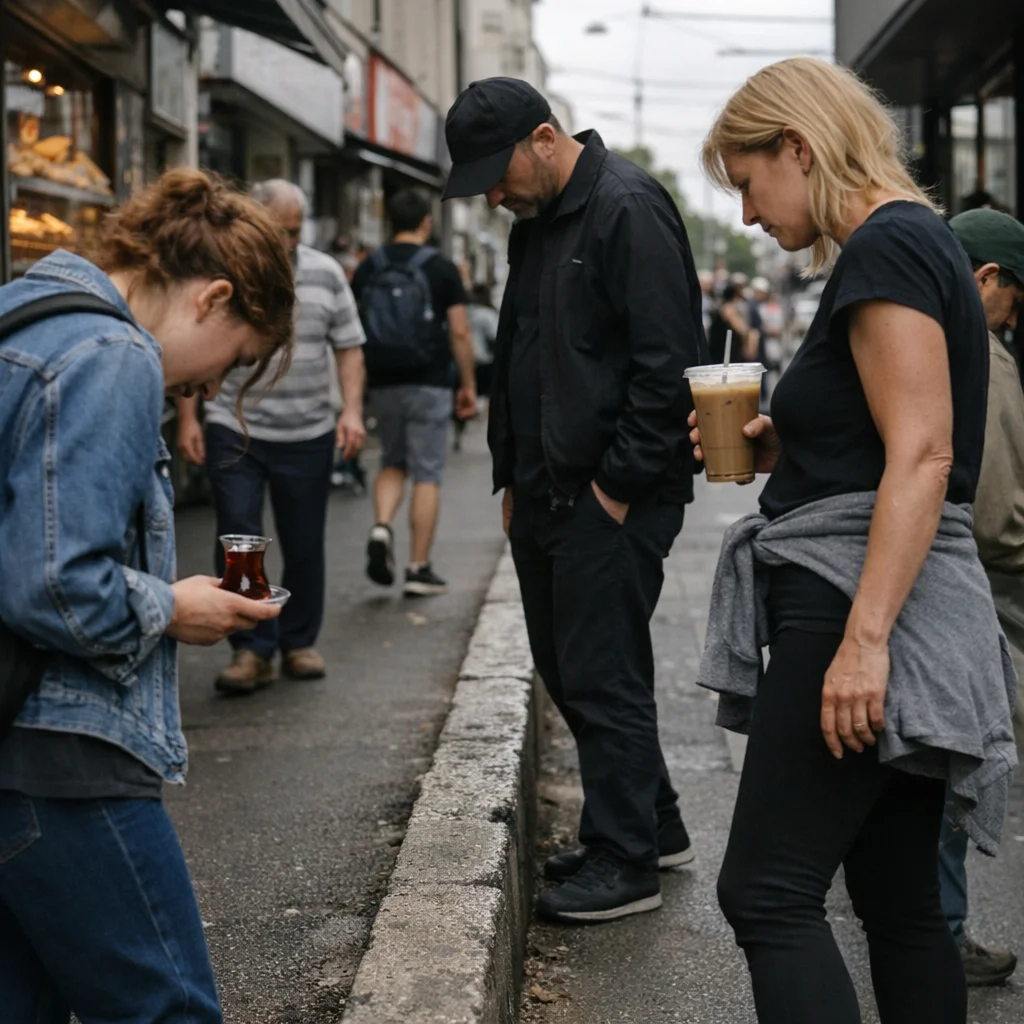
A sidewalk that learned to judge
On Friday, around 9:40 in the morning, commuters exiting Seestraße U-Bahn discovered that a newly poured center strip along Seestraße—between the intersections with Triftstraße and Guineastraße—was behaving less like infrastructure and more like a bouncer with a clipboard.
Several witnesses described a “cultural median,” a narrow concrete ridge installed as part of a routine curb repair, that appears to subtly resist pedestrians attempting to cross from the Turkish-owned side of the block to the newer café side unless they are carrying what locals described as “an acceptable beverage.”
“It’s not a wall,” said Ercan Yıldırım, 52, owner of Yıldırım Haushaltswaren at Seestraße 41. “It’s worse. It’s a suggestion with muscle. My nephew tried to cross with tea in a small glass and the strip pushed his shoe back like he’d stepped on bad manners.”
Across the way, at Pulp & Ritual Coffee (Seestraße 38), manager Hannah Vogt, 29, said she first noticed the phenomenon when a customer holding a tall iced oat latte “glided over like it was lubricated.”
“I don’t control concrete,” Vogt said, pausing to adjust a tote bag display that appeared to be experiencing its own quiet promotion. “But if it’s guiding people toward hydration choices that align with contemporary values, I’m not going to pull out early on progress.”
Eyewitness accounts and a firm grip on the narrative
Multiple shopkeepers reported the median exerts what one called “a firm grip” on foot placement, producing a slight but unmistakable lateral nudge. A delivery rider, Yusuf Kaya, 34, said the ridge “caught” his front wheel when he attempted to cross while balancing a tray of sesame rings.
“It didn’t throw me,” Kaya said. “It just made me look stupid on purpose. Like performance art, but I didn’t consent to be the installation.”
That assessment was echoed by Dr. Sabine Kroll, an urban sociologist at a nearby research institute who happened to be passing by and took notes on a napkin.
“It’s an uncanny piece of tactical urbanism,” Kroll said. “Like something out of a Borges story—an invisible library catalogue, except the catalogue is sorting bodies. The city has always classified people. This time it’s simply poured in concrete.”
Official response: not gentrification, just ‘friction management’
A spokesperson for the Mitte district roadworks office, Jürgen Rathenow, said by phone that the median was “a standard drainage assist” and denied any intention to separate populations.
“We categorically reject the idea that the curb is engaged in lifestyle profiling,” Rathenow said. “Any reports of selective resistance are anecdotal and, frankly, hard to swallow.”
Still, by early evening, the median had attracted onlookers conducting informal tests with paper cups, tulip-shaped tea glasses, and reusable bottles.
At least one local startup consultant, overheard near Seestraße 39, proposed monetizing the phenomenon as “sidewalk as a service,” offering “tiered crossing experiences” and “brand-safe mobility.”
On the Turkish-owned side, Yıldırım watched the experiments with a flat expression.
“They say they moved here for authenticity,” he said, “and now they need a concrete strip to tell them where they belong.”