Seven Activist Groups in Wedding Attempt ‘Unified Front,’ Accidentally Invent New Type of Enemy: Each Other
The coalition’s first agenda item—agreeing on what counts as “harm”—lasted longer than most relationships, and with worse snacks.
Grassroots Infighting & Public Exhaustion Reporter
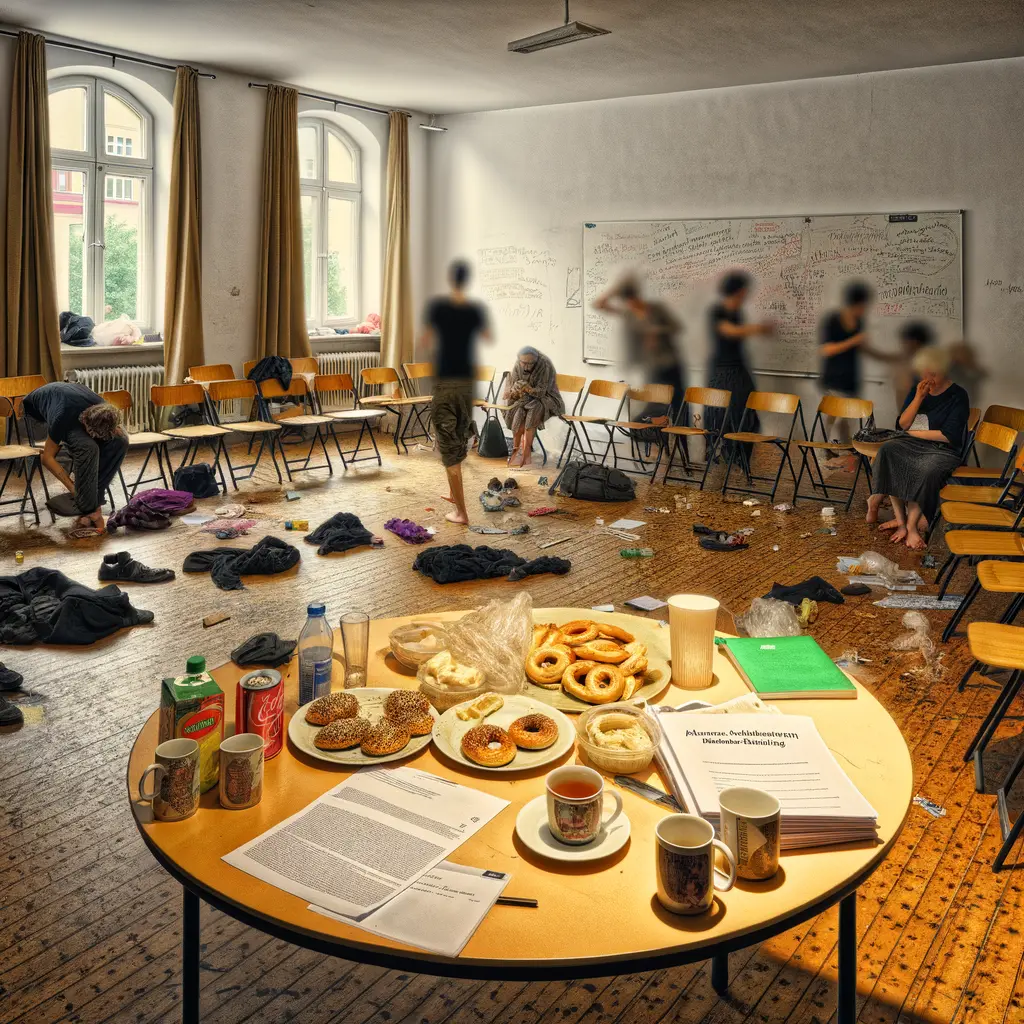
WEDDING — A hopeful coalition meeting of seven neighborhood activist groups ended this week the way all sacred Berlin rituals do: in sweaty silence, passive aggression, and someone quietly leaving to “just pop into Berghain for a minute” at 2 p.m. on a Monday.
The gathering—hosted in the back room of a Turkish bakery where the tea is strong and the opinions somehow stronger—was billed as a “Unified Front for Wedding.” It was, attendees confirmed, unified only in the sense that everyone disliked everyone else at the exact same time.
A glorious revolution, brought to you by Google Docs
Witnesses report the mood was briefly optimistic until the first slide appeared: a shared definition of "community." Then the air turned into a Jacques Derrida seminar with fewer cigarettes and more unresolved childhood.
Within minutes, a volunteer moderator was forced to introduce the newly created Consensus Safeword, an emergency phrase used to pause discussion when it becomes “too intense, too personal, or too correct.” The phrase was proposed as “let’s zoom out,” rejected as colonial, reintroduced as “let’s gently zoom,” then ultimately abandoned in favor of “I’m feeling a lot of texture right now.”
Someone tried to penetrate the bureaucracy of language itself, proposing a simple amendment: maybe not every disagreement needs a formal accusation. The proposal met stiff resistance from a subcommittee that had already drafted a 12-page escalation pathway.
Purity tests, now with finals week energy
By the midpoint, groups began cross-examining each other’s moral resumes with the meticulous cruelty of a German grading system.
Key accusations recorded by this paper (and regrettably, by three people live-blogging it in real time):
- One mutual aid collective was condemned for purchasing name-brand rice, a move described as “late-capitalist mouthfeel.”
- A tenants’ group was accused of “centering housing,” which was said to erase “non-residential ways of being.”
- A bike initiative was asked to account for the spiritual violence of reflective vests.
- A climate working group was forced to apologize for a banner that used a shade of green “associated with neoliberal forests.”
A visiting academic, possibly on their third day awake, compared the atmosphere to Arthur Miller’s The Crucible, if Abigail Williams had a tote bag and an allergy to pragmatism. Another called it “Foucault’s panopticon, but everybody’s both guard and prisoner and also the prison is on a WhatsApp group.”
The neighborhood remains inconveniently real
Outside the room, Wedding continued functioning with the vulgar indifference of a neighborhood that has never once asked permission to exist.
Teenagers drifted past on e-scooters like a low-budget remake of Godard, and two uncles argued warmly in front of a Turkish grocery over which olives were “real” in the same way philosophers argue over truth: confidently, loudly, and while sampling.
Meanwhile, an exhausted couple on U8 wore the standard Berlin look—black layers, dead eyes, the faint chemical halo of someone who’s seen the inside of a club bathroom and still believes in love. Nearby, a guy held a Mate like it was a sacred object and stared into it the way Walter Benjamin stared into history: waiting for redemption that wasn’t coming.
Security culture meets Späti culture
The meeting reached peak theological intensity when the snack table became politicized.
A committee attempted a deep dive into the ethical supply chain of hummus. Someone claimed the pita had “carceral vibes.” Another argued that asking for ingredient lists is ableist unless done with “somatic permission.”
One attendee, visibly coming down and blinking like a scratched VHS, declared: “We can’t trust any coalition that takes cash from a Späti, because Spätis sell beer, and beer funds techno, and techno funds drugs, and drugs—”
They paused here to look around as if realizing they’d just described Berlin’s circulatory system.
In response, a calm person in an oversized coat said, “Look, if you cut off Spätis, the movement dies. That’s not ideology, that’s infrastructure.” This was treated as heresy.
Outcome: historic agreement to disagree louder
The coalition failed to draft a shared plan, but did successfully launch:
- A new steering group to oversee existing steering groups
- A grievance inbox with a 48-hour response pledge (plus an “emergency trauma flag”)
- A rotating accountability role, immediately described as “emotionally unsustainable”
As attendees filed out, one organizer summarized the night: “We didn’t build power, but we did build process. Which is basically the same thing, if you’re unemployed and vaguely haunted.”
In the end, no one agreed on tactics, messaging, or whether smiling is coercion. Still, there was a fragile moment of solidarity as the group collectively decided the chairs were uncomfortable and the landlord was, conceptually speaking, evil.
Wedding lives to fight another day—united, as ever, in its ability to survive everyone’s ideas about it.