Seven New Bundeswehr Soldiers Mistaken for About Blank Line; Wedding Offers Them Falafel and Strategic Confusion
As Germany’s troop count grows “for the first time in years,” the neighborhood rehearses its national defense plan: paperwork avoidance, calcium-deprived skeleton DJs, and one uncle who thinks NATO is a grill brand.
Civic Anxiety & Street-Theory Correspondent
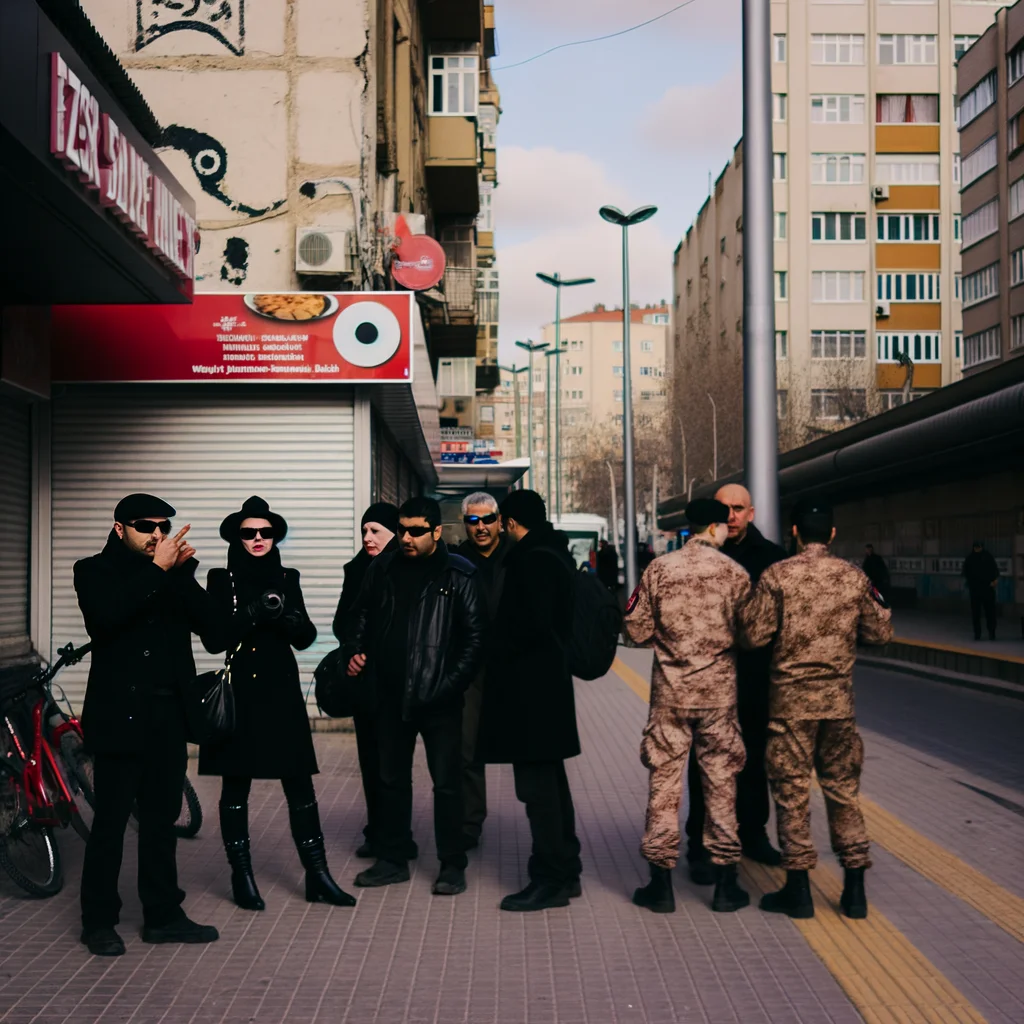
The troop increase reaches Wedding the only way anything reaches Wedding: indirectly and sweaty
Germany says the number of Bundeswehr soldiers is rising again—an achievement being celebrated nationwide with the solemn dignity of a spreadsheet. In Wedding, the news arrived as a rumor overheard between two parents arguing about stroller traffic and a person in all black whispering “defense posture” while buying vitamin water like it was an apology.
Local understanding of the military surge is nuanced. It begins at: “More uniforms.” It ends at: “Can they also fix the elevator?”
Urban warfare training, Berlin edition: passive aggression and bicycle lanes
According to highly reliable street science, a fresh cohort of Bundeswehr personnel was seen near Wedding’s U-Bahn infrastructure performing advanced maneuvers such as:
- Standing still in a bike lane with total confidence.
- Staring at a broken ticket machine like it’s a Camus novel.
- Practicing situational awareness by walking directly into a child’s scooter.
Their commanding officer reportedly requested “operational clarity” and was handed three conflicting directions, a pity-cigarette, and a philosophical question about whether security is a construct.
Walter Benjamin wrote about cities as dreamworlds of modernity; Wedding read that and said: “Cool, but can you dream your way around the broken sidewalk?”
The new national security strategy: sourcing döner, staying hydrated, denying nothing while implying everything
Military experts stress that readiness requires logistics. Wedding agrees, and has formally delegated national supply to its Turkish businesses—because the army runs on fuel, and the city runs on laminated menu boards.
At one bakery, a visibly exhausted staffer explained the community’s proposal: “We will defend the neighborhood with carbs, then rebuild it with sugar. This is how empires fall and breakfasts continue.”
An enthusiastic new recruit attempted to buy a “combat ration” and received a hot pastry, a tiny plastic fork, and the sort of side-eye that makes you reconsider your entire strategic doctrine.
Moral support from Berlin nightlife, forced at low volume
In classic Berlin fashion, no institution is allowed to grow without being processed by the nightlife ecosystem.
Defense analysts were spotted doing a “field study” at Sisyphos (not a base, just emotionally indistinguishable) to understand sustained operations over multi-day cycles, where sleep becomes optional and decision-making becomes… interpretive.
The Bundeswehr’s interest in endurance is understandable. Berliners regularly maintain a continuous state of functional disintegration from Saturday to some time around Tuesday lunchtime, making the average soldier look like a well-rested library assistant.
A senior figure in nightlife security—who asked not to be named because it “creates an aura”—briefed me on the neighborhood’s tactical mindset: “Look, war is mostly logistics and attitude. Wedding has neither, but it has commitment. Sometimes stiff resistance is just dehydration and a deep dive into denial.”
Compulsory civic participation: when war meets Berlin self-concept
Nothing unsettles Berlin like collective purpose. People moved here to be anonymous and complicated, not aligned.
One expat who moved to Wedding “for something real” said the troop increase is “important historically,” before spending 40 minutes comparing national defense to a Foucault lecture they never attended.
Meanwhile, a local grandmother demonstrated real deterrence by holding her stare for so long at a man blocking the supermarket entrance that he apologized to the concept of space.
The new enlistment pipeline: influencers, earnestness, and an accidental march
Officials claim the growth in soldiers is due to multiple factors: security worries, modernization, broader recruitment. Wedding believes it’s because Berlin keeps confusing any organized group of people for a parade.
A rehearsal in a nearby street was allegedly interrupted when civilians began following a small marching formation, thinking it was an “art walk.” Two blocks later, someone offered oranges. Three blocks later, someone asked where the bathroom was. By the time the confusion cleared up, everyone had achieved a kind of civic intimacy nobody consented to.
Kant said duty is the highest moral law; in Wedding, duty is mostly just showing up—possibly late, definitely unwell—and hoping nobody asks you to prove anything.
Conclusion: congratulations on the soldiers—please report to your nearest Berlin problem
Yes, Germany has more soldiers. No, Wedding doesn’t know what to do with the idea, beyond instinctively turning it into a logistical comedy.
If the Bundeswehr truly wants to study modern conflict, it should skip the war games and observe Wedding on a Monday at 2 p.m.: people in black clothes, sunglasses inside, moving like survivors, making choices with the slow gravity of Greek tragedy.
And if that’s not readiness, it’s at least consistency—which, in Berlin, is practically a national achievement.