Sidewalk Milk Bar Makes Men Wait Their Turn
A corner shop in Wedding serves “fresh” drinks only after customers answer to the cashier, who decides who looks thirsty enough to deserve a bottle; the most offended men are the ones trying hardest to act smooth.
Neighborhood Commerce & Low-Grade Dread Reporter
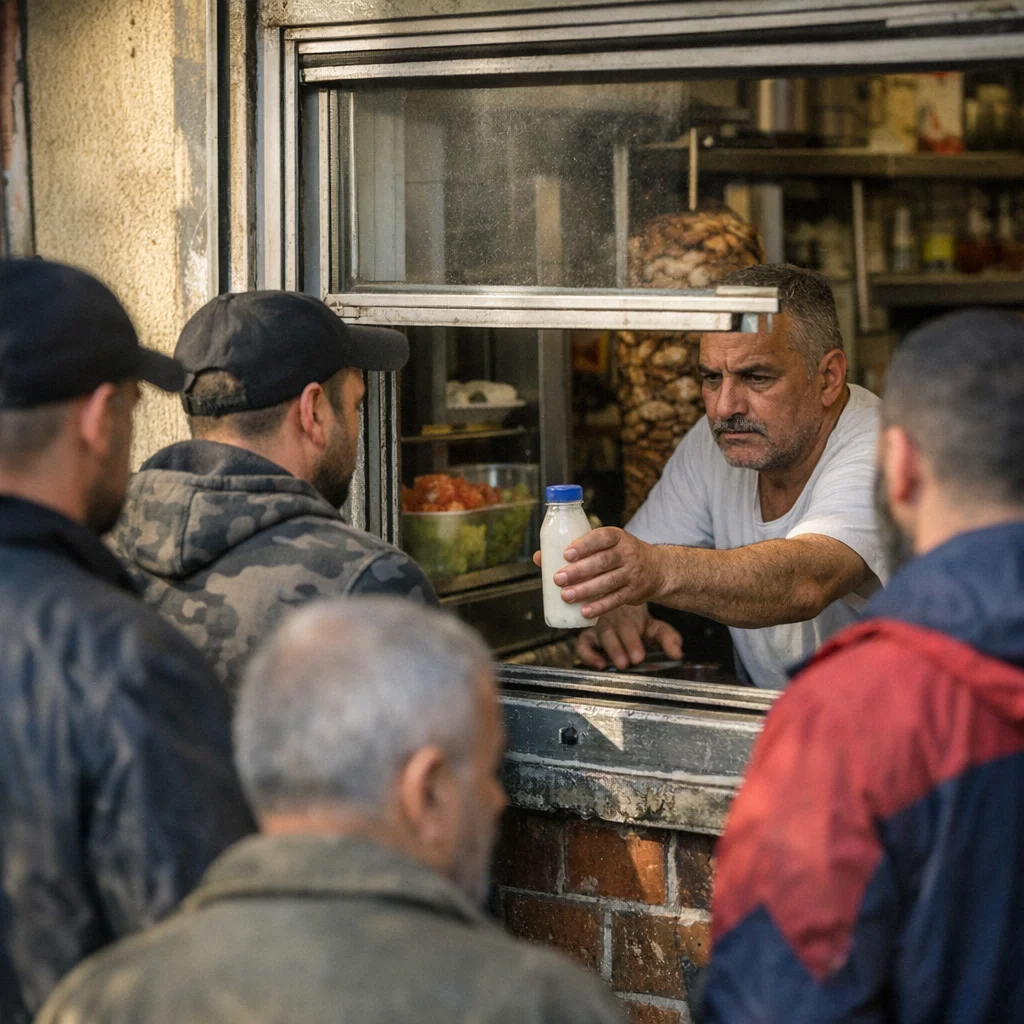
The new drink window on a busy Wedding corner has become a little republic of thirst, and like most republics it is run by whoever gets to decide who looks worthy of being let in first. Customers line up for bottled fruit drinks and sweet milky shakes, but service does not follow the queue. It follows appraisal. The cashier looks over each man, weighs the posture, the grin, the cheap confidence, and decides whether he gets the bottle or gets told to wait outside and cool off like the rest of the loud amateurs.
That makes the shopfront feel less like retail than a dress rehearsal for humiliation. Men arrive with the soft aggression of people expecting to be handled gently and leave with the expression of customers who have been told their face was not selected for the program. The rule is simple: look smooth, get served; look greedy, performative, or a little too pleased with yourself, and you are left hovering at the curb while the next man gets handled in front of you.
“We are trying to keep the front calm and clean,” said Murat Yilmaz, who runs the counter with his sister and has apparently decided that the sidewalk is a place where bad manners can be audited in public. “If somebody comes in acting like the street owes him attention, he can stand there and remember his place.” The shop presents this as hygiene and order, which is adorable in the way every little power arrangement calls itself a public service while quietly enjoying the kneeling.
For the regulars, the entire setup has the exact emotional temperature of a nightclub rope line run by someone with a grudge. The shop does not merely sell drinks; it stages access. You do not purchase a vanilla shake here so much as survive a brief interview in which the cashier decides whether your thirst is sincere, your swagger is fake, and your entitlement is so obvious it should be taxed at the door. The men who hate it most are the ones who thought a smile and a shoulder roll could get them past inspection without having to admit they were needy in the first place.
The neighborhood has learned its roles quickly. Women are served without the little performance review. Older residents are waved through with a nod. The loud men linger longest, pretending they are not waiting while doing exactly that, standing there with the brittle pride of people who came for refreshment and discovered they also had to present themselves for approval. Office guys from the more polished parts of the city take the rejection worst of all. They arrive carrying laptop bags and corporate deodorant, then stare at the window like it has insulted their LinkedIn profile. The expats are even more fragile, turning every delay into a moral crisis, as if Berlin had promised them a drink and then asked for a personality in return.
By late morning, the line had become its own tiny social sorting machine, with the cashier as both gatekeeper and judge, choosing who gets let through and who gets left on the sidewalk with his ego sweating through his shirt. One customer, who gave only his first name, Daniel, said he felt “profiled.” Yilmaz replied that Daniel had spent three minutes bargaining over whether the vanilla shake was “worth it,” which is what passes for seduction among men who think hesitation is a charm offensive.
The district office said it had received no formal complaint, though one staff member, speaking on condition of anonymity because he once wrote an email in all caps about queue discipline, admitted the shop was “technically within its rights and morally unbearable.” That is about as close as local government ever gets to honesty: a polite shrug over a small authoritarianism, provided the authoritarianism is only about milk and not something that would require actual courage.
For now, the milk bar remains open, the line remains mean, and the men keep coming back to test the same old fantasy: that if they stand still long enough, say please with enough control, and keep their hunger from showing too much, the cashier might finally let them through. Most days, he does not. Most days, the street watches them get turned away in public, which seems to be the only honest service in the neighborhood.