Sign Up for a Free Studio in Wedding — and Your Work Can Be Rebranded as 'Public‑Safety' Posters
The district's pop‑up studio application comes with an auto‑ticked consent box granting the arts fund perpetual adaptation rights; officials call it 'flexible outreach.'
Gentrification & Moral Performance Correspondent
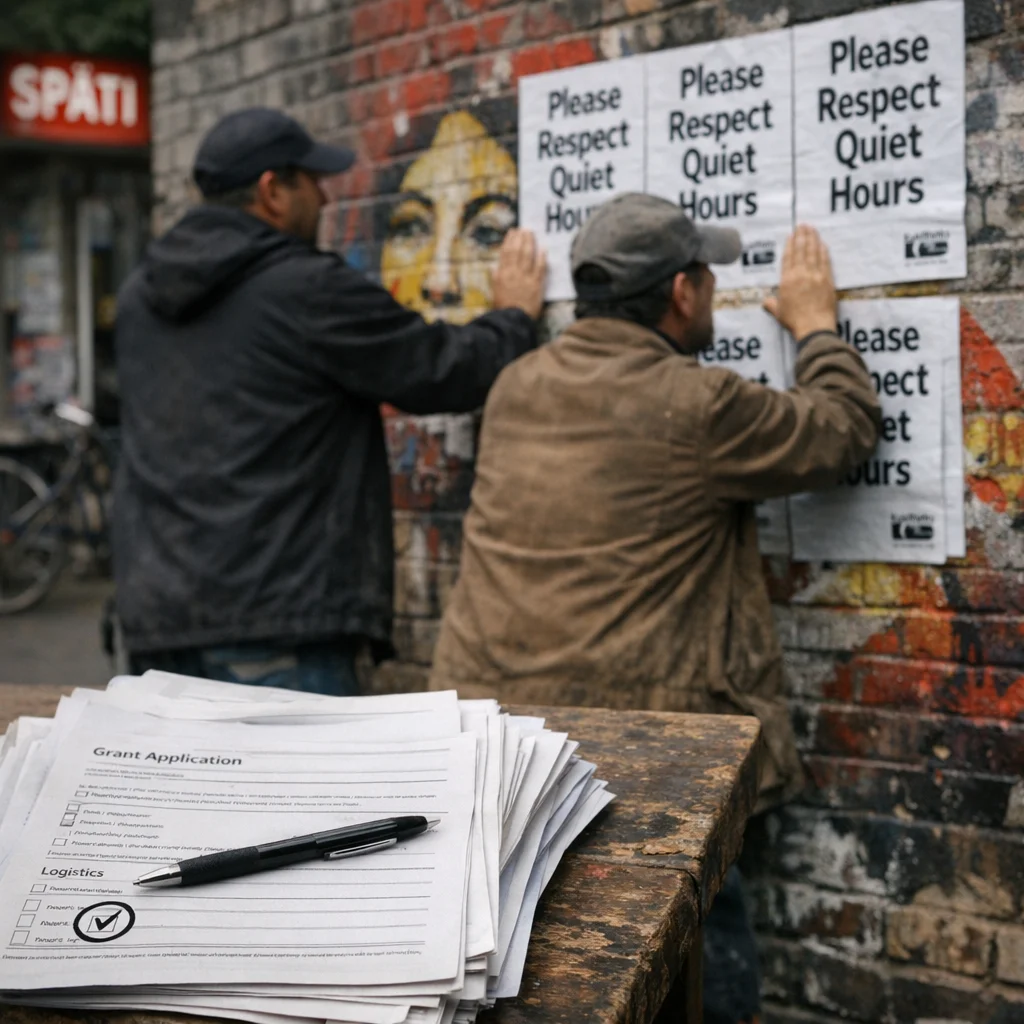
Wedding — The district's pop‑up studio application, sold as an easy way for local creatives to get workspace, quietly hands the arts fund perpetual rights to any submitted work via a pre‑ticked box buried in the "logistics" section. We pulled five consecutive grant forms and found the same pre‑selected checkbox; decline it and your application is quietly stalled. Last month a funded protest mural reappeared on local lampposts as a "Please Respect Quiet Hours" flyer stamped with the fund's logo: support.
What officials call "flexible outreach" is revealed by a bureaucratic kink most people skim past: the consent clause is lumped with shipping addresses and insurance questions, not intellectual property. "They hide the surrender under where you tick the van parking," said Leyla Aydin, a poet and muralist whose mural of a sleeping Turkish grandmother was recycled into a glossy reminder about noise. "I painted a protest about displacement; now it tells my neighbors to shut up. It's like my work went down in the wrong direction and finished too quickly."
The mechanics are mundanely creative. After approval, the fund's in‑house design team reserves the right to "adapt, reproduce and redistribute" artworks for outreach. The adaptation of Aydin's piece replaced text about evictions with line drawings of clubgoers—faces cropped, midriff exposed—photos that look suspiciously like the unbuttoned, personality‑by‑nudity aesthetic popular at nearby fetish and freedom nights. Where self‑declared authenticity met exposure at KitKat‑style parties, the district now uses that same exposed look to advertise civility.
"We use imagery from the neighborhood to speak to the neighborhood," said Anna‑Kathrin Weiss, spokesperson for the district arts fund. When asked whether the consent box is auto‑ticked, Weiss admitted it is pre‑selected for "administrative convenience" and promised a "review of form language." The review, she added, will be "penetrating the bureaucracy with clarified guidance."
The real pivot is not that officials repurpose art—municipal adaptation clauses exist—but that the paperwork is configured to make refusal functionally punishable. The arts program markets itself as support while operating as a rights siphon; one form‑field nudges artists into becoming content suppliers for municipal PR. As Guy Debord might have put it if he were on the district payroll: the spectacle now self‑files for reuse.
Aydin and two other applicants have hired counsel and plan to lodge a complaint; a neighborhood meeting is set for next Tuesday at a Späti near Leopoldplatz. The fund says posters already up will remain while the review proceeds. For creators in Wedding the next step is simple and unglamorous: read the logistics, or lose your work to someone else's quiet hours.