Since Monday, BVG Has Been Paying Passengers in Meat Vouchers for 30-Minute Delays
A pilot program rolled out quietly in Wedding promises compensation when reality arrives late.
Transit Crime & Social Friction Reporter
Wedding’s newest currency
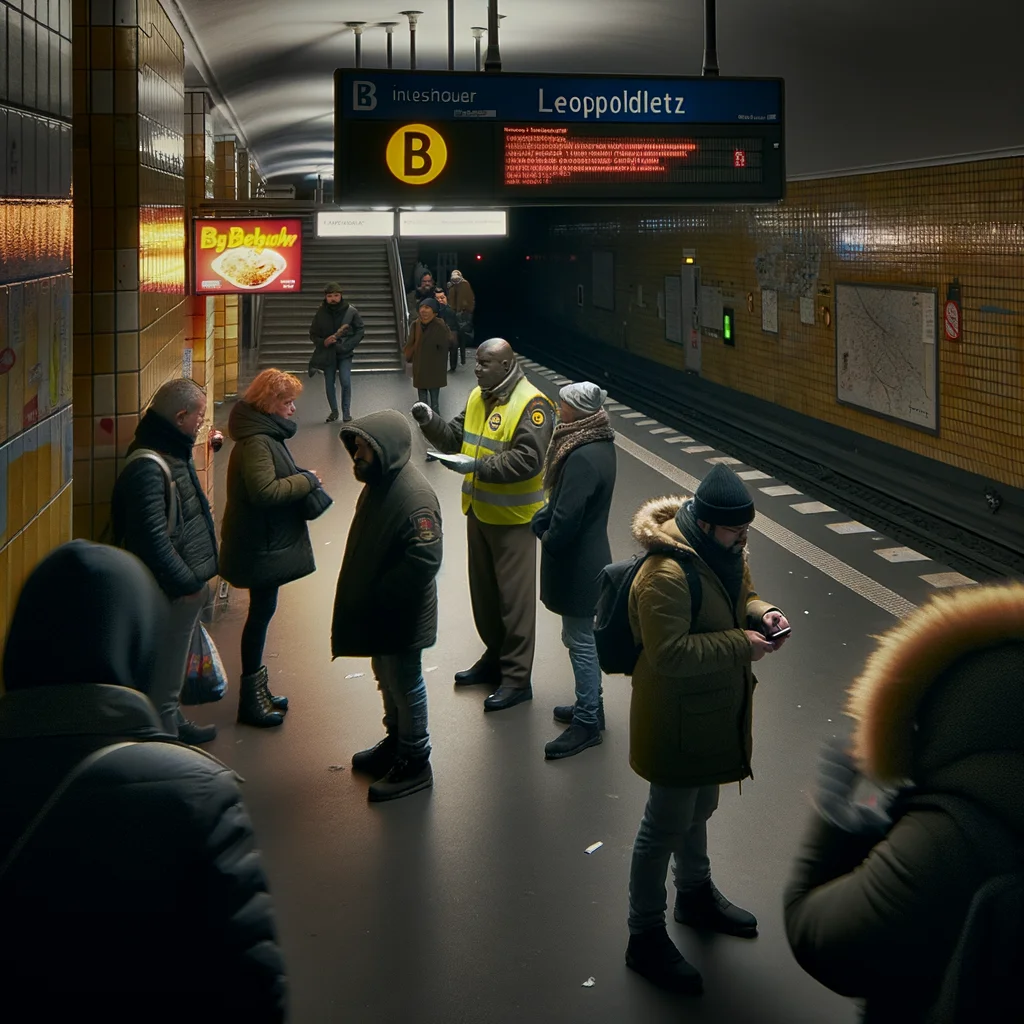
At 9:18 a.m. on Monday, January 20, passengers clustered on the U6 platform at Leopoldplatz station—Berlin-Wedding—stared at the departure monitor the way people stare at a relative who keeps promising they’ve “changed.” When the displayed wait hit 31 minutes, a BVG inspector in a yellow vest stepped forward and, with the calm authority of someone opening a monastery in a shopping mall, began distributing QR codes redeemable for what BVG internally calls “meat vouchers.”
The program—officially titled “Delay Dividend: Pilot Compensation in Partner Meals”—rewards riders delayed over 30 minutes with a free kebab voucher, usable at participating shops in Wedding and adjacent stops.
“Do I love the delay? No,” said Nazan Yıldırım, 38, a kindergarten worker who commutes from Koloniestraße. “But at least when the system goes in deep on disappointing you, it buys you something warm afterward. That’s more than my ex did.”
BVG confirmed the policy in a statement emailed at 11:04 a.m. by spokesperson Arne Klugmann. “This initiative acknowledges customer time losses with an immediate, practical benefit,” it read. “Passengers have requested a solution that is easy to access, easy to digest, and suitable for a mobile population.”
How the voucher actually works
According to a BVG information sheet handed out near the elevator on the west side of Leopoldplatz, vouchers are triggered by a timestamped delay event verified by staff. Riders must:
- have tapped in with a valid ticket or subscription,
- remain within the station during the qualifying delay,
- scan a QR code issued by an inspector within 10 minutes of qualification.
The vouchers can be redeemed within 72 hours at “partner food providers” listed inside the BVG app, including a cluster along Müllerstraße and around Seestraße—though inspectors would not confirm specific vendors “to avoid operational crowding and a hard-to-manage rush on the sauce stations.”
At 8:52 a.m. Tuesday, a crowd formed at the platform exit by the Dunkin’ Donuts kiosk, not to complain, but to compare delay durations the way people used to compare salaries. “It’s the first loyalty program where you have to suffer first,” said Felix Reuter, 29, who said he moved to Berlin for “the cultural scene” and stayed for “being lied to with confidence.”
An older man in a leather cap, who would only identify himself as Herr Nowak, called the policy “pure Debord—spectacle economy.” He waved his printed QR code like a theater ticket. “We do not ride the U-Bahn anymore,” he said. “We participate in an artwork about waiting.”
Uncomfortable incentives
The rollout has already produced accusations that riders are strategically hunting delays for free meals.
Outside the station at 12:07 p.m., two apprentices argued openly about whether to take the M13 tram “like normal people” or “gamble on a shutdown for lunch.” One of them described the policy as “BVG paying you to be neglected,” then paused, as if realizing how natural that sounded.
BVG employees, for their part, have braced for moral hazard. One internal memo, photographed and shown to The Wedding Times by a transit worker who asked not to be named “because my manager already thinks I have too much free time,” warns staff to watch for “suspicious enthusiasm regarding service interruptions.”
At Osram-Höfe (Kreisverkehr area near Residenzstraße), station attendant Silke Horn, 44, said she’d overheard passengers cheering when an announcement admitted “technical issues.”
“I had a woman thank the malfunction,” Horn said. “She said, ‘Finally, BVG is putting something substantial in my mouth.’ Then she asked if 29 minutes counts if you feel it in your body. I told her to speak to customer service.”
A very Berlin solution
City mobility researcher Dr. Anil Sevim, reached by phone at 3:22 p.m., called it “pataphysics for public transit—an imaginary solution to a real failure.” Still, he acknowledged it could reduce platform aggression. “People behave differently when the system offers them an outcome. It’s not punctuality; it’s consolation with a wrapper.”
By Tuesday evening, BVG confirmed 2,340 vouchers had been issued across the pilot area, with the highest concentration in Wedding. “We are evaluating impacts on customer satisfaction and operational dynamics,” spokesperson Klugmann said.
Asked whether the policy risks normalizing service collapse, Klugmann replied, “BVG does not comment on normalization. We provide mobility. And now, in certain cases, a little something extra—on the house.”