Since Tuesday, Wedding Has Been Running a “Transatlantic Security Summit” in a Laundromat, and Europe Still Has No Plan
Inspired by Washington’s chilly handshakes, locals staged an EU-style emergency meeting between spin cycles. It achieved record consensus on one item: everyone else should handle it.
Soft-Power & Neighborhood Delusion Reporter
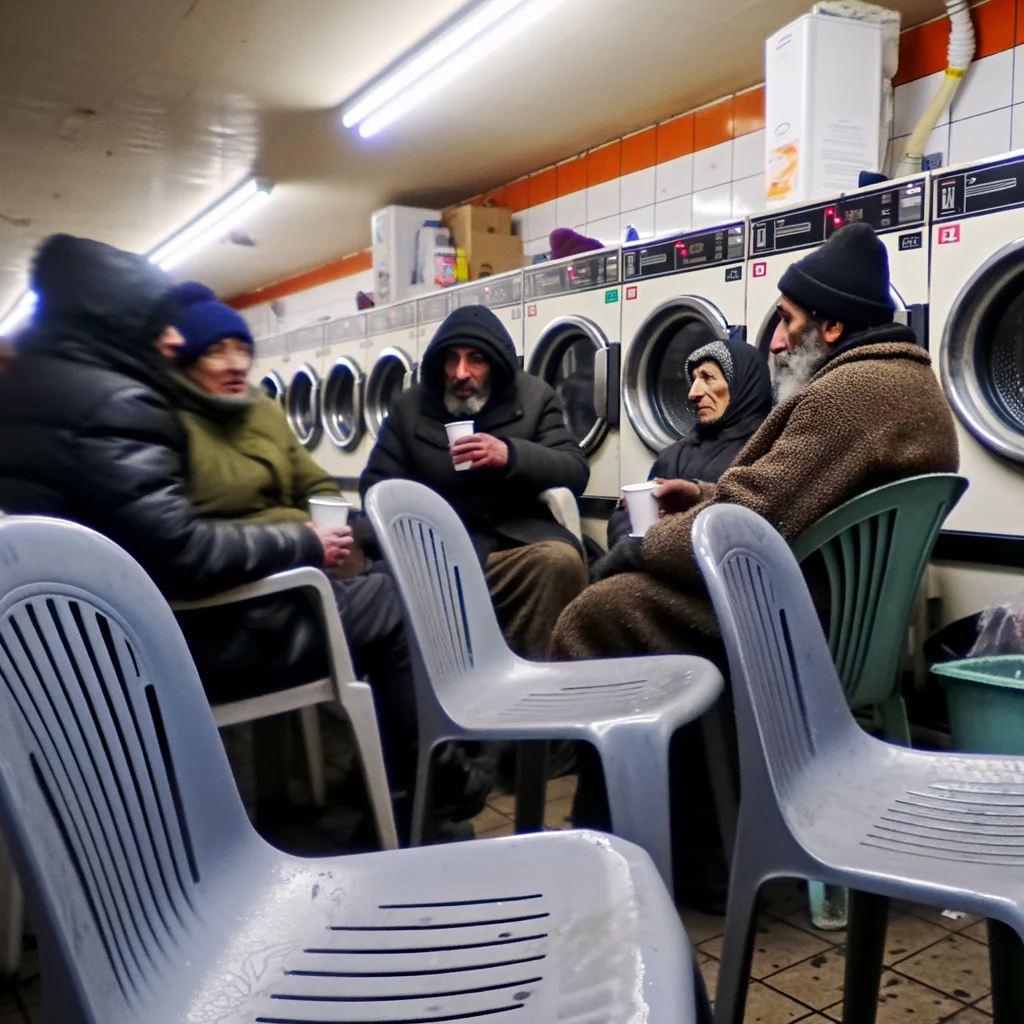
A Global Crisis Finally Gets the Treatment It Deserves: Plastic Chairs and Bad Coffee
Europe, faced with yet another reminder that American friendship has the shelf life of a sliced avocado, is apparently “deciding what to do.” Wedding heard this and thought: decision-making? Adorable. We’ve been perfecting the art of Not Deciding Since Forever.
In response to the headlines about Trump’s widening rift with Europe, a “Transatlantic Security Summit” spontaneously formed in Wedding—not at a government office or think tank, but at a laundromat off Müllerstraße where people already go to watch their problems tumble in circles.
The summit’s location was chosen for its symbolism: the machines are loud, the stakes feel high, and nothing ever comes out the way you expected.
Delegations Present: NATO, the EU, and One Guy With a Patagonia Vest
Attendees included:
- Two French Erasmus veterans proposing “strategic autonomy,” which mostly meant no longer sharing phone chargers with Americans.
- A British consultant insisting Europe must project strength, then apologizing for being here and asking if the tap water is safe.
- A Turkish grocer from around the corner who didn’t come for geopolitics but accidentally became the only adult in the room. “If you want safety,” he said, “you lock the door. If you want drama, you debate the concept of the lock.”
- A trio of Berlin expats speaking fluent Podcast, warning that “America is no longer a reliable partner” while trusting their entire retirement plan to an app that glitches when it rains.
They attempted to draft a “Wedding Guarantee,” a neighborhood-level security pact pledging mutual aid in the event of:
1) a hostile foreign power, 2) a sudden gas shortage, 3) an American deciding Europe should "handle its own mess," or 4) a new brunch place switching to English-only menus with stiff moral confidence.
The Policy Options, Ranked by How Good They Sound in Conversation
After a deep dive into deterrence—held directly above a washing machine that shook like it had opinions—the summit proposed several European responses:
Option A: Europe Rearms Supported by one guy who had recently read half of a magazine article about “defense innovation.” He suggested “drones, but make them community-based,” and was immediately asked to leave after trying to fund it with a crowdfund.
Option B: Europe Negotiates Proposed by someone who believed diplomacy was “just active listening with better suits.” They tried role-playing talks with the U.S. by DMing an American cousin in Ohio and getting left on read.
Option C: Europe Does Nothing But Calls It Restraint This became the clear favorite, as it matched Wedding’s historic municipal doctrine: the less you do, the more ethically complex you can describe it later.
In a move that would make Wittgenstein vomit into a bicycle basket, the summit debated the meaning of “alliance” for two hours and concluded it’s a word you use when you want closeness without commitment. In other words: the Tinder bio of foreign policy.
Gentrification Adds Soft Power—Mostly Soft
The real division wasn’t transatlantic. It was the classic Wedding split: old neighborhood pragmatists vs. newcomers who treat geopolitics like a lifestyle brand.
Longtime residents—especially Turkish families who’ve watched the street mutate business by business—tended to support what they called “reality.” This included food, actual jobs, and the ability to survive winter without a three-step affirmation ritual.
New arrivals advocated for symbolic measures like:
- renaming local street corners after international values,
- forming a “Defense Co-Working Circle,”
- and introducing a rotating schedule to “hold space” for Europe’s existential fear.
A small group even suggested Wedding should "decouple" from the U.S. by boycotting American cultural exports. The plan fell apart after they admitted they still needed Amazon deliveries for their ethically sourced lamp cords.
Final Communiqué: Hard to Swallow, Easy to Sign
In a ritual clearly plagiarized from the EU itself, the summit produced a one-page statement, immediately softened by fourteen footnotes. It contained two concrete commitments:
- Everyone would “remain concerned,”
- The laundromat’s lost-and-found would be recognized as “a shared strategic reserve.”
A draft clause reading “Europe must take responsibility for its own defense” faced stiff resistance from attendees who felt responsibility had a judgmental tone.
The meeting concluded the only way European meetings truly can: with exhausted silence, crumbs, and the sensation that history is happening while you’re busy folding socks.
As participants dispersed into the gray Wedding afternoon, someone asked when the next summit would be.
“Soon,” said the British consultant, like a promise he didn’t plan to keep.
And thus Europe’s plan remains exactly what it has always been in Wedding: a lot of talk, a little posturing, and the faint hope that someone louder will handle it first.