Smash the Pass, Says the Turkish Shop Owner
Wedding’s phone repair counters have learned to speak fluent privacy while quietly selling the cheapest version of it: a cracked-screen “fix” that resets your number, your apps, and your dignity before handing you.
By Omar Felton
Kiez Features Reporter
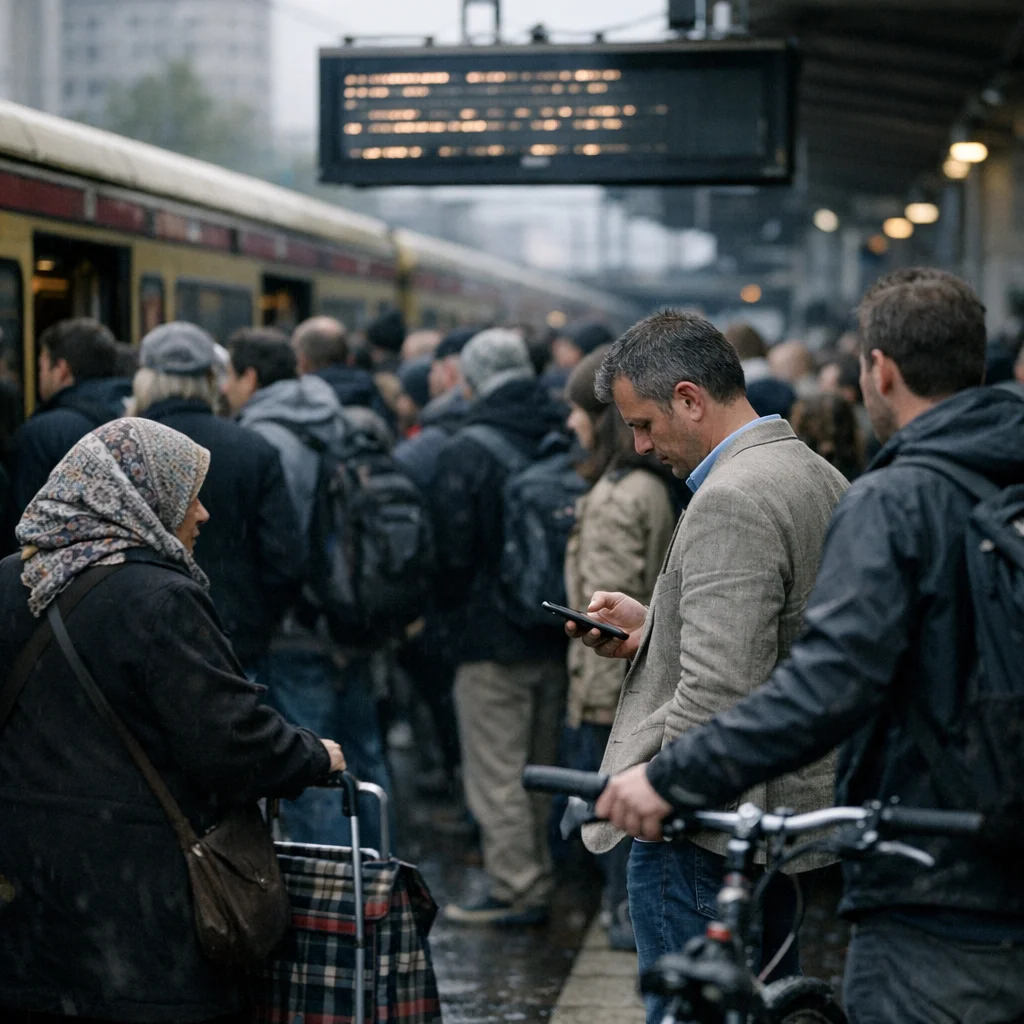
The first thing Berlin did with the 49-euro ticket was pretend it had invented fairness. Then it shoved the whole city into the same metal tube and called the bruising a reform. In Wedding, where the platforms already smell like old smoke, spilled coffee, and the sour breath of delay, the ticket did not create public transport. It exposed it.
By Monday morning, the machine outside Gesundbrunnen had the look of a shrine visited by people with no faith left, only coins and curses. A woman with a shopping trolley from the Turkish supermarket on Müllerstraße stood behind two men in immaculate sneakers discussing “sustainable mobility” with the solemnity of a church donor. One of them had a bicycle helmet hanging from his wrist like a fashion apology. He was not going to work. He was auditioning for the right to feel clean about himself.
That is the class trick here: for some riders, 49 euros is a utility bill. For others, it is a costume. The people who actually need the ticket — cleaners, carers, delivery workers, pensioners hauling bags to Rewe, families moving between schooling, shifts, and bureaucratic errands — are the ones who board earliest and get flattened deepest. The rest arrive with their reusable cups, their little moral dimples, and the smug little sweat of people who can afford to call necessity a lifestyle.
“Everyone suddenly talks like they discovered the train for the first time,” said Hüseyin Kaya, who runs a phone-repair counter near Leopoldplatz and has seen more cracked screens and cracked tempers than the BVG has seen functioning timetables. “The city sells this as climate virtue, but the platform is just a wet armpit with ad copy.” He pointed at the crowd outside, where a school group, three office workers, and a man pushing a stroller had all been compressed into a single organism of irritation.
The BVG, naturally, responded with the usual vocabulary of managed embarrassment: “high demand,” “capacity adjustments,” “operational optimization.” Bureaucratic German for: we knew this would happen, we did nothing serious, and now we would like praise for announcing the mess in a calm voice. Its spokespeople speak as if crowding were a weather system and not a consequence of underinvestment, fantasy planning, and the magical assumption that Berliners can be asked to endure anything if the press release has enough green adjectives.
The city’s officials, who love a mobility summit almost as much as they love being photographed on one, treated the surge like a moral success. They praised “modal shift” while ordinary riders stood cheek-to-cheek in cars that smelled like damp coats, battery heat, and the low-grade despair of people trapped beside one another too long. Nothing says urban progress like forcing a cleaner to inhale a startup founder’s deodorant cloud while both of them stare at the same broken departure board.
Wedding takes this performance personally because the neighborhood never gets the polished version of Berlin. It gets the overflow. It gets the people who are late, loaded down, and already tired before the train arrives. It gets the boys with bikes they will not ride, the aunties with market bags, the men arguing softly into speakerphone, and the platform rituals of staring at the tunnel as if concentration alone could drag the next train out of the dark. The whole scene is a municipal joke told too close to the ear.
And the joke is always the same: the city congratulates itself for making movement cheaper while leaving the actual movement crueler. The well-fed can buy austerity as a pose. The rest buy it because they have to. That is the genius of Berlin’s transit politics — to wrap a squeeze in ethics, call the bruise inclusive, and then act surprised when the crowd starts smelling like defeat.