Smoking Area for the Serious Poor
A new set of municipal smoking rules is letting Wedding’s cafes and bars cosplay as public-health institutions while quietly shoving the same old regulars back outside like a staffing problem.
Prestige Leakage & Neighborhood Vanity Reporter
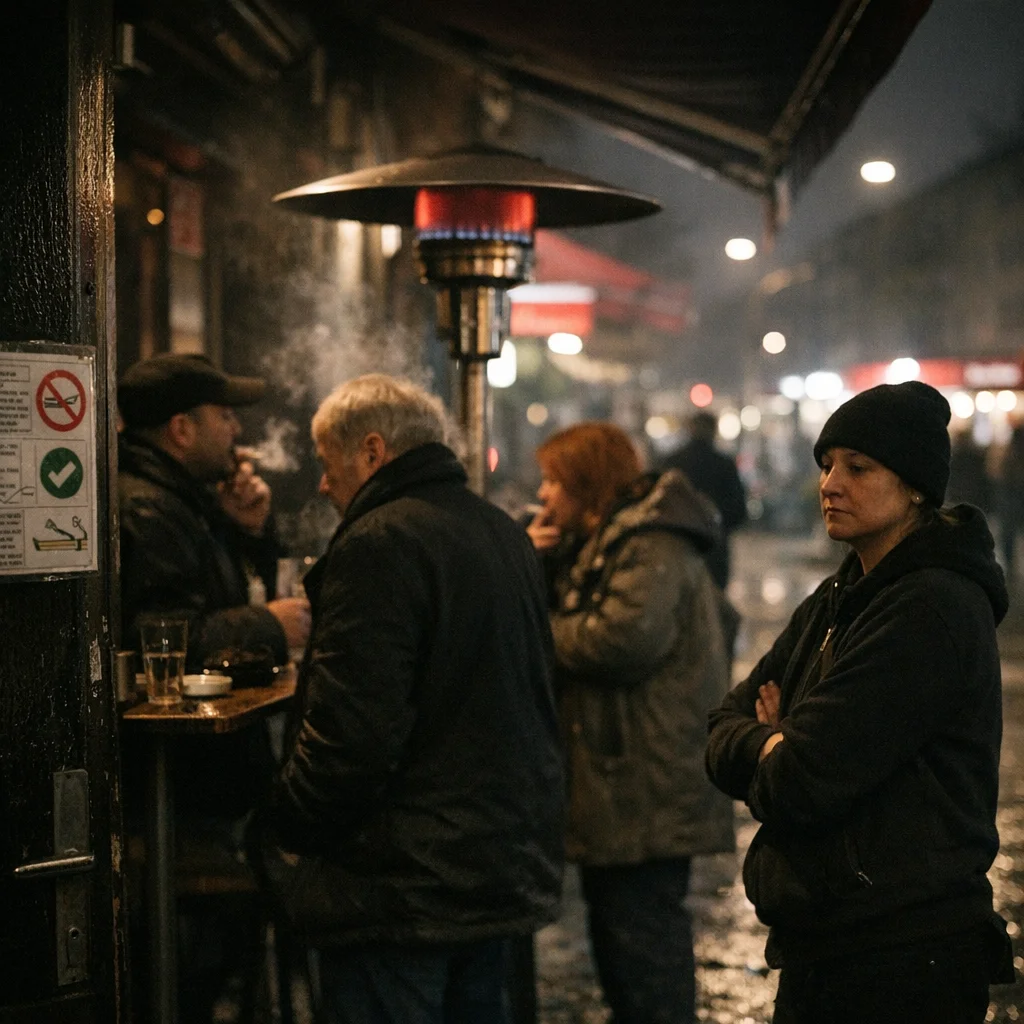
At a bar on Müllerstraße in Wedding, the smoking rules were posted with the moral certainty of a parish commandment and the practical kindness of a parking fine. Smoking was allowed only in the marked outdoor area, which sounded orderly until you saw the “area” was basically a punishment pen: one wheezing heater, a dented ashtray, and a staffer in a too-thin jacket being paid to apologize for a decision made by people in better shoes.
The owner, a man with a municipally polished smile and the charisma of a clipboard, said the setup was about health, neighbors, and respect. That is the local religion now: say “care” until the word goes soft and greasy in your mouth. What he wanted was the sheen of a public servant without the burden of public service. He wanted the moral aftertaste of a city official and the labor cost of a thrift-store landlord. So he outsourced exclusion to a laminated sign and a waitress with red knuckles, then stood there looking like a man who had personally invented decency.
Inside, the room kept its soft-lit, oat-milk morality. Outside, the smokers got sorted like leftovers. The younger ones in expensive coats and dead-eyed confidence drifted in and out as if the cold were part of the concept, a little Berlin foreplay for people who think suffering is artisanal if it happens near a speaker system. The regulars were another matter: Turkish men who had been coming long before the menu learned to flatter itself with plant-based foam, men with work faces and nicotine habits and the bad luck to be visible when a city decides visibility is a hygiene issue. They stood under the heater like they were waiting to be admitted back into civilization by a bouncer with no spine.
One customer, Mustafa Yilmaz, said the arrangement was “fine if you are a tourist with time and money. If you work all day, it is a little theater for other people’s conscience.” He was being generous. It is less theater than laundering. Berlin’s municipal language takes a small cruelty, wraps it in phrases like “balance,” “compliance,” and “shared responsibility,” and sends it back smelling faintly of disinfectant and self-respect. The city loves these terms because they let everybody masturbate their conscience in public while nobody has to touch the actual mess.
The staff knew the script by heart. Apologize, point to the sign, nod at the heater, shrug as if policy had fallen from the ceiling in tasteful typography. Their gentleness was not a virtue so much as the residue of wages too low to support a moral personality. They were expected to absorb everyone’s irritation and call it hospitality. In the new urban order, being polite is just another way of being underpaid.
The district’s public-health guidance, predictably, arrived dressed as principle and functioning as paperwork. A spokesperson said businesses were free to design their own compliance measures as long as they respected the rules. That is Berlin’s favorite bureaucratic sedative: do whatever you like, but do it with a conscience certificate. The city hands out moral vocabulary the way a bad lover hands out excuses—lavishly, repeatedly, and always after the damage is done.
So the bar keeps its reputation for responsibility, and the customers keep their nicotine and their small humiliations. The heater hums like a compromised conscience. The sign stays dry. The owner gets to feel clean while everyone else stands outside in the grime, proving once again that in Wedding, civility is mostly a scam with patio furniture.