‘Sorry, We Don’t Take Cash’ at the Rave
Berlin’s supposedly anti-commercial nightlife has found a perfect way to look rebellious while forcing everyone into app wallets, wristbands, and subscription morality.
Nightlife Etiquette & Status Rituals Correspondent
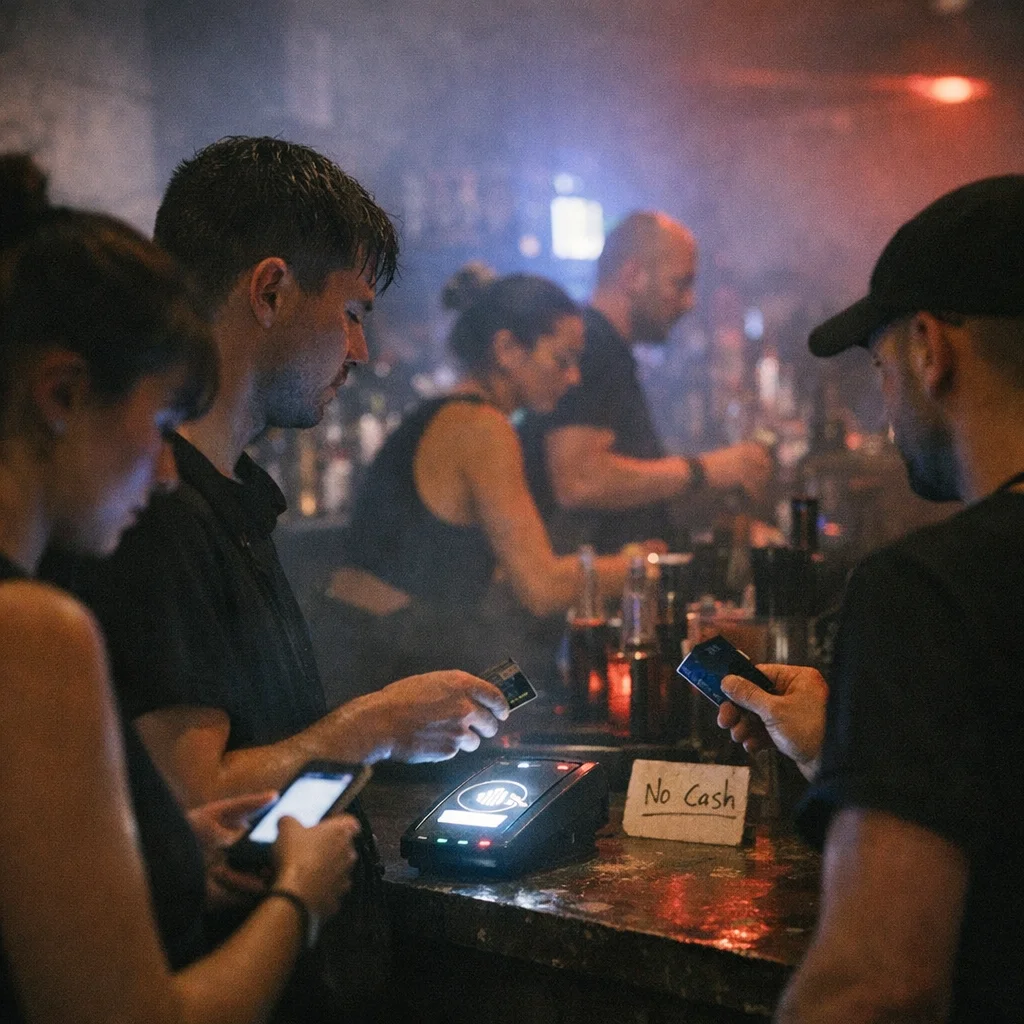
The cash box died quietly, which is how Berlin likes its funerals
The first thing to go was the bar tab, then the token system, then any remaining fantasy that the people sweating in the queue were participating in a liberated collective rather than a mildly narcotized subscription service with drums. At an all-night event in north Berlin, a handwritten sign at the entrance announced that cash was not welcome. Cards were tolerated. App wallets were applauded. Convenience, that old managerial sedative, had been promoted to political virtue.
By midnight, the crowd had accepted the new order with the obedient sincerity it usually reserves for door policy, gender-neutral slogans, and whatever piece of industrial furniture a promoter has decided counts as politics this week. A line of ravers in black cargo pants, thrift-store martyrdom, and expensive regret stood outside under a billboard-sized moon, covering phone cameras with stickers like little badges of moral immunity before entering the republic of correct posture and bad decision-making. Inside, the bar staff tapped screens, receipts appeared like tiny tax confessions, and every transaction carried the dead-eyed triumph of people who think a contactless terminal is an act of resistance because it arrives before the bass drops.
The venue, a former industrial shell with a side room that smells faintly of fog machine residue, spilled beer, and civic exhaustion, framed the change as practical. “People want a smoother flow,” said Leonie Hartmann, the club’s operations manager, who requested anonymity because she still owes a friend 40 euros in cash and understands, on some level, that hypocrisy is the native language of the scene. “Nobody wants to stand there counting coins like it’s 1998 and we’re all waiting for a fax.”
That logic is the class anthem of the neighborhood: the same crowd that performs anti-capitalism with its jaw clenched and its eyeliner smeared now treats cash like a moral stain, as if a folded bill might leave residue on their hands, on their conscience, on the cheap little ideology they brought to the door. They will quote Debord while loading a prepaid app, complain about neoliberal infrastructure while topping up credit through a platform that sells their data with the tenderness of a loan shark, and call it community when the house policy happens to make the bar line move like a lubricated zipper.
This is not rebellion. This is affluent strain performed by people who want to feel dirty without being inconvenienced by dirt. It is the same social type every weekend: the freelance curator with a trust-fund vocabulary, the NGO darling with a nicotine habit and a rented seriousness, the man in the cropped leather jacket who says “access” like he invented it and then panics if his battery dips below 18 percent. They praise openness while worshipping systems that sort by device, bank access, and tolerance for administrative nonsense. The excluded are always the wrong kind of broke: the cash-only regular, the tourist with a dead phone, the worker whose card is blocked, the person whose life is not organized around a charger and a smug little app icon.
Outside, one man in a faded T-shirt printed with a Soviet memorial logo said he missed the cash-only era because it forced people to make decisions with their actual hands instead of with a glowing rectangle and a posture. “Now everyone is very radical until the battery dies,” said Cem Yilmaz, who runs a Turkish bakery three blocks away and has watched the neighborhood trade bread for bio-snack ideology. “They say they hate capitalism, then they tip it through a screen and ask for a latte of revolution.”
Club staff say the move reduced theft, sped up service, and made accounting easier. That is true, in the same way a confession makes crime easier to file and a condom makes bad judgment feel spiritually curated. The new system also hands the venue owner, the promoter, and the payments platform a neat little triumvirate of control: less cash in the drawer, less mess for management, more data for the machine, and a crowd too intoxicated on self-image to notice it is being milked by a smoother form of obedience. Every frictionless improvement is a tiny robbery with good lighting.
By early morning, the bar queue moved beautifully. The politics did too. Everyone got served faster, everyone felt a little superior, and nobody had to touch the dirty little relic called cash. Somewhere in the room, under the strobes and the discipline, Berlin’s favorite illusion kept pumping: that ease is emancipation, and obedience is just a better user experience.