Soup, Salon, and a Smiling Knife
A trendy neighborhood soup kiosk discovers the Berlin dream of ethical consumption: paying extra to be judged by someone in apron chic. Everyone gets to perform kindness, especially the customers who need witnesses.
Neighborhood Commerce & Low-Grade Dread Reporter
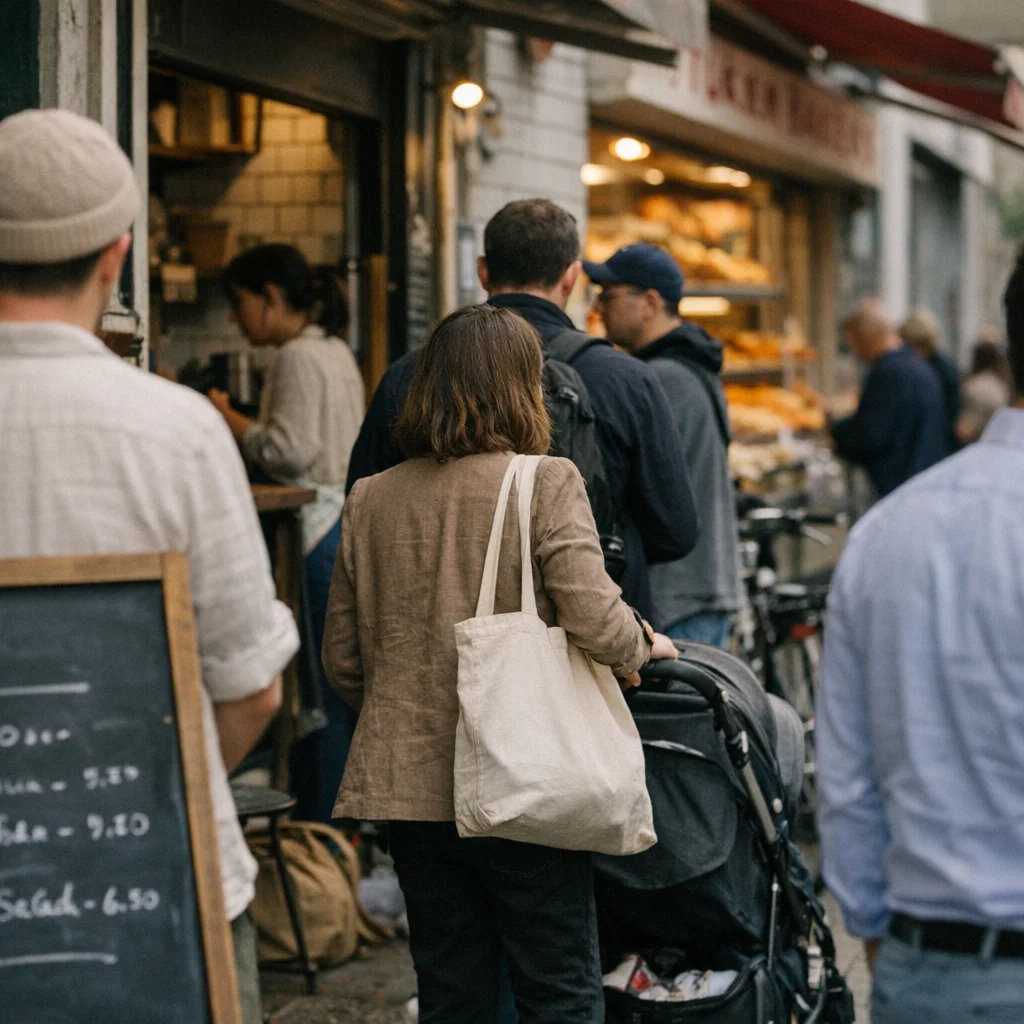
By noon, the line outside the soup kiosk on a narrow Wedding side street had done what every respectable Berlin queue eventually does: revealed who can afford to wait and who gets to call waiting “community.” Freelancers with tote bags padded by tax deductions, wellness devotees in expensive linen pretending they buy fabric only with a conscience, and parents dragging exhausted children like luggage stood in the cold for bowls that cost less than a tram ticket and came with a bonus feature: being assessed by staff in immaculate aprons, as if hunger were a moral failure and broth were a disciplinary tool.
The kiosk, which opened this month beside a Turkish bakery and a closed video store now serving as a shrine to everything the city sold off to branding and called progress, promises seasonal soup, local produce, and zero moral damage. That last promise is the real product. Customers do not come here merely to eat; they come to be witnessed purchasing innocence. They want the cheap lunch, yes, but also the tiny erotic thrill of being scolded by someone with a compost bin and a better posture. Their favorite fantasy is that suffering is dignified if it arrives in a paper cup.
By the time the soup runs out, the place resembles a parish for overeducated penitents: startup translators, gallery assistants, a man in a beanie announcing he is “between projects” in the same tone others use for chemotherapy, and one tired mother who looked less fed than administratively processed. Everyone in line performs the same little ballet of merit: checking the time, frowning at the queue, then staying in it because the point is not the soup but the public rehearsal of restraint. They want scarcity with a values statement.
Behind the counter, chef-owner Elif Demir ladled lentil soup with the expression of a priest hearing confessions from people who only become ethical when there is an audience and a chalkboard menu. “They want cheap lunch, but they also want to be seen suffering correctly,” she said, speaking on condition of anonymity because the district’s little ecosystem is built on mutual blackmail and everyone still shops at the same wholesale market. Demir said the menu was designed to be humane, though not so humane that customers stopped feeling slightly dirty, which is the only seasoning many of them trust. Too much comfort and they panic; too much truth and they start asking whether the district office subsidizes the vibe.
The regulars, naturally, have converted the kiosk into a seminar on public virtue, where every sentence is a lubricant for self-regard. One man criticized plastic containers while cradling his own artisanal thermos like a relic from a church that charges rent. A woman from a nearby co-working space praised the “ethics” of the lunch while taking a call about a funding round so bloated with social language it sounded like colonial extraction in a cashmere sweater. Two parents complained about screen time, then handed their children a tablet as if outsourcing attention were a progressive parenting strategy instead of what it is: a small surrender dressed as enlightenment.
The sharpest performance belongs to the newcomers who claim to hate gentrification yet arrive dressed like its unpaid internship. They speak the language of authenticity with the eagerness of people laundering privilege through soup, linen, and a few strategically hummed words about “the neighborhood.” They call Wedding “still real,” which is how you know they have already begun to sterilize it. They love the grit here so much they keep trying to polish it off their own shoes and deposit it back as a compliment.
The district office, naturally, has perfected the municipal art of being present only after the rent has moved, the façade has been repainted, and the misery has been formatted into a lifestyle asset. Officials will no doubt discover the sidewalk queue once it blocks a pharmacy entrance and forces the city to acknowledge that even hunger now needs spatial management. Until then, the line remains a public lesson in class discipline: who can afford to wait, who must look grateful while waiting, and who gets to mistake consumption for conscience.
Demir said she expects the crowd to grow next week, especially once the first influencer arrives to describe the soup as “deeply nourishing” and “holding space,” without ever admitting it tastes like twenty years of rent inflation and a mild threat. That is the local miracle: turn deprivation into content, charge extra for the moral texture, and let everyone pretend they are choosing it. In Wedding, even a bowl of lentils comes with the district’s favorite service charge — the right to feel superior while being fed by the ruins.