Speed-Fueled Cleaning Sprees Hit Wedding at 4 a.m., Neighbors Wake to Pristine Chaos
Residents blame stimulant-fueled productivity for spontaneous deep-clean rituals; bouncer wristbands, empty energy drinks, and a suspiciously aligned spice rack are left as evidence.
Dancefloor Etiquette & Chemical Sociology Reporter
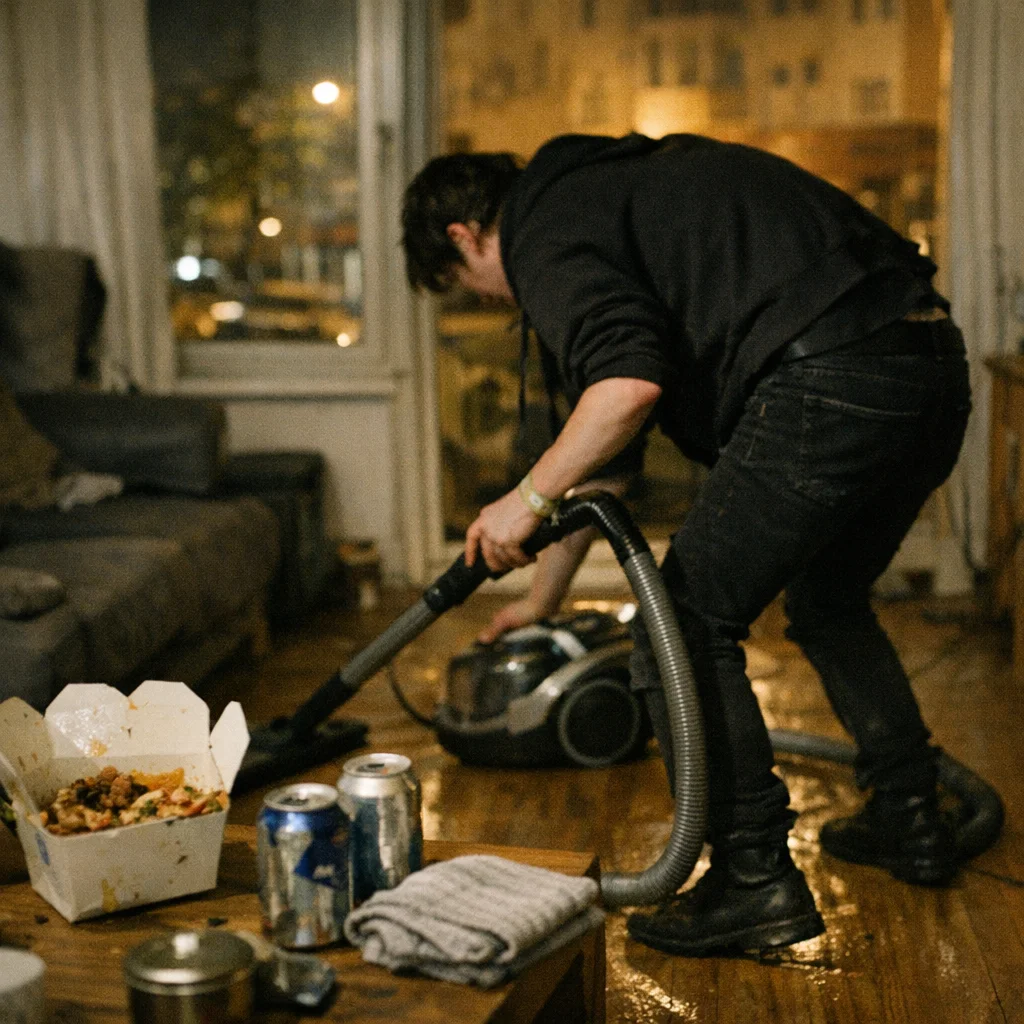
At 4 a.m. in Wedding, when most people are apologizing to their lungs or apologizing to their plants, a different civic service activates: the Speed Cleaning Brigade. Eyewitnesses describe a distinct choreography—rapid light-scrubbing, precise bookshelf erections, and a compulsive alignment of magnets on fridges—that lasts until the sun considers appearing.
“It’s like Camus met a Roomba,” said Leyla, who lives above a döner shop. “One must imagine Sisyphus happy, only now Sisyphus has a feather duster and a loyalty card.” Evidence left behind is telling: club wristbands still on wrists, smashed energy drink cans, and a damp dish towel positioned with military discipline.
Longtime residents and recent arrivals agree on one thing: productivity has been repurposed. For some, speed-fueled cleaning is a virtuous completion of the night’s arc—finish the set, then finish the sink. For others it’s an involuntary public service: you wake, your neighbor’s sofa faces true north, your rug is vacuumed, and you’re left to wonder if your life was rearranged while you slept.
Gentrifiers warn that this is merely lifestyle optimization; parents down the street call it noise with a conscience. A Turkish grandmother from Müllerstraße told us her kitchen was reorganized so that the spices now form a Piet Mondrian homage. She laughed and said she preferred it, though she remains uncertain who now folds her tea towels with such tender aggression.
Neighbors report strange side effects: late-night mopping that morphs into a one-person parade, brooms used like conductors’ batons, and the occasional heartfelt apology scribbled on a Post‑it explaining, in tiny letters, that the cleaner “meant well.” It’s tidy, intrusive, and oddly intimate—like someone finishing what you started but getting to claim the credit.
If this phenomenon has a theory, it’s simple: stimulants sharpen focus and shorten moral hesitation. The city’s nocturnal economy has produced a cohort who can stay up until dawn, then slide into tight corners and get a firm grip on the vacuum. They often finish with a satisfying polish and disappear, leaving Wedding to decipher whether it has been helped, violated, or both.
Either way, the floors are spotless. The angel of history—if Walter Benjamin were around—would probably applaud, then light a cigarette and ask for directions back to bed.