St. Pauli Fans Buy a Revolution, Receive a Security Briefing
Babelsberg’s stadium party for the cult club exposes how quickly football radicals become event producers once there are wristbands, guest lists, and a chance to look morally superior in a crowd.
Civic Hypocrisy & Neighborhood Compliance Reporter
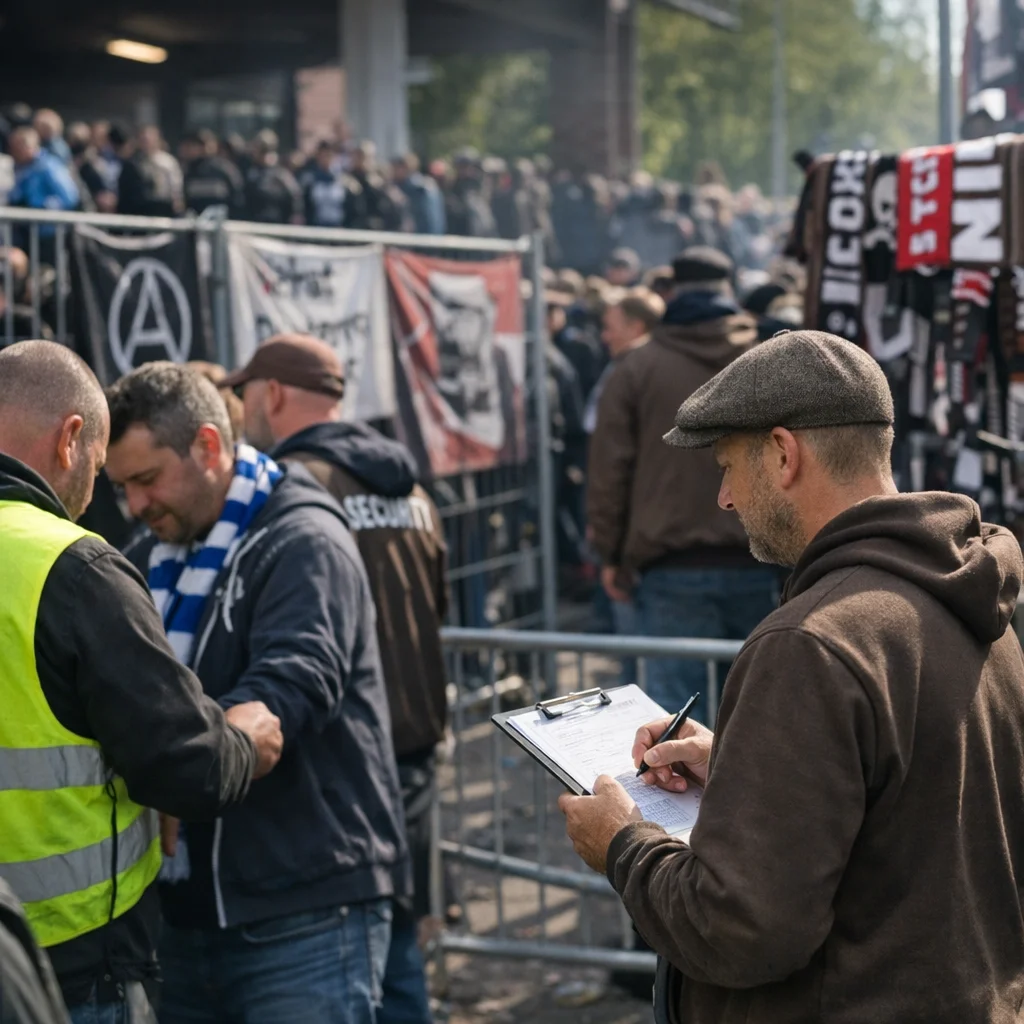
Babelsberg’s moral merchandise stand sold out before kickoff
Babelsberg’s stadium party for the visit from St. Pauli drew a crowd on Saturday that wanted football, politics, and the little narcotic of being recognized as decent by strangers with matching scarves. By the time supporters were sliding toward the gates, the event had already been wrapped in the usual German halo of virtue: guest lists, wristbands, security checks, and people lecturing about emancipation while being herded through metal barriers by a steward with dead eyes and a laminated badge.
Outside the stadium, the merchandise did a vulgar little dance. Scarves with clenched slogans hung beside tote bags that looked like they had been approved by a committee determined to make rebellion safe for brunch. A volunteer in an oversized black hoodie, performing anti-consumption with the zeal of someone auditioning for moral foreplay, kept announcing that football should be “for the community,” then immediately asked whether anyone had an extra ticket link because the allocation had vanished faster than a principle in a checkout queue.
The clothing was its own admission. There were patched jackets that looked inherited from a better class of poverty, work boots too clean to have met a real sidewalk, and sunglasses worn indoors like a tiny act of class treason purchased on credit. The crowd spoke in that careful, semi-radical register where every other sentence is a disclaimer and every noun has been air-lifted through a reading group. They arrived not so much to watch a match as to be seen correctly in relation to it.
Inside, the atmosphere was loud, affectionate, and drenched in self-regard. St. Pauli supporters entered as if carrying a tote bag full of approved positions: anti-fascism, anti-racism, anti-capitalism, and the deeply capitalist desire to be the first person in the room who can name them all. Babelsberg regulars, who have spent years mistaking local loyalty for political depth, treated the whole affair like a referendum on their own purity. Everyone wanted to stand on the right side of history, which was awkward because they were already physically on the left side of the stand and still needed a steward to tell them where the line was.
One organizer, flushed with the narcotic authority of a clipboard, defended the tightened access controls as necessary for safety, crowd flow, and the orderly prevention of the kind of moral cosplay that always breeds the messiest chaos. She said the event had to remain “open but secure,” which in practice meant that openness was available after verification, preferably to people with the correct posture and a coherent political vibe. In plain English, the revolution needed bouncers, and the bouncers needed wristbands.
A season-ticket holder named Timo Rehberg, who asked not to be quoted by surname because he once posted anti-capitalist slogans from a paid terrace seat and still sounds embarrassed about it when he drinks, watched the ritual unfold with a look of tired amusement. “People say they hate hierarchy until somebody gets to decide who gets in,” he said. “Then all the free-love language starts sweating through the collar.”
There was football, technically. Babelsberg pressed, St. Pauli sang, and both sets of fans behaved as if the match were a referendum on their private bedroom politics. At one point a banner about solidarity was held up by people who spent the first half arguing over the proper pronunciation of solidarity, as if the word itself were a bouncer checking IDs. The whole scene had the brittle glamour of a Godard film shot inside a merch tent after someone spilled warm beer on the ideals.
By the final whistle, the score mattered less than the social pecking order on display. The party continued outside, where exhausted idealists traded leftover beers, spare opinions, and the kind of eye contact that suggests everyone knows exactly what everyone else is trying to get. Organizers said they would review entry procedures before the next big crowd. Translation: the same moral fever, just with better crowd control and fewer opportunities for the faithful to rub against the velvet rope and call it solidarity.