St. Pauli’s pilgrims buy rebellion at the gate
Babelsberg’s stadium party sells the old left-wing football fantasy back to itself, with fan scarves, moral superiority, and the comforting smell of sanctioned dissent.
By Gus Pothole
Sports Cynicism & Civic Collapse Reporter
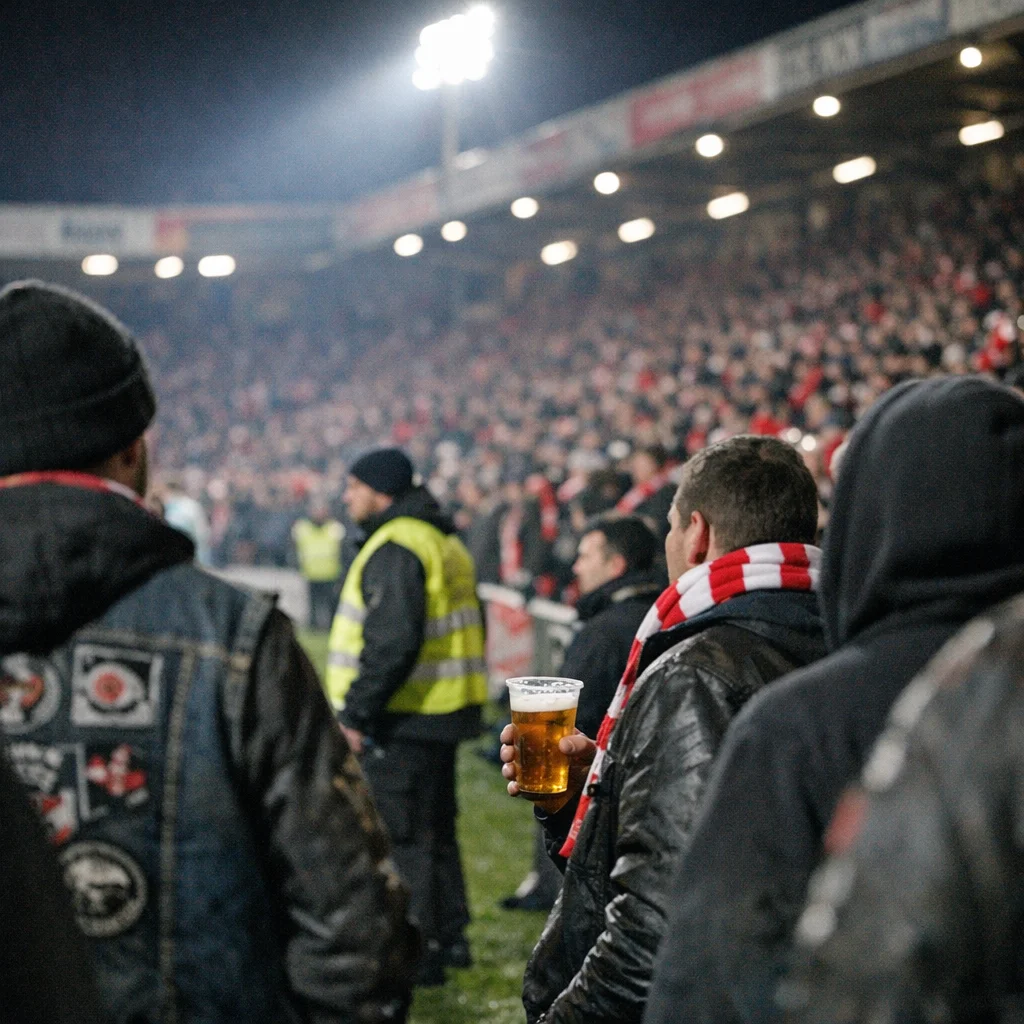
Babelsberg turned its stadium into a chapel for Saturday’s useful idiots, and the congregation arrived dressed like a budget-conscious revolution that had been pre-approved by a cultural foundation. Red-and-white scarves, black hoodies, scuffed sneakers, craft-beer breath, and the glazed confidence of people who think buying the correct ticket is a political act. The match against St. Pauli drew the faithful to the stands, where football was sold with moral garnish and the faint sweaty perfume of sanctioned dissent.
By the time the gates opened, the queue outside had the usual roll call of the German progressive leisure class: freelance designers with dead eyes, grant-funded organizers still tasting their own slogans, NGO-adjacent believers clutching reusable cups like sacrament, and heritage-left tourists who come to “support local culture” the way other people go to a petting zoo. They were not there merely for football. They were there to be seen wanting the right thing in public, to stand shoulder to shoulder in a crowd and leave with the warm, lubricated feeling that their politics had briefly acquired calves.
Inside, the atmosphere was loud, cozy, and faintly masturbatory. St. Pauli’s supporters arrived in their usual uniform of disciplined rebellion: patched jackets, stern faces, beer foam, and the look of people who have turned anti-fascism into an aesthetic that can survive laundering. Babelsberg answered with a stadium party that felt less like a match than a mixer for morally certified adults who need noise, proximity, and a shared enemy to keep the blood moving. Even the beer queues had hierarchy in them. Everyone was performing the same hunger: not for the game, but for the little narcotic of being counted among the clean-hearted.
A young supporter named Jan Berger, face flushed from beer and conviction, said the club’s appeal was that it still made people feel “close to the community.” He said this while checking his phone every few minutes, presumably to ensure his righteousness was being properly witnessed elsewhere. “The market ruins everything,” he added, with the solemnity of a man whose rent is paid through a profession built on branding other people’s despair. “But at least here you can still mean it.” Which is the modern left in one sentence: a man in a scarf begging the world to believe his intentions are heavier than his credit-card bill.
The club, naturally, played its part with the polished innocence of an institution that has learned rebellion is best handled by management. The messaging was all values, belonging, and community spirit, the kind of language that lets a district sound virtuous while it invoices the feeling of virtue back to the public. A spokesperson praised “football with values,” which is bureaucrat-speak for charging admission to a conscience. The district, never wasting a chance to look responsible after the fact, monitored crowd flow, transport pressure, and noise as if the real emergency were not political theater but unlicensed enthusiasm.
What mattered was not the score. It was the social choreography: the soft-lit faces, the red scarves, the plastic cups, the little shoulder shoves of solidarity, the way everyone wanted to be seen wanting purity without ever having to live inside it. The whole evening felt like a flirtation with conviction conducted by people too well-fed to risk anything. Babelsberg did not simply host a football match. It laundered left-wing longing through turnstiles, beer taps, and tasteful branding, then handed it back to the crowd like a damp shirt that still smells vaguely of itself.