Starbucks’ Love Letter to Wedding: Espresso at Gunpoint
A flagship coffee bar in Wedding has started enforcing a loyalty ritual so aggressive that customers are treated like counterfeiters unless they buy the premium drink, the branded tote, and the moral posture that goes.
Neighborhood Commerce & Low-Grade Dread Reporter
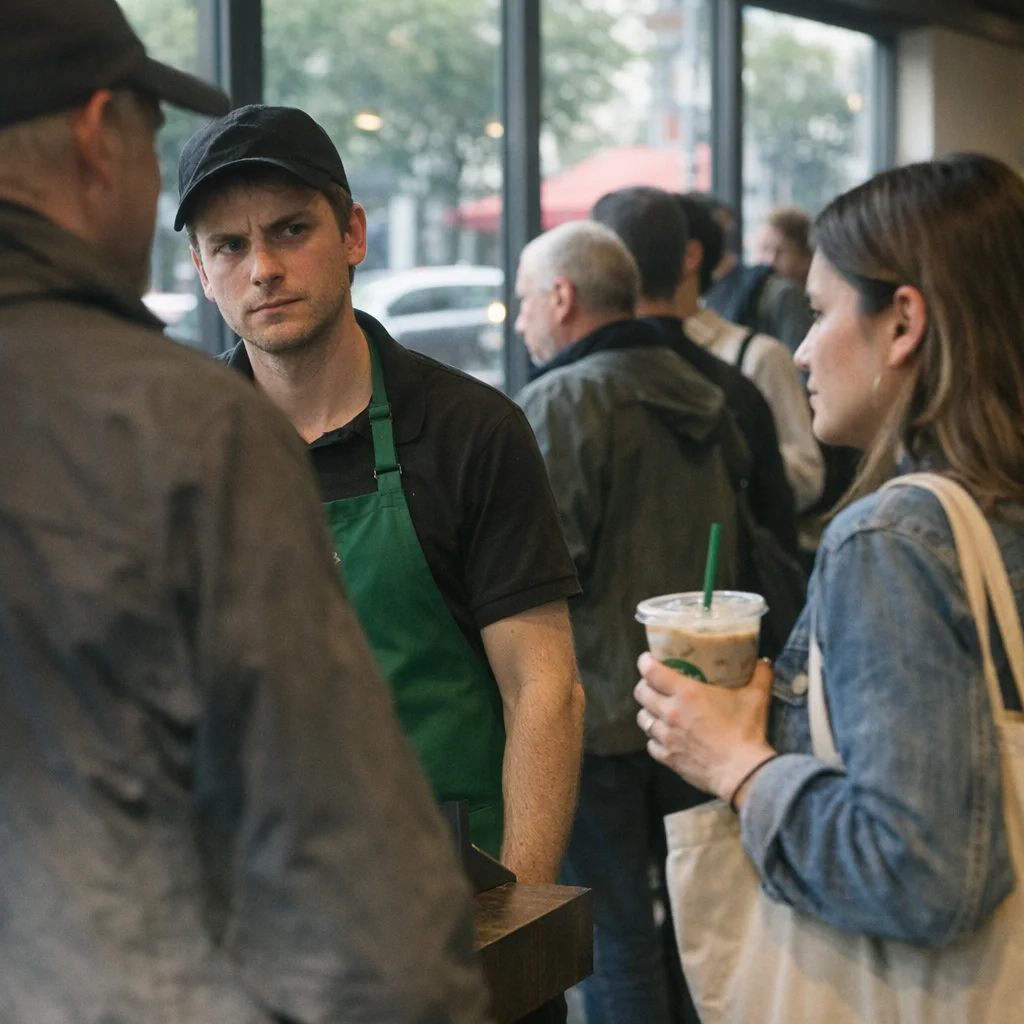
At the new Starbucks on Müllerstraße in Wedding, the coffee is no longer the point. The point is consent, staged as a retail ritual: you approach the counter, state your desire, and wait to see whether the barista grants it like a favor or withholds it like a punishment. The house mood is not hospitality but a quiet, glossy domination. A simple espresso is treated like a confession extracted under a desk lamp. A cappuccino arrives only after you have performed enough compliance to prove you understand who is giving orders.
The first move is always the same. The menu is recited with the dry authority of a nightclub bouncer pretending to be an educator. Names of drinks are spoken slowly, as if the customer might be too common, too tired, or too morally underdressed to hear them correctly. Plain coffee lands with an immediate chill. A flat white with oat milk gets a smile that suggests you’ve at least read the room. Ask for black coffee and the face behind the counter goes flat, the way a prosecutor’s does when a witness insists on being honest.
Then comes the loyalty choreography. The app is not a convenience here; it is a collar with notifications. The premium drink, the branded tote, the bonus points, the seasonal syrup, the forced cheerfulness — all of it works like a consent form that must be signed in public and then admired. Customers who order the approved combination are rewarded with quicker service, softer voices, and little bursts of flirtation from staff who know exactly which bodies are easiest to train. The others are left waiting until they either upgrade or visibly suffer, which is apparently the same thing in the modern service economy.
By mid-morning, the room had sorted itself into its usual classes of desire. Startup interns with tote bags were ushered through like regulars at a private club for the soft-focus ambitious. Two women from the neighborhood who wanted filter coffee and a pastry were made to feel like they had wandered into someone else’s foreplay. An older man from a nearby shop, still in work clothes, was advised to “try something a bit more special” after asking for just coffee, which is corporate language for: show a little more skin, please, or at least a better posture.
“It’s a flirtation machine for people who need to be desired by a cashier,” said Cem Aydin, who runs a kiosk nearby and watched the line from across the street. “The whole place is built like a little domination ritual. If you order the right thing, they reward you with attention. If you order too plainly, they make you stand there feeling underdressed and vaguely ashamed, like you’ve entered the room before learning the rules of seduction.”
The script is not subtle. Every drink upgrade is framed as self-care, which is just coercion in a softer sweater. Every upsell comes wrapped in reassurance: extra shot, alternative milk, limited edition cup, all of it delivered with the cold smile of a minister announcing austerity while calling it empowerment. The branch’s real product is not espresso but the sensation of being chosen, if only because you paid for the right costume.
A district office spokesperson said it was “monitoring commercial conduct in the area” and confirmed no formal complaint had yet been filed, “though several residents have reported feeling psychologically checked at the counter.” The company did not answer questions about whether the branch had been told to favor customers who order like they are auditioning for intimacy with a rewards program.
By afternoon, the line had become a small theater of surrender. The loudest chain-haters were performing their coffee literacy with missionary zeal, eager to show they knew the code and had the tote to prove it. The plain-coffee crowd stood there like people who had shown up to a private afterparty in work boots. The branch did not need to serve terrible coffee. It only needed to serve better coffee to the customers most willing to be handled, praised, and sorted by appetite.
That is the real loyalty ritual: not buying a drink, but offering yourself up in a form the counter can reward. Wedding has seen many things arrive with rent hikes, but this one is special. It turns the morning order into a little transaction of power, one in which the premium cup is only the opening move and dignity is what gets left under the register, warm and unclaimed.