Starlink Enters Wedding’s Group Chat, Immediately Gets Asked to Fix Everyone’s Trauma
Inspired by Iranian activists using satellite internet to dodge shutdowns, locals trial a rooftop dish so they can livestream outrage when the Wi‑Fi “mysteriously” dies at the exact moment accountability is required.
Connectivity Panic & Neighborhood Hypocrisy Reporter
A real news story says activists in Iran are using Starlink to keep communicating when the state tries to pull the plug. In Wedding, we read that and thought: finally, a solution to our own authoritarian nightmare—Vodafone in a prewar building.
The Great Satellite Awakening (Now With Rooftop Access Codes)
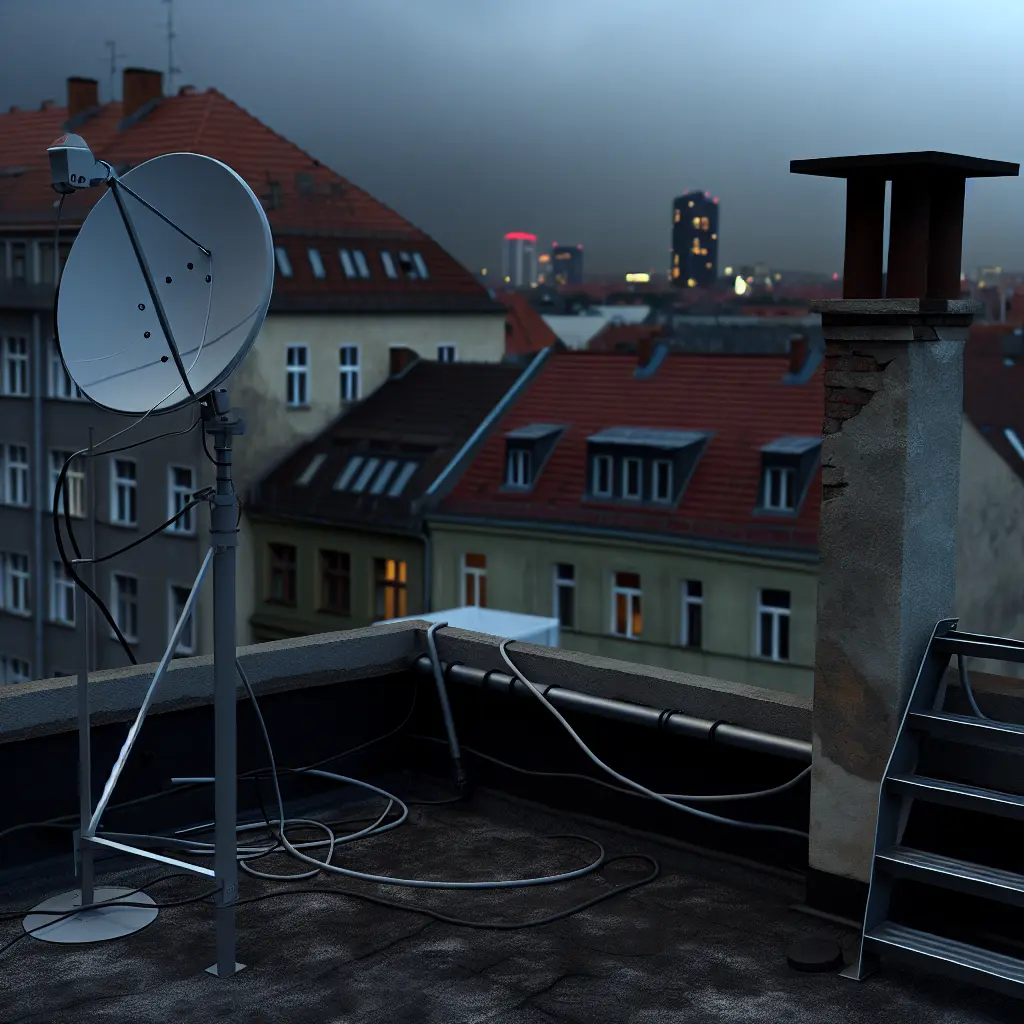
Last week, a coalition of Wedding residents, expats, activists, and one guy who “used to work in aerospace” (meaning he once assembled an IKEA lamp without crying) installed a discreet satellite dish on a roof near Leopoldplatz.
Not to evade the morality police. Not to outmaneuver censorship. No—because the building’s internet collapses every time someone starts a Zoom call, a revolution, or a “quick check-in” with their therapist.
The collective calls it Project Free Sky, which sounds heroic until you learn the first use case was streaming a neighborhood meeting after the moderator muted someone “for tone.” Yes, the first political prisoner of Wedding is a man named Luca who insisted the courtyard compost is “a colonial narrative.”
Censorship, But Make It Berlin
Iran’s activists face deliberate shutdowns. Wedding’s residents face a more spiritual form of repression: a router perched on a shoe rack like a failed altar, surrounded by old mail and the smell of damp ambition.
Locals insist the outages are “structural violence.” Landlords insist it’s “user error.” The router itself, like a character from a Beckett play, refuses to explain anything and keeps blinking like it’s flirting.
One resident compared the experience to watching Antonioni: “Nothing happens, and yet somehow I’m still furious.” Another said the dish made them feel “seen by the cosmos,” which is a polite way of saying they finally got 20 Mbps without having to make eye contact with a technician.
The New Underground Press: Instagram Stories
With the dish online, the neighborhood immediately began publishing high-risk content:
- A 47-part Instagram story exposing a café that charges extra for oat milk “because it’s political.”
- A livestream of a dog-owner screaming “consent!” at a toddler.
- A PDF zine titled Dialectics of the Stolen Package, which is basically Walter Benjamin with tracking numbers.
This is where the satire bites: people in Iran use connectivity as a lifeline. People in Wedding use connectivity as a ring light for their personal brand of righteousness.
Still, there’s an uncomfortable respect here. The same infrastructure that helps someone survive a crackdown also helps a Berlin creative survive being mildly disagreed with. History is a flat circle, and it’s charging €14 for a natural wine.
Surveillance Anxiety: Now With Better Coverage
The moment Starlink went live, someone suggested the dish might be “compromised.” Not by Iran, obviously—by the building’s WhatsApp group, which has the paranoid energy of Foucault if he ran a tenant association.
A resident proposed a “rotating encryption committee.” The proposal met stiff resistance from people who can’t remember their own door code. Another demanded “a deep dive into the data,” then admitted they don’t know what data is, exactly, but they hate it.
Meanwhile, the dish just sits there, quietly penetrating the sky with the innocence of a household appliance and the menace of a new argument.
A Small Moral Point, Hard to Swallow
It’s easy to romanticize tech as liberation when your biggest enemy is a regime. It’s also easy to romanticize it when your biggest enemy is a neighbor named Annika who keeps “temporarily” storing furniture in the stairwell.
But the Iranian story lands in Wedding like a dropped plate: loud, messy, and impossible to ignore. Connectivity can be resistance. It can also be narcissism with better upload speeds.
Either way, the dish is staying up—until the landlord notices, tries to monetize it, and rebrands the roof as a “satellite wellness terrace.”