Starshield Goes Dry: Kyiv’s Sky Waits Its Turn
Ukraine says the military link vanished without warning, and troops discovered who gets to stay desired when the signal goes cold. In this war, access is a lover with a switch and no apology.
Global Affairs & Kiez Mischief Correspondent
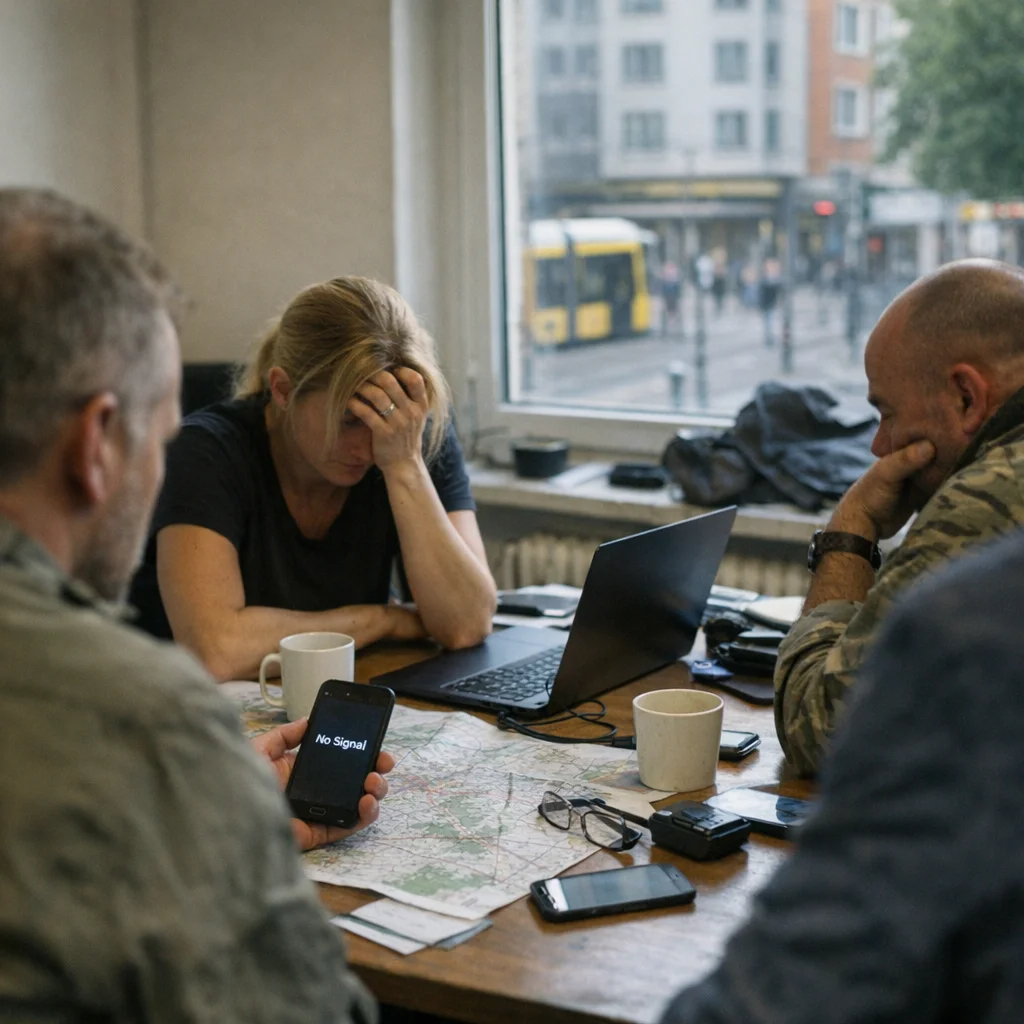
At a drab logistics office in Mitte, Berlin defense contractors and a few very nervous consultants spent Wednesday pretending not to notice that Ukraine’s Starshield-linked drone feed had gone cold. The room had the brittle hush of men waiting to be called back after a bad date: jackets still on, phones face-up, everyone acting like they had not spent months selling themselves as indispensable and exclusive.
By late morning, one procurement manager who asked not to be named because he still works in “strategic mobility” and cannot survive being seen as needy, said the throttling had exposed the whole arrangement as what it was: a private line dressed up as national destiny. “Everybody in this city loves being the one a system keeps answering,” he said. “Nobody enjoys finding out the line goes dead the second someone higher up wants to save bandwidth for someone prettier.”
That landed hardest in Wedding, where the news moved from Turkish cafes on Müllerstraße to the coworking lofts near Leopoldplatz and then to a basement bar with a war map on the wall and a bartender who talks about “solidarity” the way landlords talk about “community”: as long as it doesn’t cost anything. The old crowd read it correctly at once. Power had promised constant access, then gone cold to remind everyone who was begging. The new crowd, all black coats and imported urgency, immediately translated the whole thing into “resilience” while ordering oat milk and checking whether the right people had seen them care.
At a Prenzlauer refugee-network meetup held in a former storage room off Müllerstraße, a volunteer named Derya Kaya said the room soured the moment someone suggested “platform diversification,” which is startup language for making the abandoned wait in several queues at once. “They call it interoperability when they still want you available on demand,” Kaya said. “Then the signal cuts, and suddenly every generous promise has the texture of a locked bathroom door.”
The defense contractors were the worst at pretending this was technical. One man from a firm near Friedrichstraße kept using the phrase “redundant pathways” like a man trying to sound romantic after being told he was replaceable. Another, from a company with a slick website and no visible shame, said the market simply needed “more options,” which in Berlin usually means the privileged looking for a second place to be disappointed from. The whole office talked like people describing a relationship that had gone from exclusive to unpaid.
Berlin officials, naturally, found a way to make the humiliation sound like governance. A federal cybersecurity office spokesperson said the state was “monitoring the situation closely,” which in this city means a folder has been opened and left to dry on a radiator while everyone waits for a minister to discover courage in a briefing paper. The federal line stayed correct, sterile, and entirely useless—the bureaucratic equivalent of saying you are still thinking about someone while already texting a different crush.
Meanwhile, the contractors began pitching alternative channels, backup relays, and “continuity solutions,” the sort of language men use when the main arrangement stops answering and they want to sound entitled to another chance. Their real panic was simpler: if the feed could be throttled once, then all their supposed exclusivity was just a lease. Not a bond. Not a guarantee. A subscription with a hand on the dimmer switch.
On the street, the joke was less elegant and more honest. Around Wedding, people who have spent years being priced out, dialed down, or politely ignored recognized the pattern immediately: access is always sold as mutual desire until one side decides it can afford to withhold. The drones dropped, the markets adjusted, and the city did what it always does when power starts rationing attention—it turned the whole thing into a panel, a deck, and a networking breakfast where everyone pretended the cutoff was temporary and nobody was desperate.
By evening, one contractor finally admitted the question was no longer why the link had been throttled but who would be let back on first. That is the real posture of the powerful here: shoulders squared in public, then quietly refreshing the inbox like a jealous ex pretending it is all just logistics. In Berlin, even war gets managed like a bad flirtation—someone always waiting by the phone, someone else deciding whether the silence is strategic or simply a better offer.