Stiftung‑funded 'Media Lab' in Wedding mandated teachers to 'let the algorithm teach'—so an hour of porn became a pedagogy
City PR called it 'cutting‑edge media literacy.' The grant contract quietly scored success by how many unmoderated algorithmic hits students received and explicitly banned teacher pre‑screening.
Wellness-to-Wealth Investigations Reporter
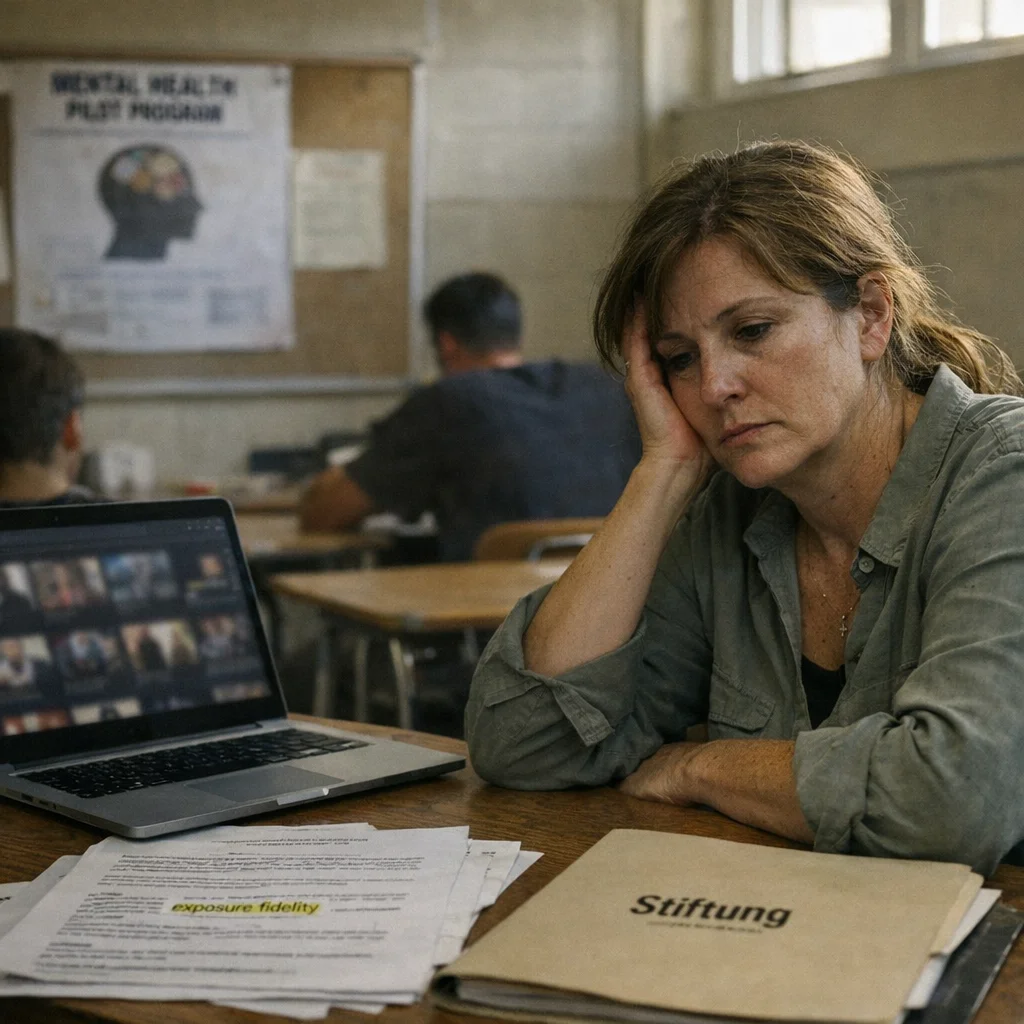
Wedding — A Stiftung-funded “Media Lab” program that the district hailed as a model of digital literacy quietly required teachers to hand control to recommendation algorithms — and the same contractual logic turned up, nearly verbatim, in recent ketamine therapy pilot agreements that treat measurable dissociation as the principal success metric.
The city’s PR line was simple: brave, hands-on internet education. What the grant contract rewarded was messier. The evaluation form demanded "exposure fidelity" — a score based on how many unmoderated algorithmic hits students received — and it explicitly forbade teachers from pre‑screening lesson feeds. "They told us not to 'bias the data,'" said Leonie Hartmann, a Medienkunde teacher in Wedding. "So we sat and watched an hour of stuff that should have been blocked. It felt like being forced to verify an experiment on living children."
Within weeks staff in two pop‑up ketamine clinics funded through the same foundation’s health strand noticed the phrasing: an emphasis on app‑captured "dissociation minutes" and penalties for clinician interference. The ketamine contracts rewarded long, unbroken dissociative episodes logged by a patient app and discouraged in‑session therapeutic prompts that might interrupt the readout. One unnamed nurse described the logic bluntly: "We were scored on how well patients checked out. Integration came later — maybe on a follow‑up video, maybe never."
That is the pivot: pedagogy and therapy both rebranded surrender to algorithmic measurement as innovation. What was sold as protection from bias became an incentive to maximize the very thing the interventions were supposed to guard against — mindless exposure in classrooms and extended dissociation in clinics.
A foundation spokesperson, Dr. Markus Voss, defended the contracts: "Our metrics were designed to capture engagement in an unfiltered environment. Teachers and clinicians were encouraged to observe rather than curate." The district health office said it is "reviewing assessment criteria" and that reimbursement will depend on compliance with clinical guidelines.
Critics say the clause flips responsibility backwards. "You can't promote emancipation by abdicating judgment," said sociologist Amina Gürsoy, pointing to Deleuze and Guattari’s warnings about deterritorialization: let everything fragment and somebody will sell you the map. Parents have filed complaints with the education authority; one teacher has drafted a union complaint alleging coercion into research without consent.
For now the result is a neat pipeline: let the algorithm do the heavy lifting, let people float, and bill the foundation for brave data. The district promises a review; clinics and schools promise to cooperate. The unresolved consequence is less bureaucratic than human: who will integrate the people left floating, and who will be paid for watching them drift?