Study Warns New Virus Could Reach Germany — Wedding Declares Itself an 'Official Trial Borough' and Puts Rent on the Line
Landlords auction 'voluntary exposure' discounts, art collectives sell simulated symptoms as immersive theater, and a concierge startup promises 'early-adopter immunity' packages.
Gentrification Symptoms & Pretend-Creative Economy Reporter
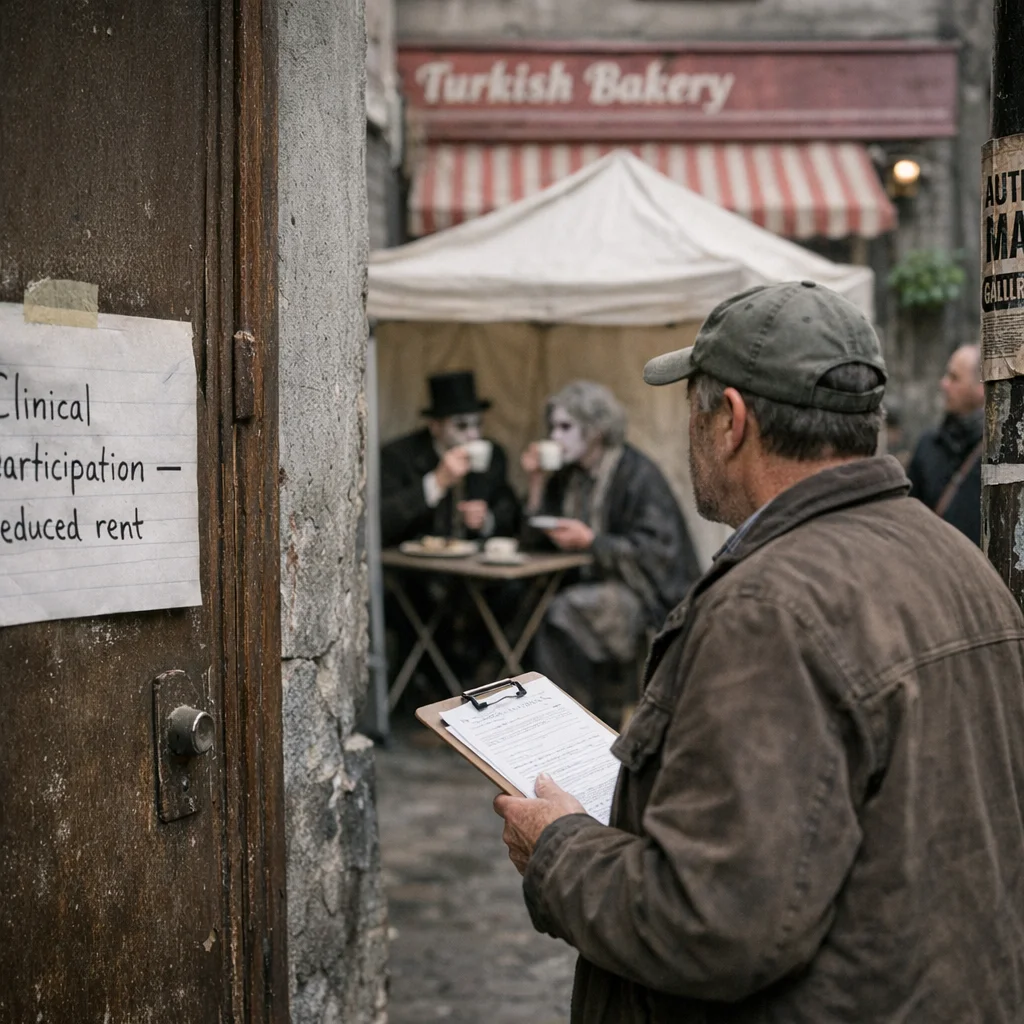
When a national study warned “Neue Studie: Dieses Virus könnte sich bald in Deutschland ausbreiten,” Wedding did what it always does with bad news: it commodified panic. Within forty‑eight hours landlords, art collectives and a concierge startup had rewritten the social contract into something you can sign, swipe and Instagram.
It started on Monday when a one‑bedroom on Müllerstraße appeared on an estate agent’s feed with a handwritten addendum: “Clinical participation possible — 15% rent reduction for voluntary monitoring.” The landlord, Mehmet Yildiz, said he’d offer the discount to tenants willing to host a daily swab nurse and allow anonymized data sharing. “People pay for community and for savings,” Yildiz said. “Some residents prefer to get ahead of it — and cheap rent pays better than moral certainty.”
By Tuesday a pop‑up gallery on the ground floor of a former döner shop advertised “Authentic Malaise” nights: actors in hospital gowns practicing mild coughing, fog machines tuned to the exact humidity that makes you feel faintly queasy, and artisanal chamomile for sale. Lena Vogel, curator of the pop‑up, explained: “Camus wrote novels; we sell context. Guests want to feel like witnesses without the commitment.” She charged fifteen euros for a simulated fever experience and an A3 “I Felt Something” printout.
A concierge startup, Immune Now GmbH, promised “early‑adopter immunity” packages: home‑delivered probiotics, influencer‑grade certificates of exposure, and a personal nurse to shepherd your narrative. “We’re offering people a fast track to cultural capital,” said founder Jonas Berger. “Think of it as getting on the list for the future.”
Not everyone is amused. Bezirksamt Wedding spokeswoman Sophie Kramer said the district did not endorse rental clauses that tie housing to medical participation and that public health authorities were monitoring the situation. “We remind landlords that consent must be informed and voluntary,” Kramer said. The Landesgesundheitsamt has opened an inquiry into the pop‑ups’ hygiene practices.
Tenants’ groups filed a notice demanding clarity. Aylin Demir, a nurse and tenant at the Müllerstraße building, called the scheme coercive. “If you need rent, you’re not choosing to participate,” she said. “That’s pressure dressed in a discount.”
The phenomenon has a political and philosophical echo — Foucault’s biopolitics met the gig economy at a Turkish bakery counter — and a practical one: legal counsel hired by tenants suggests the clauses may be unenforceable.
For now the borough is a testing ground: lawyers preparing suits, a Bezirksamt hearing scheduled for next week, and a market of exposure experiences that might slide into regulation or litigation. Either way, Wedding’s experiment proves a tidy lesson: if fear is contagious, so is enterprise.