Succession’s Other Line, Saxony Keeps 113 Warm
Saxony’s sprawling roster of commissioners, ombudsmen, and policy courtiers costs 3.2 million euros a year, and nobody in power seems willing to admit it exists mostly to make bureaucracy feel important enough to be.
Administrative Grief Correspondent
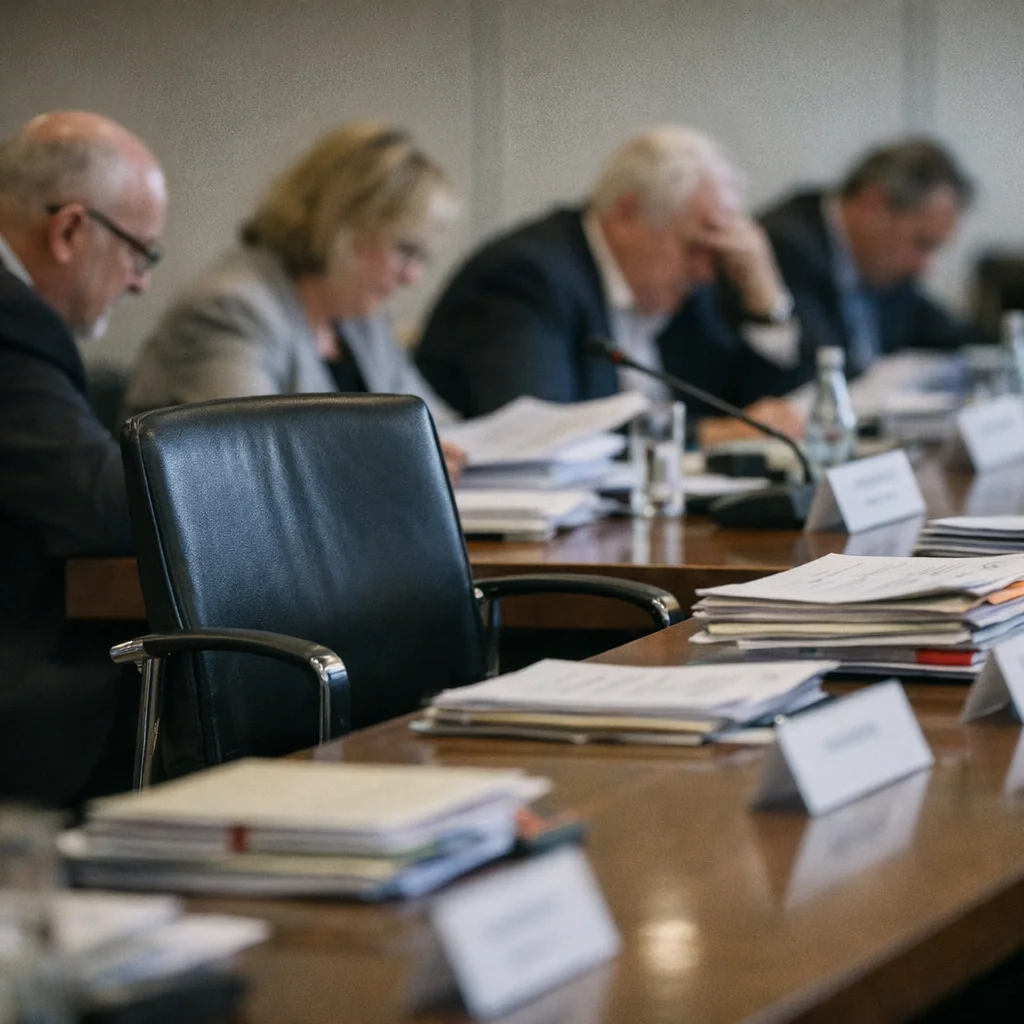
Saxony’s political class has built itself a very expensive arrangement for avoiding direct touch. There are 113 posts now devoted to standing between public anger and the people who caused it: commissioners, ombudsmen, special representatives, complaint shepherds, and other officeholders whose real job is to be handled at a safe distance. The annual bill is 3.2 million euros, which is what the state pays to make bureaucracy feel like it still has a pulse and a spine.
The roster reads like a government that has hired a succession line for its own nerves. Every scandal gets a chaperone, every failure gets a liaison, every ministry gets someone to wear the clean shirt and take the awkward first contact. The names change, the titles multiply, and the structure stays obediently open for business, like a private club that has mistaken velvet curtains for accountability.
In Dresden, the arrangement has become a kind of political foreplay: lots of positioning, lots of titles, lots of breathless talk about “coordination,” and very little actual contact with the thing that is supposed to be fixed. The ministries keep their hands clean while the commissioners do the intimate labor of receiving complaints, smoothing outrage, and absorbing the administrative bruises that should belong upstairs. It is a state-sponsored slow dance in which power never has to undress its excuses.
“Whenever a problem starts kicking at the door, Saxony doesn’t answer it,” said Martin Keller, a budget watchdog in Dresden who asked not to be named because his office shares a printer with one of the assistant bureaus and he has seen how quickly paper becomes revenge. “It sends out someone in a blazer to stand very close to the mess and make eye contact with the public.”
That close but not too close posture suits the governing parties just fine. Conservatives can point to the commissioners and call the state disciplined. Progressives can point to them and call the state compassionate. Both readings flatter the same machinery: one hand reaching for moral authority, the other hand tucked safely behind a stack of forms. Nobody has to admit the obvious, which is that the entire setup exists so elected officials can look like they are in the room without ever having to sit on the bed they made.
Several people inside the ministries describe the posts less as a reform than as a buffer zone with a salary. When a school roof collapses, when a housing complaint rots for months, when a transport fix arrives after the public has already aged into bitterness, the commissioner is the warm intermediary positioned between the scandal and the office that signed the budget. They take the heat, file the notes, and keep the governing class from feeling the full sting of its own incompetence. The state gets to remain technically available and emotionally unavailable, which is the preferred posture of any administration that wants praise without exposure.
The official defense is coordination, a word that in government usually means “we have created another layer so nobody has to admit whose layer failed.” The commissioners are said to improve communication, strengthen trust, and make the system more responsive. In practice, they mostly make the system better at imitation: it can now simulate concern with a dedicated salary line and a tasteful letterhead, like a man who has confused cologne with intimacy.
The finance committee is expected to review several of the positions again this fall, though insiders say the likely outcome is a rearrangement of the same bodies in slightly different chairs. In Saxony, the real luxury is not the titles themselves. It is the promise that someone else will always be made to hold the public’s gaze, keep the language soft, and stand there taking the pressure while the powerful keep their distance and call it governance.