Tactical Chic Invades Leopoldplatz as Ammo Scandal Becomes a Lifestyle Trend
After reports that U.S. military ammunition flooded Mexican cartels, Wedding's flea stalls and boutique cafés suddenly sell the look — stamped crates, camo aprons and moral ambiguity.
Crime & Kiez Satirist
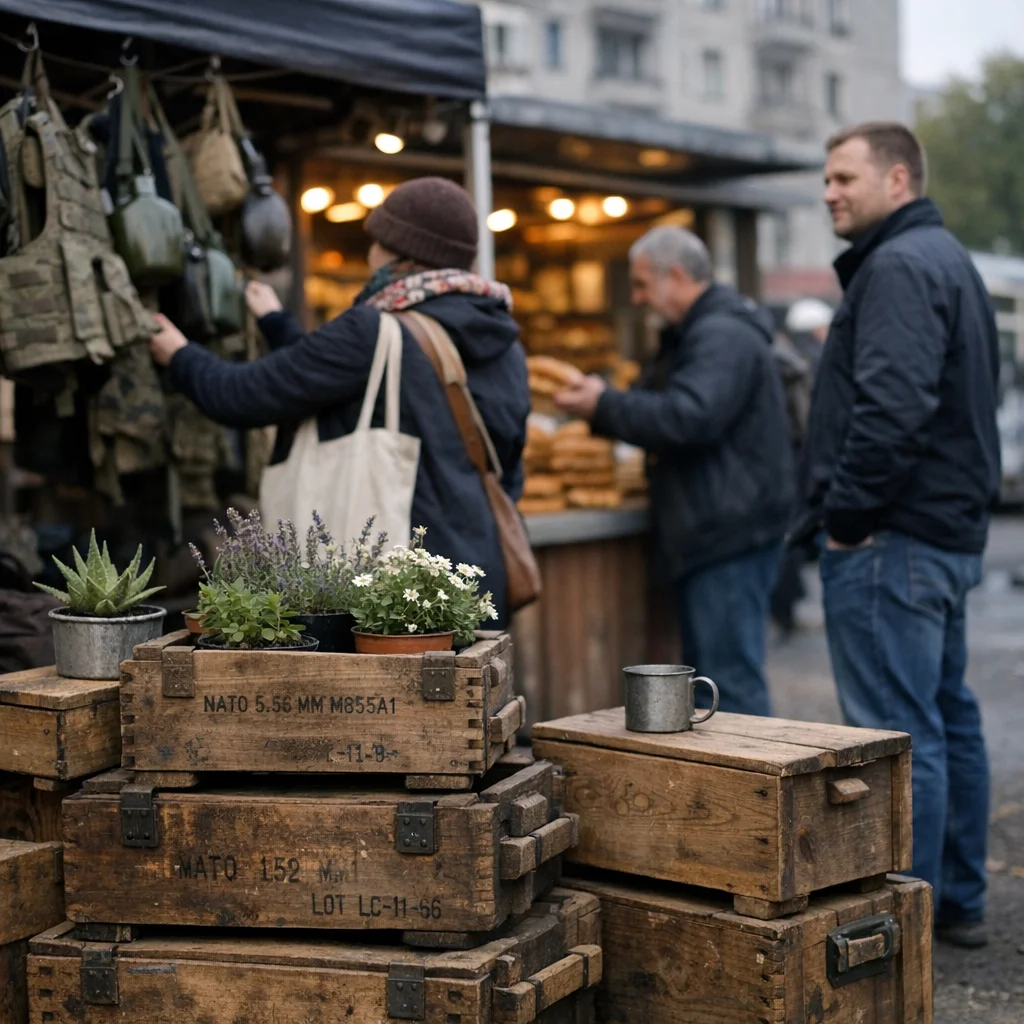
When the New York Times ran a story about Mexican cartels being overwhelmed with ammunition manufactured for the U.S. military, nobody in Wedding expected a delivery truck full of consequences. But consequences, like bad décor trends, have a way of crossing borders.
From Actual Bullets to Boutique Backdrops
What arrived in Wedding this week was not live ordnance (calm down, safer neighborhoods), but the look of it: NATO‑stamped wooden crates used as coffee‑table statements, tactical vests hung in gallery windows like ironic coats, and enamel canteens rebranded as “heritage hydration.” Leopoldplatz now hosts a weekend stall selling repurposed ammo boxes as planters next to a Turkish bakery where the owner, Fatih, sells simit and a suspiciously trendy canvas messenger bag labeled "SPEC OPS".
“People like things that look like they survived something,” said Luca, who runs a boutique that once sold artisanal pickles and now sells camo aprons. “It’s the aura — like Walter Benjamin crossed a flea market with a catalogue.” Benjamin, one imagines, would have cursed softly and then written a short essay about the aura of an object that used to be useful and is now purely symbolic.
This is Baudrillard’s simulacrum in a shopping bag: the original function (military supply) evaporates, leaving a hyperreal version that performs toughness without any of the danger. It’s comforting in a very Berlin way — an aesthetic that lets you feel gritty while sipping oat milk.
Police, PR, and Kafkaesque Paperwork
Local police were vaguely involved, in the manner of authorities who have to pretend to understand both geopolitics and Instagram. “We are monitoring reports; we are not monitoring fashion,” said an unnamed officer who sounded like they wished a uniform came with a manual for influencer disputes. The scene was Kafkaesque — forms were filled out, statements were given, and nothing changed except the aesthetic direction of three cafés.
If the Mexican cartels were overwhelmed by a flood of U.S. military ammunition, Wedding residents are overwhelmed by a flood of objects that make it appear as if something violent once happened here and was then lovingly restored and upcycled. There is a dissonant intimacy to it: the objects are hard to swallow as history, but easy to hang over a sofa.
The Economics of Authenticity
Nobody is pretending these crates are contraband. They’re sold as “vintage surplus” or “industrial heritage” — the passive voice of gentrification. Landlords have noticed. One real‑estate agent suggested listing a unit as “authentic Napalm‑era storage potential” before deciding the joke was illegal and changing it to “industrial character.” Rent increases follow trends faster than a delivery service.
Meanwhile, Turkish family‑run shops watch the march of tactical chic with a mixture of amusement and exasperation. “We sold actual supplies for forty years,” Fatih muttered while wrapping a simit. “Now they want the look and an origin story printed on a cardboard tag.” The old owners are losing customers to curated kitsch — an ironic form of displacement: physical shops remain, but their cultural meaning is leased out by novelty vendors charging by the square meter of nostalgia.
Nightmares of Soft Power and Stiff Resistance
There is something obscene about turning instruments of violence into conversation pieces, and Wedding is not immune. The international origin story matters: ammunition manufactured for a superpower, siphoned into violence across borders, then reworked into decorative objects sold under the rubric of "authenticity." It is not only morally awkward — it is a perfect metaphor for global capitalism's talent for rebranding culpability into lifestyle.
Some residents have staged an informal counter‑exhibition: a pop‑up titled "From Ruin to Reuse" where actual military surplus is explained, contextualized, and ethically questioned. Attendance was low, but the conversation was fierce — a deep dive into provenance that many preferred to avoid at the farmers' market.
What Wedding Might Do About It
Ideas floated around the Kiez: require merchants who sell militaria‑adjacent goods to post origin stories, tax decorative authenticity, or institute an "Anmeldung for Armor" so every tactical vest sold comes with a registration form and a pamphlet on postcolonial logistics. These plans are as realistic as a startup’s pivot to premium pickles, but at least they feel like action.
At the end of the day, the problem is not objects. It’s appetite. Gentrifiers want their edges without consequences; markets want narratives that sell; geopolitics wants attention. Nobody wants to admit how delicious it is to wear tough‑looking clothes while complaining about global inequality over a $6 flat white.
If Walter Benjamin's Angel of History were hovering over Leopoldplatz now, he'd be drenched in espresso and muttering about ruins turned into living room accessories. Baudrillard would smile, raise a glass, and then probably start a small line of NFTs called "Simulacra: Authenticity Edition." The rest of us will keep buying planters shaped like ammunition crates and arguing about whether something is ethical or merely aesthetically convenient.
One sensible suggestion: if you're going to buy a stamped crate, at least use it to hold houseplants. Repurpose honestly. Penetrating the market for meaning is one thing; pretending you understand the shipment routes behind it is another. Deep dive into provenance, or shut up and water your succulents.