Take a Swab, Get a DM: How Wedding’s 'Safer Testing' Turns Pill Checks into Promo Funnels
Everybody says the point of on‑site drug testing in Wedding is safety. Lean closer and you see the cotton swab’s little stamped code that matches the same promoter IDs printed on guestlist sheets, and the tester’s tablet that auto‑checks a consent box: the service meant to protect you quietly.
By Lina Paypass
Night Economy & Digital Vice Reporter
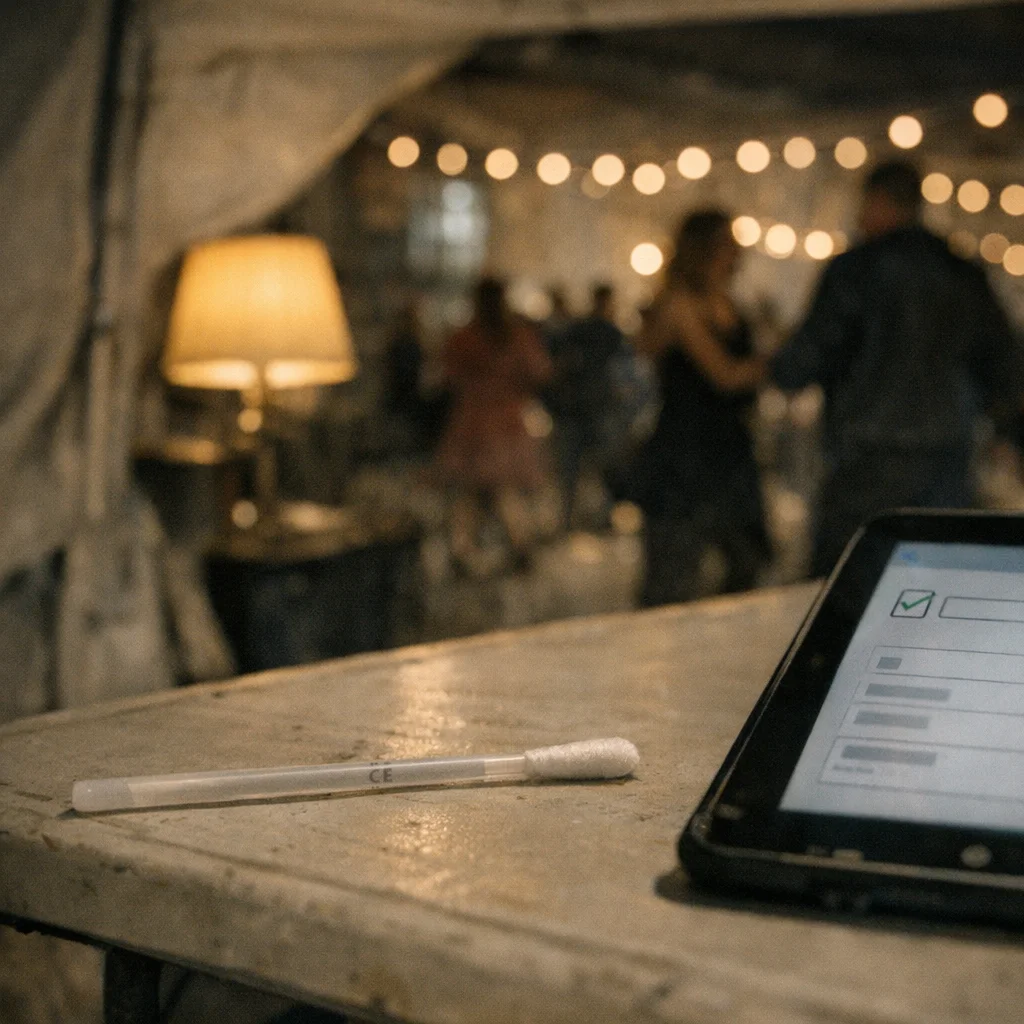
Who: partygoers, harm‑reduction volunteers, and promoters in Wedding. What: on‑site drug‑checking tents sold as anonymous safety services are instead feeding marketing funnels. Where: weekend events at converted factories and riverside parties across the neighborhood.
Volunteers set up folding tables under warm table lamps and hand out cotton swabs with the language of harm reduction: "anonymous," "confidential," "know your mix." Shortly after last month’s Sisyphos‑adjacent marathon, several ravers reported the same curiosity: a DM offering discounted guestlist entry and a free drink, sent within hours of their test.
The small, physical clue that rearranges the story is not a database or a server label but a tactile two‑letter glyph pressed into the plastic base of each swab. A promoter ID printed on guestlist sheets — the same odd pair of letters — matches the glyph. On the other side of the table, testers log samples into a tablet app with a checkbox pre‑ticked: “share with partners.”
"I thought it was a one‑off until my friend got the same message," said Mira Yilmaz, 29, who works nights in a Turkish bakery on Müllerstraße and DJs on the weekends. "They told me I tested negative, then invited me to a paid after‑party. It felt like my safety had been converted into an ad slot."
Organizers who brought the tents insist the swaps are about preventing harm. "Our volunteers never link identities to results," said Lukas Fiedler, who runs a mobile testing collective. "If a machine misbehaves we'll fix that." Yet Fiedler declined to explain why his tablet’s consent screen defaults to sharing, or why promoter codes are printed on guestlists distributed at the door.
District officials say they were alerted this week. "Data protection and public‑health rules must be respected," said Dr. Jana Köhler of the Mitte outreach office. "We will audit the providers and review consent practices." The local police said there are no criminal charges yet, though the data protection authority has opened an inquiry.
A spokesperson for a well‑known promoter called the allegation "an operational misunderstanding" and suggested it was a case of "aggressive grassroots marketing." That phrasing — grassroots that grabs your inbox — reads differently when the physical object you trusted bears the same stamp as the ad that follows.
As debates over nightlife safety erotically flirt with surveillance, harm reduction clinics have suspended tents at several weekend events while officials probe. The immediate consequence: fewer on‑site testers, more anxious ravers trying to judge risk by smell and story. If Foucault liked to show how bodies become sites of power, tonight he would probably admire how a tiny pressed glyph gets more traction than any pamphlet about consent.