Take What You Need, Scan What You Are: Wedding’s Community Fridge Turns Free Food Into a Loyalty Program
City press releases call it mutual aid; the fridge’s tiny peel‑off stickers and shelf QR codes quietly invoice your solidarity to cafés and advertisers.
By Lina Paypass
Night Economy & Digital Vice Reporter
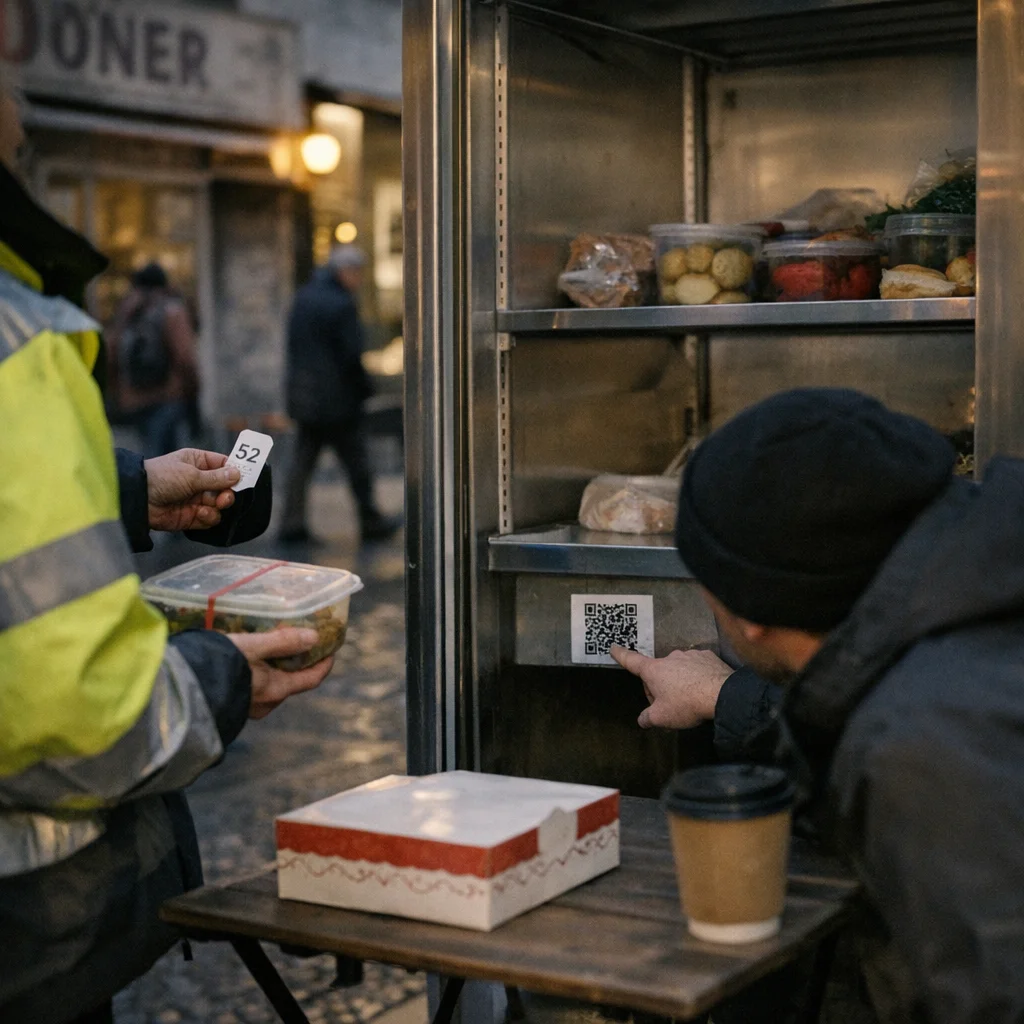
The stainless steel box on the corner of a side street in Wedding arrived with polite municipal fanfare: mutual aid, climate action, community resilience. Volunteers stocked it with surplus bread from a Turkish bakery on Müllerstrasse and leftover salads from a nearby co-op café; council press releases called it a civic triumph.
What changed, day by day, wasn't the food but a tiny mechanical rule stuck beneath a shelf: anyone who takes something must peel a numbered sticker off the dispenser, slap it on the item, and then scan the QR taped under the shelf.
At first glance the ritual looks bureaucratic — tidy, trackable, compassionate. Up close it acts like a register: each peel-off links a quasi‑anonymous token to a timestamp, and the QR resolves that token into a chain of sponsor IDs. "We wanted to avoid people taking the entire fridge at midnight," said Aylin Kara, who runs the volunteer rota. "The labels help with stock and hygiene." She paused when pressed about the data. "Partners receive aggregated numbers, not names. It's for sustainability." She smiled the way people smile when a small backdoor arrangement is being explained away.
The practical effect is odder and crueller. Cafés and advertisers buy slices of the fridge's usage feed and treat it like a customer pipeline: someone scans a salad at 3 a.m. on a Tuesday and, in the ad dashboard, that entry becomes a weekend‑brunch prospect. Marketing dashboards reassign temporality to suit conversion goals — effectively turning other people's Tuesdays into somebody else's Saturdays. Mehmet Sahin, a night-shift security guard who relies on the fridge, laughed bitterly: "I took soup at two in the morning and got an email for Sunday bottomless brunch. I genuinely forgot what day it was — because they did."
Felix Neumann, owner of a small café that sponsors the fridge in exchange for branded stickers on the shelf, admitted the business case plainly: "We get foot traffic, we send offers. It's a small price to pay for keeping the fridge stocked."
District office spokeswoman Anna Berger defended the setup: "The project is voluntary, GDPR-compliant and anonymous. We monitor for abuse." Asked whether turning mutual aid into a loyalty funnel felt like commodifying hunger, she replied, "We call it partnership." The word sounded like a contract clause.
Walter Benjamin would have enjoyed the irony: an arcaded commerce of leftovers, public generosity refracted into commodity data. Volunteers are now debating whether to peel off the peelers — covering QR codes, refusing sponsor logos — while a startup has already asked to A/B test the sticker design to "optimize emotional engagement."
For now the fridge keeps giving. The council will review the sponsorship terms next month. Activists plan a midnight intervention; marketers plan to sell the afterparty. Either way, somebody will keep mislabeling days to make the numbers look sexier.