Tannhäuser at the Bürgeramt Wants Your Application First
A new district filing rule lets overbooked civil servants decide who gets processed, who gets bounced, and who gets quietly propositioned by paperwork.
Administrative Grief Correspondent
Tannhäuser at the Bürgeramt Wants Your Application First
A new district filing rule lets overbooked civil servants decide who gets processed, who gets bounced, and who gets quietly propositioned by paperwork.
The office calls it efficient triage. In practice, it is an intake flirtation with all the tenderness of a locked door: a system that makes residents line up, undress their files, and wait to see which clerk will grant them entry, which will send them away unfinished, and which will keep them hanging under fluorescent lights until they start apologizing for having needs at all.
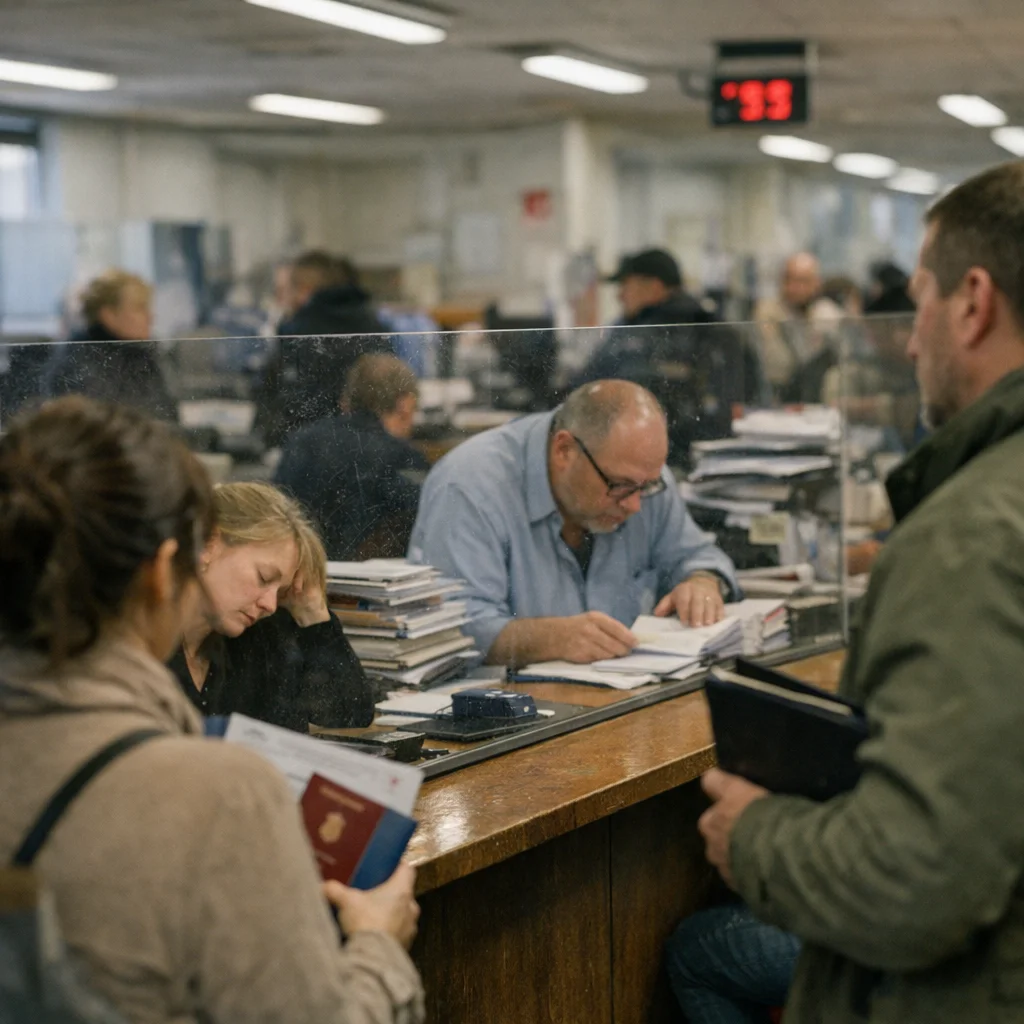
At the Bürgeramt on Müllerstraße in Wedding, the new rule arrived wrapped in the holy language of the modern district: throughput, readiness, capacity, fairness. The vocabulary was so clean it almost smelled disinfected. Then the counter opened and the real choreography began. Applicants place their papers on the glass, step back, and wait while staff “assess readiness,” a phrase so bureaucratically lubricated it sounds like consent written by a committee that lost the plot and the keys.
The result is not order. It is a selective courtship ritual in which the office chooses who gets touched by the stamp and who gets left sweating in the waiting area. A complete file does not guarantee processing. A polite face does not guarantee mercy. What matters is whether the clerk is in the mood to be generous, whether the stack on the desk has already made them cruel, whether your documents arrive with the right amount of humility and the wrong amount of confidence.
Residents have learned the posture of the office’s appetite. Speak too sharply and you are told to come back another day. Smile too eagerly and you may be kept longer, as if gratitude were foreplay and delay were the price of admission. One woman waiting for a registration appointment described it as “being inspected for whether the state wants me or just wants me to wait.” Another man, a delivery rider from Leopoldplatz with a folder held together by tape and rage, said the place “makes you stand there like a suitor while they decide if your papers are worth the effort.”
A clerk, speaking on condition of anonymity because the public has a tiresome habit of confusing fatigue with sainthood, said the office was simply protecting throughput. That word now appears to mean any system in which exhausted people get to distribute punishment while calling it care. “We can’t process everyone,” the clerk said. “So we prioritize readiness.” In Wedding, that translates roughly as: if you look easy to handle, you get handled; if you look difficult, you get left outside with your dignity folded into a numbered ticket.
The district office said the policy was designed to reduce wasted appointments and prioritize complete files. It was the kind of explanation that arrives wearing a tie and smelling faintly of panic. Officials also spoke of “calming pressure points,” which is what institutions call it when they discover they can turn scarcity into a bedside manner and make the public grateful for being slowly undressed by procedure.
Near Leopoldplatz, people have already adapted to the new etiquette. Men in pressed shirts arrive with their documents sorted like gifts for a difficult lover. Students from the bars and sublets around Seestraße whisper to one another about which clerk is “in a good mood” as if discussing a door policy at a club with worse lighting and no music. A Turkish bakery owner on Müllerstraße said the whole thing resembles bad dating dressed as administration: “You bring everything, you wait your turn, and still they act like they’re the ones being pursued.”
That is the genius of the arrangement. The Bürgeramt gets to play chooser, judge, and reluctant partner all at once. It can withhold the stamp like a body withholding a response. It can make residents prove they are worthy of being taken in, then call that public service. And because the language is all neutrality and throughput, nobody has to admit what is happening: the district has built a little machine for extracting compliance by making people beg prettily for a basic civic act.
By the end of the week, the queue had developed its own etiquette of survival. People lowered their voices. They overthanked clerks. They stood straighter when summoned, as if posture might improve their chances of being chosen. Some arrived with additional copies of everything, the administrative equivalent of bringing flowers to an arrangement that already intends to disappoint you. The office noticed. The office always notices when desperation gets decorative.
District officials say more changes are coming once staffing improves. That is the official punchline, delivered with the serene confidence of a man unbuttoning his cuffs while the room quietly burns. In the meantime, the Bürgeramt continues to audition applicants one by one, deciding who gets the stamp, who gets sent away, and who gets left in the corridor long enough to mistake bureaucratic attention for affection.