Tax Office Launches Loyalty Card for Misery
A new pilot rewards people for returning with the same unpaid forms, missing attachments, and ashamed expression they had last time. The bureaucratic genius is that desperation finally gets its own points system.
Administrative Grief Correspondent
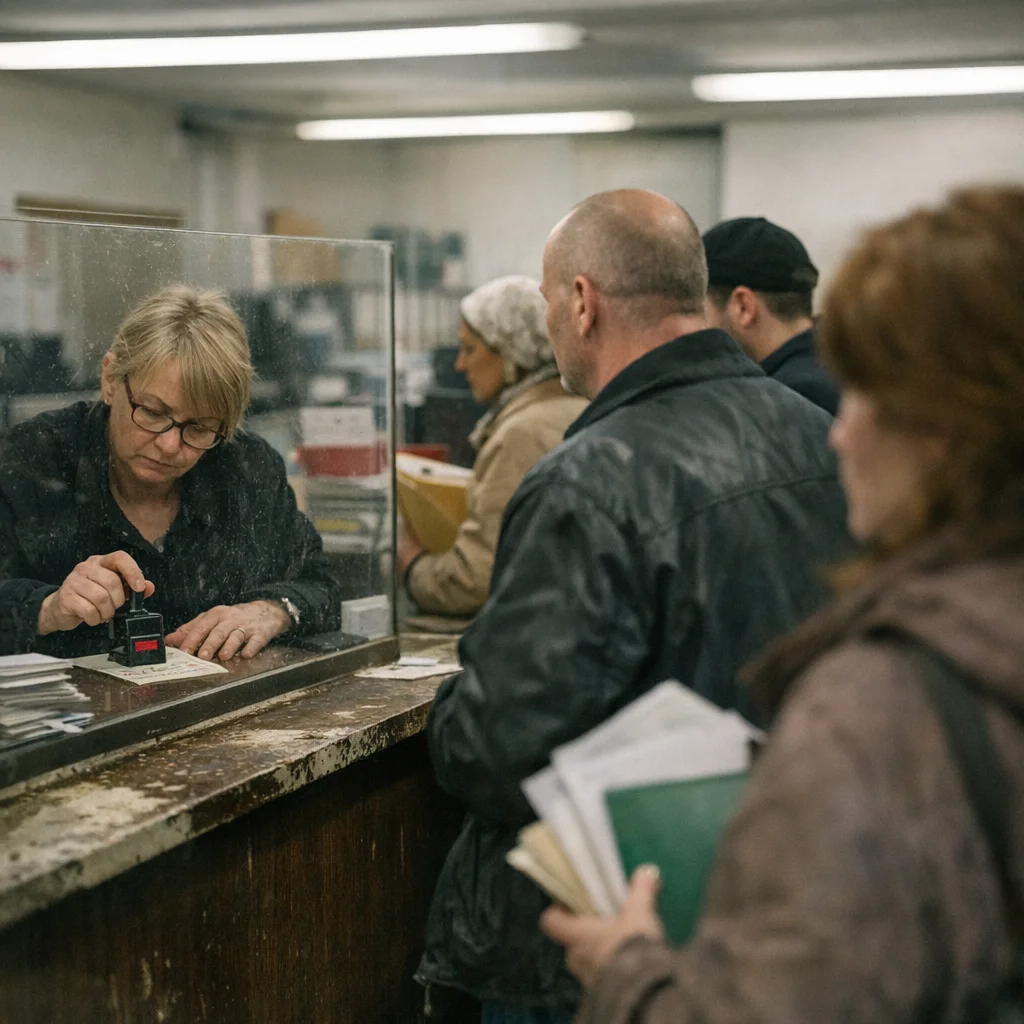
A Stamp for Your Shame, Please
Wedding’s tax office has launched a loyalty-card pilot for the sort of citizen Berlin loves most: the compliant, overfoldered, underfucked taxpayer who arrives early, apologizes before speaking, and leaves carrying the same incomplete file like a wet animal. The program rewards repeat visits with stamps for every fresh round of missing attachments, wrong signatures, and the little flushed humiliation that rises in the neck when a clerk barely glances up long enough to make you feel medically unnecessary.
The office opened the scheme under the usual fragrance of cheap toner, overheated plastic, and institutional breath. Behind the glass sat clerks with the tense, polished boredom of people who have learned to confuse cruelty with workload. One manager, wearing the soft smile of a man who has never carried a box of files in his life, called it “service optimization,” which in district-office German means: make the public queue politely while we pat ourselves on the back for reducing the number of humans per humiliation.
Each failed attempt gets a stamp. Ten stamps unlock a voucher for something pathetic and symbolic: priority disappointment, a free pen that stops working by the tram stop, or a quicker return to the same desk so the clerk can tell you the printer is acting “temperamental” while the room smells faintly of sweat and cold cigarettes. The logic is exquisitely vile. If residents cannot be made rich, efficient, or happy, they can at least be trained into a dependable loop of waiting, apologizing, and coming back with the attachment that was allegedly missing, though everyone in the room knows the real missing item is basic mercy.
This is the morality of austerity dressed as digital progress: fewer staff, more portals, more passwords, more “self-service,” and a managerial class that masturbates over efficiency metrics while outsourcing the emotional cost to whoever still has time off work. The district office calls it modernization because “we have run out of patience” sounds too honest for a press release. The state does not want to solve your problem; it wants to see whether you will remain humble enough to keep trying.
At the counter, the humiliation has a local accent. Müllerstraße commuters, pensioners with greasy folders, and small-business owners from the Turkish bakery strip all get the same treatment: a paper chase conducted by people who would collapse if asked to exhibit one-tenth the resilience they demand from the public. A clerk checks a barcode, sighs as though you have interrupted a funeral, and points to page 4 where your signature is apparently too close to the margin. It is not bureaucracy as much as foreplay for submission.
A nearby café owner called the pilot “honest,” which is the kind of compliment Berlin gives when it has already given up on decency. “At least it admits you’re not a customer,” he said. “You’re a recurring inconvenience with a tax number.” Another resident, after her third visit, said the office had the energy of a man in a loosened tie promising a better future while reaching for your documents with damp, unconvincing fingers.
The district office defended the program as user-friendly, which is a phrase so fraudulent it should require a notary and a warning label. Officials said they were monitoring the pilot, though the monitoring itself reportedly required three forms, two signatures, and a follow-up appointment because the printer in the back room “felt emotional.” That printer, sources said, has already received more respect than the people standing in line.
By midday the waiting area had the glamour of a bad office fetish: fluorescent light, plastic chairs, folders clutched like bruised organs, and one young consultant in immaculate sneakers praising “friction reduction” while visibly sweating at the first request for proof of residence. These are the people who worship efficiency until it asks them for a document. Then they fold like warm paper and start begging the counter staff to be “fair,” as if fairness were not exactly what they spent years helping gut.
The pilot runs through next month, when officials will decide whether to expand it, rename it, or call it innovative and move on. In Berlin, that is what passes for reform: a little varnish, a lot of queueing, and the same old public service grinding its teeth while the managers stand around the carcass smiling at the quarterly numbers.