Tax Office Yoga for the Self-Employed
Wedding’s freelance class keeps discovering that “independence” ends the moment the tax letter arrives.
Administrative Grief Correspondent
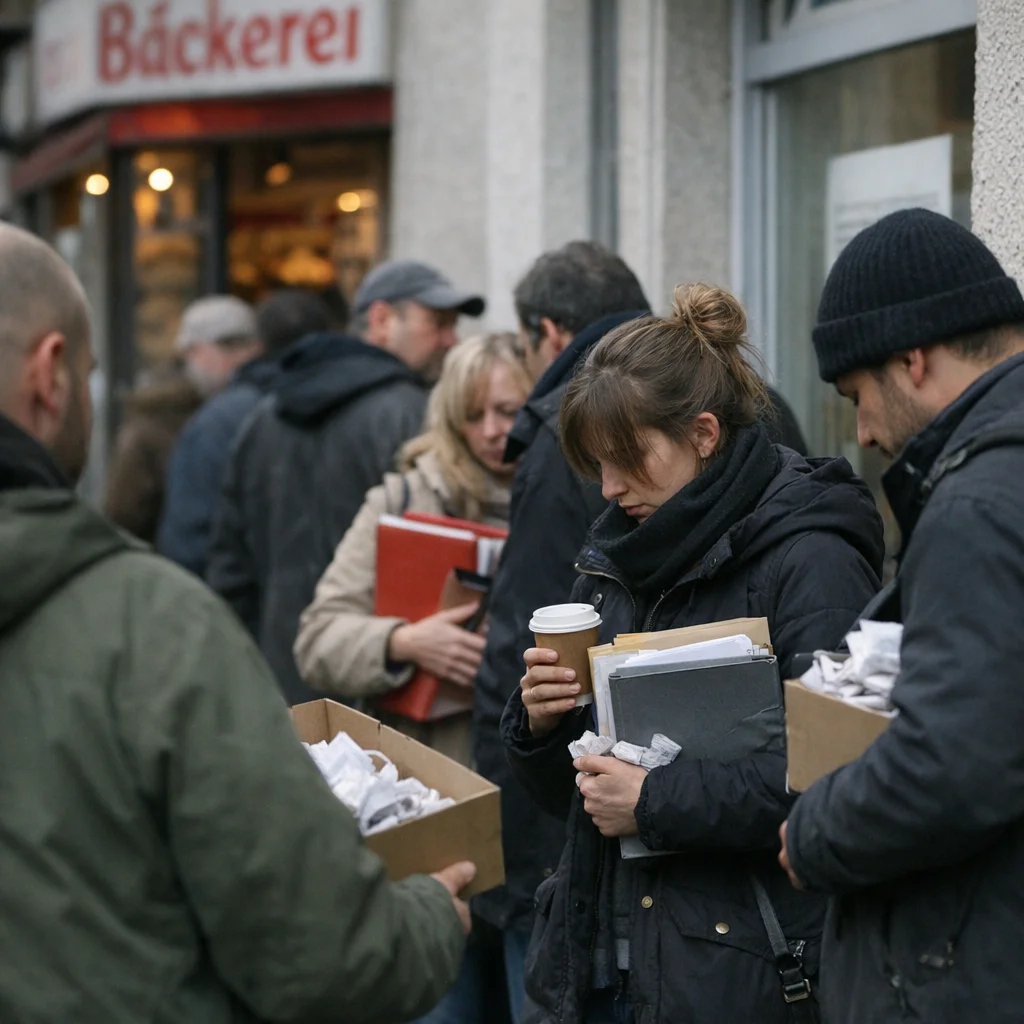
Receipt Confession Booth on Müllerstraße
The self-employed like to talk about freedom the way drunks talk about control: loudly, romantically, and with one hand already reaching for the wall. In Wedding, that fantasy had a date with reality on Thursday morning outside a tax adviser’s office near Müllerstraße, where freelance illustrators, app designers, translators, and one man calling himself a “strategic creative consultant” stood clutching shoeboxes of receipts like evidence in a case against their own dignity.
Inside, the waiting room was arranged for humiliation. Chairs in a neat row. Coffee gone cold. Bank statements spread out like a body at an autopsy. The tax office does not need batons when it has forms: the whole institution works like a petty authoritarian organism, feeding on delay, shame, and the private knowledge that people who call themselves independent are often just outsourced risk wearing a nicer coat.
Everyone had come dressed as though competence might still save them. There were color-coded folders, apologetic smiles, and the brittle posture of people pretending not to panic while their phones buzzed with rent reminders. One woman had the exhausted elegance of someone who had spent the night making invoices look cleaner than her life. A man in expensive glasses kept opening and closing a spreadsheet as if he could seduce the numbers into forgiving him. Berlin loves this sort of self-deception: performative poverty with artisanal fonts.
“People call it independence until they owe money,” said Nadine Arslan, a tax adviser who asked not to be named because several of her clients still owe her for last winter and she is, quite sensibly, done with being romantically exploited by the creative class. “Then they want discipline, structure, and mercy from the exact system they spent a year describing as oppressive. It’s like watching someone beg after spending months bragging they never need anyone.”
That is the social arrangement in one sentence: precarious labor repackaged as entrepreneurship, instability laundered as hustle, and the state stepping in only when it wants its cut and a little moral theater. Freelancers in Wedding spend months selling themselves as liberated citizens of the creative republic, answerable to no one but inspiration, deadlines, and a landlord with the emotional range of a parking meter. Then the tax letter arrives and the whole performance collapses into sweating, blinking obedience. The revolution, it turns out, was a shoebox full of thermal receipts and a freelancer’s trembling thumbprint on a payment plan.
At one table sat two women from a Turkish bakery on Rehberge, there to explain why the state can track every reimbursed sandwich but never the actual work that paid for it. Nearby, a tech copywriter with a jacket that probably cost more than a month of groceries muttered that the system was “opaque,” which is the kind of word people use when they want to sound principled while being slowly audited into clarity. Another client admitted he had filed late because he “thought he could freestyle the math,” which is exactly the sort of sentence that should be printed on a warning sticker and slapped onto every self-employment brochure in the city.
By midday the room had the atmosphere of a group confession run by a landlord’s accountant. Everyone was suddenly spiritual about organization, suddenly eager for rules, suddenly in love with structure in the way people become sentimental about a lover after being caught lying. The district tax office said it could not comment on individual cases, but confirmed that self-employed filings in Wedding had risen again along with errors, corrections, and payment-plan requests — proof that the city’s favorite economic model is one where people are praised for “flexibility” right up until the invoice lands and the sweat starts beading under the collar.
When his name was finally called, a man in round glasses reached into his coat pocket and found a missing receipt. He looked relieved in the same way someone looks after remembering the safe word, which is fitting: in this neighborhood, the state’s favorite form of intimacy is making you undress your finances one humiliating page at a time.