Techno’s “Cashless” Door Has Become a Courtesy Tax for the Beautifully Unprepared
A growing wave of clubs and after-hours crews have embraced card-only entry, not to modernize anything, but to turn the old ritual of humiliation into a cleaner, fee-friendly experience for tourists, influencers,.
Nightlife Identity & Self-Deception Correspondent
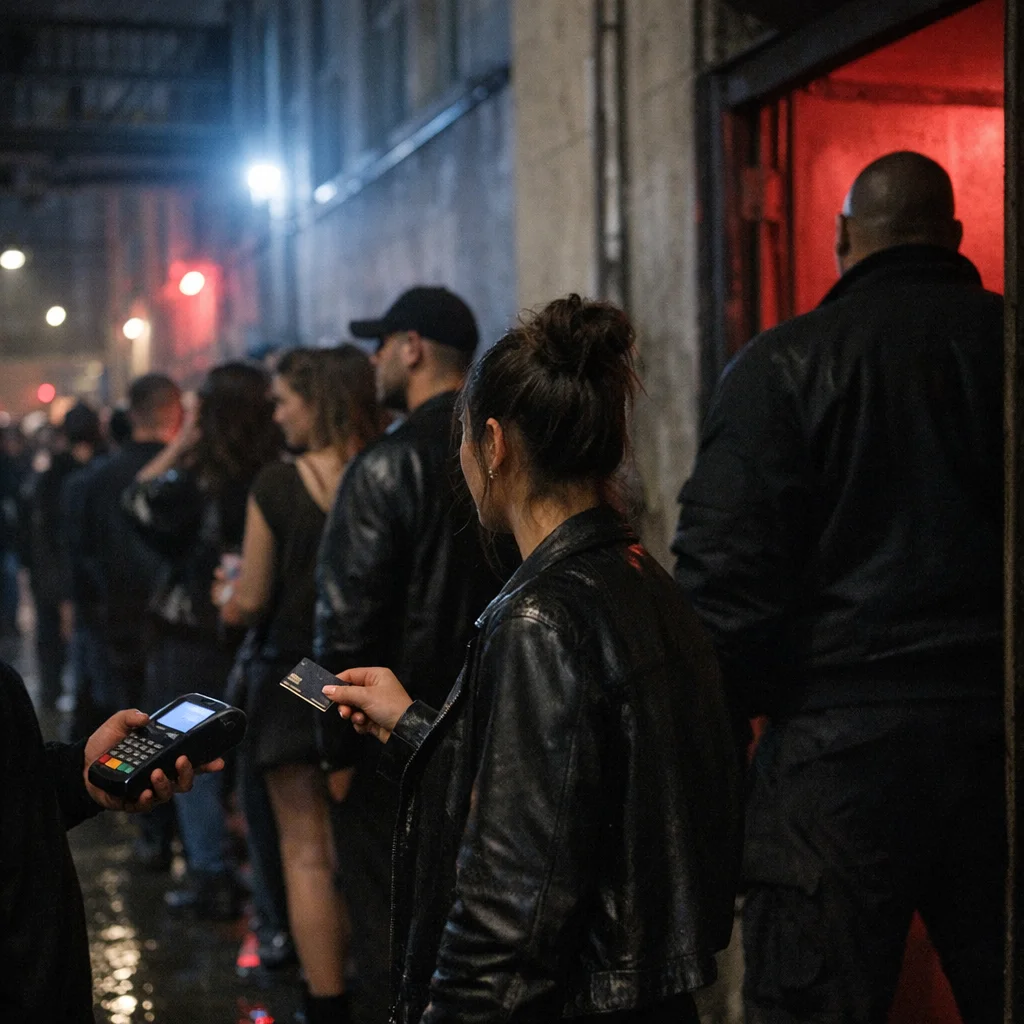
A small but aggressively sincere class of Berlin nightlife pilgrims has begun treating every Berghain opening like a civic obligation, a personality transplant, and a confession booth with better lighting. They arrive early, dress as if audited by a very disappointed god, and spend the evening clutching their phones and their dignity with the same sweaty hand.
The new cashless door is the perfect Berlin compromise: maximum exclusion, minimum embarrassment for the people administering it. No one has to say you’re too broke, too ordinary, too late, or too visibly alive. The card reader does the dirty work. Tap. Decline. Try again like a fool. Smile while the machine rejects you with the administrative chill of a landlord and the emotional warmth of an airport kiosk. The humiliation is no longer handmade; it is standardized, contactless, and invoiced.
Promoters call this efficiency, which is the language the culture industry uses when it wants to sound like a public service while behaving like a velvet rope with a spreadsheet. Payment processors get their cut. Tourism branding gets its brochure-friendly myth of “Berlin authenticity.” The club gets to keep selling the same corpse-pale fantasy of danger while making sure the line outside is disciplined, payment-enabled, and properly deluded. Everybody profits except the idiots waiting in the wet night to be told they are not the right kind of nothing.
The result is a scene full of people whose greatest achievement is attendance. They can recite opening dates like a theology syllabus, name old floor plans the way other men name exes, and speak about brutalist architecture with the moist reverence of a graduate seminar in self-erasure. One promoter, who requested anonymity because his wardrobe is legally his only remaining asset, said the crowd had become “less a queue than a subscription model for self-respect.” That is generous. A subscription still gives you something to cancel; this is closer to a recurring fee for being publicly teased by a machine.
On the sidewalk, the faithful perform their little Baudrillard pageant: black clothes, dead-eyed confidence, and the humiliating hope that a bouncer will mistake them for someone interesting, dangerous, or at least fuckable in a way that can be monetized. Inside, they behave like they have penetrated the last serious republic in Europe, when in fact they have mostly penetrated an expensive room full of other people trying to look impenetrable. The card readers at the door have added a new layer of insult. Now even the refusal is sleek. Now even the shame has contactless payment. Tap, decline, blush, repeat.
“I’ve been to every opening since the doors first moved,” said Jonas K., waiting near the entrance with the brittle posture of a man who thinks history owes him a stamp and a small erotic miracle. “It’s not about the party. It’s about being there before everyone else ruins it.” This is the whole disease in one sentence: the modern Berlin snob as a martyr to his own anticipation, a man so in love with exclusion that he mistakes a queue for character development.
The club has not said much publicly, which only improves the myth. Silence is catnip for people who confuse scarcity with soul. Around them drift the usual supporting cast: consultants in black who say they “work in culture” while mostly laundering rent money through taste; ex-activists now dressed like architectural internship victims; expat men with morally flexible German and the dead eyes of people who came here to be discovered by the city and ended up being processed by it; and local operators who know this species well enough to watch it spend itself on the door. Debord would have loved the update: the spectacle no longer needs a stage, just a reader, a queue, and the promise that if you look sufficiently wounded, the machine might let you in.
The physical mechanics are almost obscene in their banality. Someone fumbles their phone. Someone else pretends their card is “just having issues,” which is nightlife code for I have arranged my entire self-worth around a balance under twenty euros. A reader beeps. A receipt prints. A face goes tight. The bouncer doesn’t even need to sneer; the terminal has already done the sexual humiliation for him. It is difficult to overstate how perfectly Berlin has fused techno mystique with the etiquette of retail failure.
By early morning, the same people who had spent the night discussing underground culture were outside ordering coffee like hungover aristocrats with bad posture and excellent boots. A BVG employee at Ostbahnhof, asked whether he recognized any of them, laughed and said, “Every Saturday they come back looking spiritually repossessed.” He was not wrong. They had paid for the privilege of being exhausted in a room with bass and called it transcendence, which is exactly the sort of civic fraud Berlin now exports as nightlife.
The next opening is already being discussed with the seriousness of a state funeral for the moderately desirable. The people with nothing else to brag about will be back, laminated in certainty, lining up to be filtered by architecture, payment infrastructure, and their own pathetic legend. In the end the city doesn’t sell freedom. It sells the feeling of being chosen by a machine that has already decided you are surplus.