Techno’s Newest Sponsor Is Your Anxiety
A Berlin nightclub economy that once sold freedom is now selling risk management, consent theater, and moral superiority to the same people who want to get obliterated before sunrise.
Nightlife & Fiscal Insomnia Correspondent
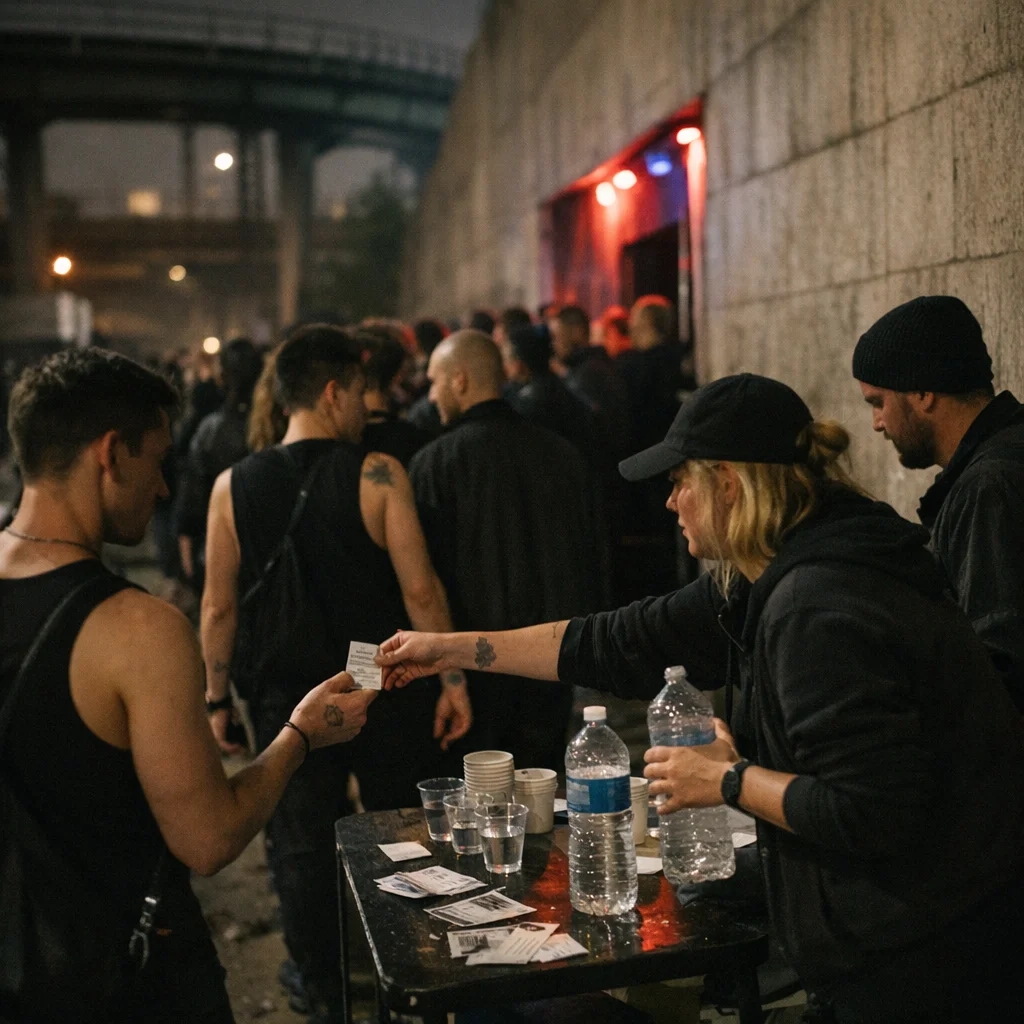
At RSO, Berlin’s industrial techno cathedral off the Treptow rail tracks, the weekend was sold like a civic virtue and delivered like a hangover with a receipt. Promoters, awareness crews, and harm-reduction staff drifted through the concrete in black jackets and expensive sincerity, performing concern with the dead-eyed precision of people who have learned that morality is easiest to monetize when it is laminated.
The queue outside was a museum of self-regard: silver puffer coats, mesh tops under winter jackets, little piles of ketamine confidence, and the glazed expression of people who had spent all day posting about care and all night shopping for a controlled fall. At the door, guests were greeted not by pleasure but by procedure. Consent reminders. Boundary language. Branded water. Little informational cards handed out like communion wafers for a scene that still wants to be sinful, just with a refund policy.
By midnight the pitch had sharpened into a premium humiliation package. If you wanted to dissolve yourself properly, you first had to agree to the club’s terms and conditions, acknowledge the sanctity of your own nervous system, and promise not to weaponize your loneliness in the smoking area without filing it through the correct channels. The bass did the usual work of trying to peel the skin off your thoughts, while the awareness team stood nearby with the expression of overqualified hospice staff assigned to a room full of narcissists in gimp pants.
One promoter, speaking on condition of anonymity because his little empire still likes to call itself a “community project,” described the operation as “responsible hedonism.” That phrase is so bloated with managerial semen it should be billed by the milliliter. What he meant, plainly, was this: people want to get wrecked, but they also want a certificate of innocence stapled to their coat. He was not selling freedom. He was selling absolution at the door.
The club’s awareness apparatus is the real headliner. It is the velvet rope of conscience, the clipboard morality squad, the beige theology of a room full of horny contractors pretending to be ethically evolved. They move through the crowd with tote-bag solemnity, wearing the exhausted face of people who have been asked to translate other people’s shame into a policy language nobody will remember by sunrise. The whole performance has the soft, humiliating texture of a branded apology.
And naturally the crowd loves it. Not because they are noble, but because they are vain. They want the thrill, the sweat, the chemical collapse, and the flattering lie that their appetites are progressive if they use the approved vocabulary. They want to be handled without being called pathetic. They want their degradation supervised by someone with a lanyard. It is a dance floor full of adults begging for permission to lose control without losing face.
“We are not here to moralize,” said Lea Mertens, 29, who runs an awareness collective and requested anonymity because she once dated a promoter who still owes her rent and a more convincing apology. “We are here to reduce harm.” Of course. Everyone in Berlin says they are reducing harm right up until the moment they discover harm has a door fee and a guest list.
The management line is even more exquisite in its emptiness. A spokesperson said the venue “takes safety seriously,” which in Berlin usually means somebody has combined a PDF with a conscience and called it culture. The district office, reached for comment, praised “responsible nightlife initiatives,” a phrase so bloodless it could be used to justify a landfill with a bar tab. The city loves this arrangement: the club gets to cosplay as public service, the district gets to cosplay as enlightened governance, and the crowd gets to believe it is participating in politics while paying to be searched, stamped, and spiritually handled.
This is the new institutional romance: the club provides the flesh, the district office provides the blessing, and the branding machine provides the moral aftertaste. Everyone flatters everyone else while extracting rent from the same exhausted bodies. The result is not liberation, but a premium-grade compliance ritual for people who still think cynicism is a form of depth.
The old fantasy was freedom. The newer one is cleaner and more profitable: curated danger, supervised collapse, the velvet hand on your throat followed by a QR code. Berghain still carries the prestige, but RSO has found the nastier trick. It doesn’t just let you sin. It lets you pre-pay for the guilt and then tips itself.
By Monday morning, the queue was gone, the stamps had faded into bruised little bureaucratic flowers, and the only thing still running was the business model. More training. More branding. More care language sprayed over the same animal need. Another weekend of righteous damage ended exactly where it was always meant to: in the cash register, blinking politely.