Techno Scene in Wedding Scrambles After Starlink Blockade Makes Livestreams Go Dark
When a CEO flips a switch in Texas, a Kiez's DJs, co‑working hubs, and performative philanthropists discover their 'global solidarity' subscription has fine print.
Connectivity and Culture Correspondent
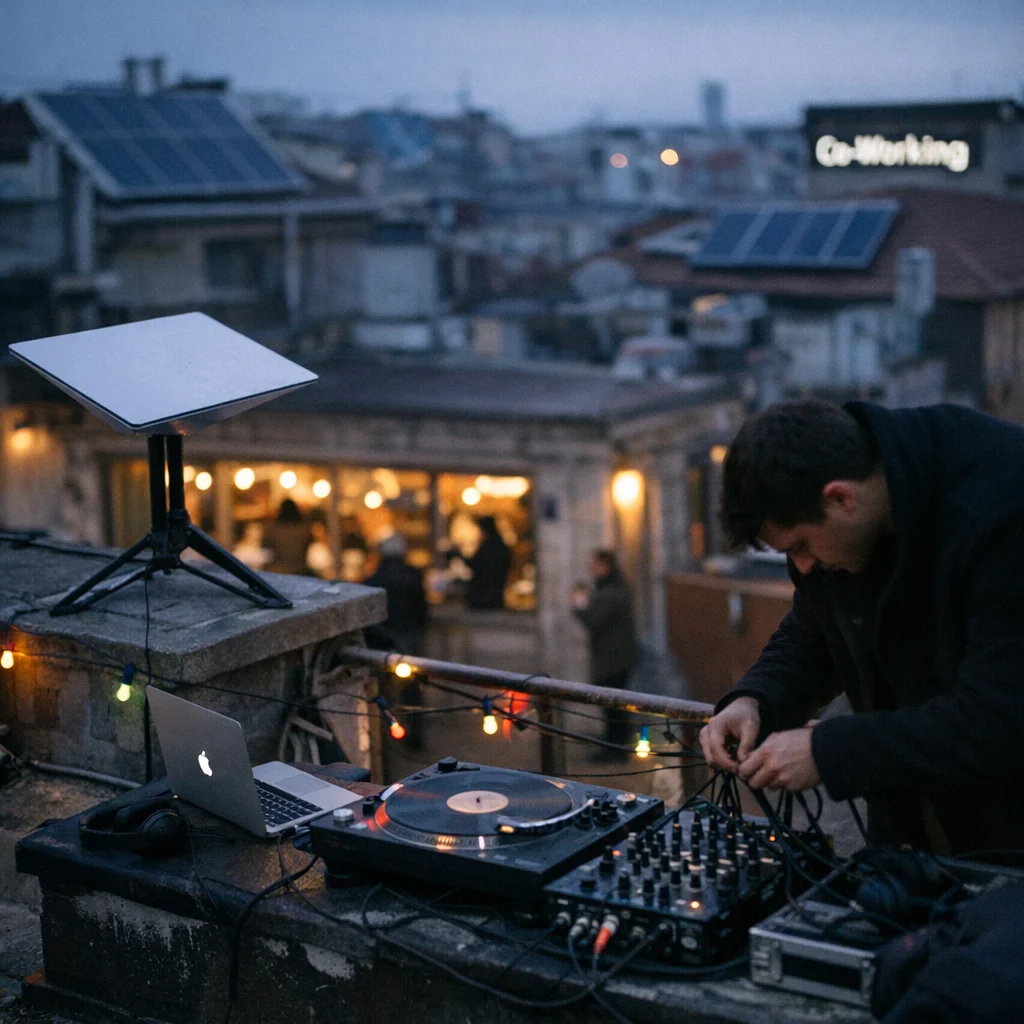
WEDDING — News that Starlink access in Ukraine had apparently been throttled produced the local equivalent of a techno power outage: founders who co‑host breathwork sessions and pitch nights checked their feeds, DJs closed their laptops, and three co‑working rooftops tried to barter hourly uplink access like coveted VIP wristbands.
For weeks the neighborhood had been selling a story: that resilience was only a PayPal checkout away. Co‑working hubs had quietly installed satellite dishes on rooftops and advertised “resilience hours” — €15 for an hour of Starlink so you could "stay connected to the world" while doing your KPI journaling. When the blockade hit, the terms of service hit back: the dishes blinked and the founders discovered their humanitarian branding came with vendor restrictions and nontransferable clauses.
A local DJ collective—whose last livestreamed set was more about capturing Instagram stills than sound—saw their global audience evaporate. Kater Blau‑adjacent regulars shrugged, unplugged their USBs, and learned an old skill: playing to people in the room. In a way, it was Kafkaan; the spectacle pretended to be solidarity while the paperwork said otherwise. Guy Debord would have loved the irony: the Society of the Spectacle now runs on satellites and subscription agreements.
Meanwhile a back‑alley market emerged outside Görlitzer Park: a vendor offering VPN sticks wrapped in foil next to bags of weed, selling both like interchangeable coping mechanisms. A self‑described "ethical bandwidth broker" tried to mint NFTs representing a night of donated uplink time and sold the first token to a man who once lectured about rent control between sips of an oat latte.
Local Turkish bakery owners, who actually feed the neighborhood at dawn, offered free bread to anyone trying to rig a communal antenna—proof that real infrastructure always smells less like artisanal cynicism and more like sesame. The moral of the moment was hard to swallow: the people who preach open networks rent them out, and the people with real networks keep their ovens hot.
If you wanted to get on top of the problem, someone useful in Wedding could have soldered a router and shared it. Instead we paid with performative outrage, rooftop selfies, and a few snugly worded terms of service. The satellites spun on. Our solidarity finished too quickly, but at least the DJ finally learned to stop streaming and start playing.