Tempelhof Runway Demands Proof Before It Comes
City planners now require activist groups to submit performance videos and emotional affidavits before any new protest permit is approved on the former airport grounds.
Neighborhood Opinion Columnist & Reality-Check Distributor
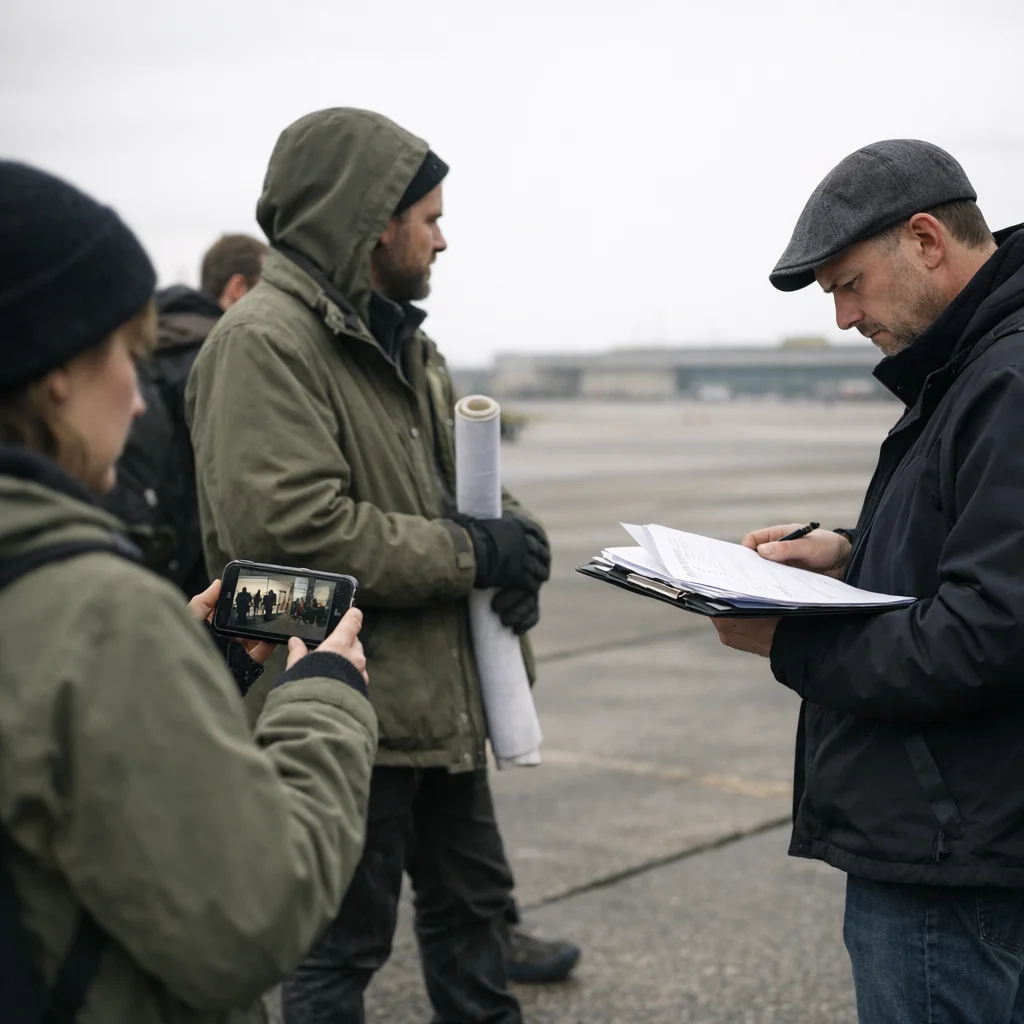
Berlin’s Tempelhof field has finally met the one thing its acreage cannot seduce: a permit office with a ruler and a grudge. The former runway, long treated by a certain NGO-adjacent class as an oversized back room for self-regard, is now under a rule that does what their manifestos never quite manage: it asks what happens next, and who is left sweating when the talking stops.
Under the new review process, groups seeking to demonstrate on the old airport grounds must submit performance videos, crowd-flow sketches, and emotional affidavits before any permit is signed. Officials want to know where people will stand, how they will move, how long they will hold the space, and whether the action produces more than a flattering drone shot and a caption about urgency. One planner called it a response to “movement theater,” which in municipal language means the city is tired of being groped by moral performance and then expected to applaud.
The rule is aimed at the familiar Tempelhof economy: foundation-funded collectives, culture-sector freelancers, and professional dissenters who can turn outrage into a deck by lunch. They know how to do the optics. They know how to arrive in the right boots, say the right sentence about solidarity, and leave with enough images to sell the feeling of rebellion to their followers, their patrons, and whichever lifestyle supplement still pays for righteous cheeks in soft focus. What they often cannot produce is any disruption that survives the camera.
That is the detail the city’s new paperwork is designed to expose. Not the slogan. Not the posture. The effect.
Mira Sander, who applied for a housing rally and asked to be named because she is “already being judged by three funders and one ex-partner,” called the policy “an insult to civic courage.” She said the permit office was forcing dissent to audition, as if protest were some desperate thing waiting at the edge of the runway hoping to be chosen. Her group submitted a six-minute rehearsal clip showing twenty people chanting near Hangar 4, then breaking formation to check whether the drone angle made them look sufficiently uncompromising. The planners rejected it for lacking measurable disruption and for failing to identify a clear downwind impact on traffic, transit, or the public mood.
That requirement is the real offense, which is why it works. The city is no longer content with public virtue that merely poses in front of the concrete and calls itself pressure. It wants proof that the action can obstruct a lane, delay a schedule, or at minimum make life mildly impossible for someone who did not already buy the cause at a book launch. The old arrangement was cleaner for everyone: activists got their communion with the horizon, and the city got to pretend it had tolerated dissent while quietly laundering the field into a stage for approved rebellion.
Now the laundering has a form number.
The district office says the new review is meant to separate inconvenience from branding. That sounds harsh only if you’ve spent years mistaking a crowd for a threat because it was arranged in a visually pleasing circle. The rule also does something uglier: it protects the city’s preferred order by filtering out the groups that cannot afford to be effective, and by humiliating the ones that can. If your protest needs sponsors, a comms plan, and a rehearsal clip, you are already halfway to being managed.
The right wing will call this an attack on public order. The left wing will call it an attack on democratic expression. Both complaints are mostly cover for a deeper panic: the city has started asking dissent to do the job it pretends to do, instead of serving as a decorative bruise on the weekend calendar.
Tempelhof is still a runway, which is fitting. It remains the kind of flat, exposed surface where vanity can build speed, lift its chin, and then be inspected for parts. Now the permit office gets to stand at the end with a clipboard and ask the only question that matters: what, exactly, is being taken off here, and what is just being stripped for attention?