Temple of the Accepted Complaint
A new kind of neighborhood politics is thriving in Wedding: the kind that feels brave because it arrives with a form, a hotline, and absolutely no intention of fixing anything.
Administrative Grief Correspondent
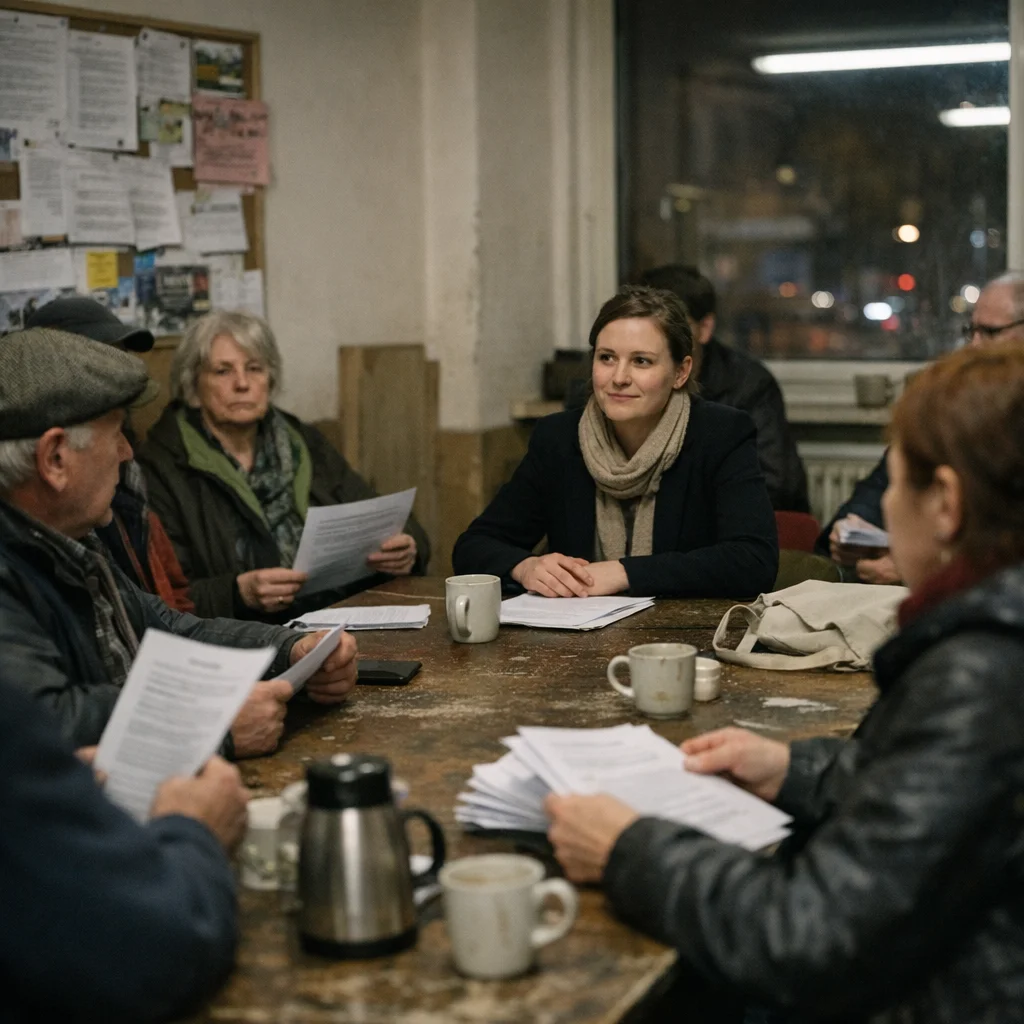
The civic hobby that smells like cold coffee
I have developed a sincere disgust-respecting admiration for neighborhood complaints in Wedding, because they are one of the last surviving German institutions where moral vanity still shows up on paper, with tabs, bullet points, and the emotional temperature of a wet stairwell. The petitions arrive laminated and perfumed with righteousness. They speak of the “public good” in the same tone people use when they are really talking about their own fragile bedtime, their rent anxiety, and the unbearable sight of someone poorer than them standing outside a Späti at 11:40 p.m. with a beer and a pulse.
Wedding, for the record, does not need rescuing by people who discovered “local engagement” after moving in from a cleaner postcode and suddenly deciding the neighborhood must be exfoliated into respectability. The real scenery is already there: Reinickendorfer Straße coughing up buses, the U8 breathing through its dirty mechanical throat, the bins around Leopoldplatz becoming an annual referendum on who is allowed to exist in public, and the district office on Müllerstraße answering every crisis with the same soft bureaucratic caress: please wait, please understand, please stop making us look at this.
Forms as a moral sedative
The sequence is always the same. First comes the noise complaint, then the cleanliness campaign, then the “dialogue format,” which is where public responsibility gets tucked into a chair and sedated with bad coffee. Someone from the resident initiative arrives with a tote bag, a scarf that looks expensive in a frightened way, and the posture of a person who wants to be seen as fearless while asking the state to do the dirty work. They speak about “quality of life,” which in Wedding usually means they want the street to keep its working-class texture but lose the actual working-class people who make it noisy, sticky, alive, and inconvenient.
The district office, naturally, never misses a chance to perform neutrality like a cheap trick. It promises to “review the matter,” a phrase so empty it should be printed on municipal condoms and handed out to everyone who mistakes administration for action. Review what, exactly? The overflowing bins near the corner? The kids on folding chairs? The delivery drivers idling under fluorescent light? Or the deeper emergency: that the neighborhood refuses to behave like a showroom for the kind of people who need their urban experience pre-sanitized and emotionally padded?
The local saints of managed resentment
There is always a gallery in these meetings. The long-time residents with genuine grievances sit beside the imported moralists, the hobby activists, the self-appointed protectors of “the Kiez,” and the sort of people who say they love diversity with the same mouth they use to complain about noise, smell, and “unregulated gathering behavior.” They do not want a better neighborhood. They want a neighborhood that has been trained to apologize for itself.
And because the middle class cannot enjoy a wound without first calling it a concept, they wrap their disgust in decent language. They talk about bins, but mean bodies. They talk about cleanliness, but mean class. They talk about safety, but mean control. They talk about the street life around Leopoldplatz and the side streets off Reinickendorfer Straße as if they were defending civilization, when in fact they are defending the erotic little fantasy that they are still brave people for staying here after dark.
That is the obscenity: the complaint culture in Wedding is not an interruption of power; it is power taking off its jacket, smoothing its hair, and asking to be admired for having done paperwork instead of violence. Not a baton, no. Something much more intimate. A spreadsheet, a hotline, a district email inbox, and the soft-eyed promise that if you keep being a problem, the system can keep stroking itself by “managing” you.
Dialogue as a substitute for spine
The district office adores “dialogue” because dialogue costs less than consequences and lets everyone leave with their shoes still on. A meeting in a room off Müllerstraße, a chair circle in a community center, a moderator speaking in the tone of a woman trying to calm a drunk uncle at Christmas: all of it is designed to absorb irritation and return nothing but the warm smell of institutional self-respect. The complaints are “taken seriously,” which means they are placed in a folder and fed to the calendar like a sacrificial animal.
Even the volunteers know the game. Some arrive genuinely exhausted, having watched the street degrade in real time, while others arrive with the manic glow of people who have mistaken civic tidiness for moral superiority. They want Wedding cleaner, quieter, more legible, more expensive, less available to the wrong sort of hunger. They want the neighborhood to stop embarrassing them in front of guests. They want the public to remain public only in the abstract, where it can be praised without ever being touched.
The thing nobody says out loud
What makes this especially nauseating is how much class resentment gets laundered through the language of care. The complaint is never just about trash or noise. It is about who gets to occupy the sidewalk, who gets to loiter without apology, who gets treated as a resident and who gets treated as residue. Wedding is full of people who would never admit they want order because they are afraid of contact, afraid of unpredictability, afraid of being forced to notice that the city is not a tasteful extension of their nervous system.
So they meet, they nod, they circulate forms, they ask for more “coordination,” and the district office, with its dead eyes and soft voice, helps them turn discomfort into process. That is the real civic achievement: converting resentment into a respectable hobby and then invoicing the public for the privilege.
The next meeting will be crowded. Of course it will. Nothing makes a conscience as lubricated as the chance to perform concern one more time, in public, before going home to the quiet little apartment where all this noise can finally be hated properly.