The 42Hz Courtesy: How Wedding DJs Slip a Secret Bass Cut into Sets So the City Can Keep Its Ears Closed
Promoters preach 'better mixing' — the barely audible 0.3‑second inverse bass blip tucked into every DJ USB is actually a sonic handshake with noise‑monitoring apps, letting venues advertise 'compliant' raves while the
Nightlife Contradictions Reporter
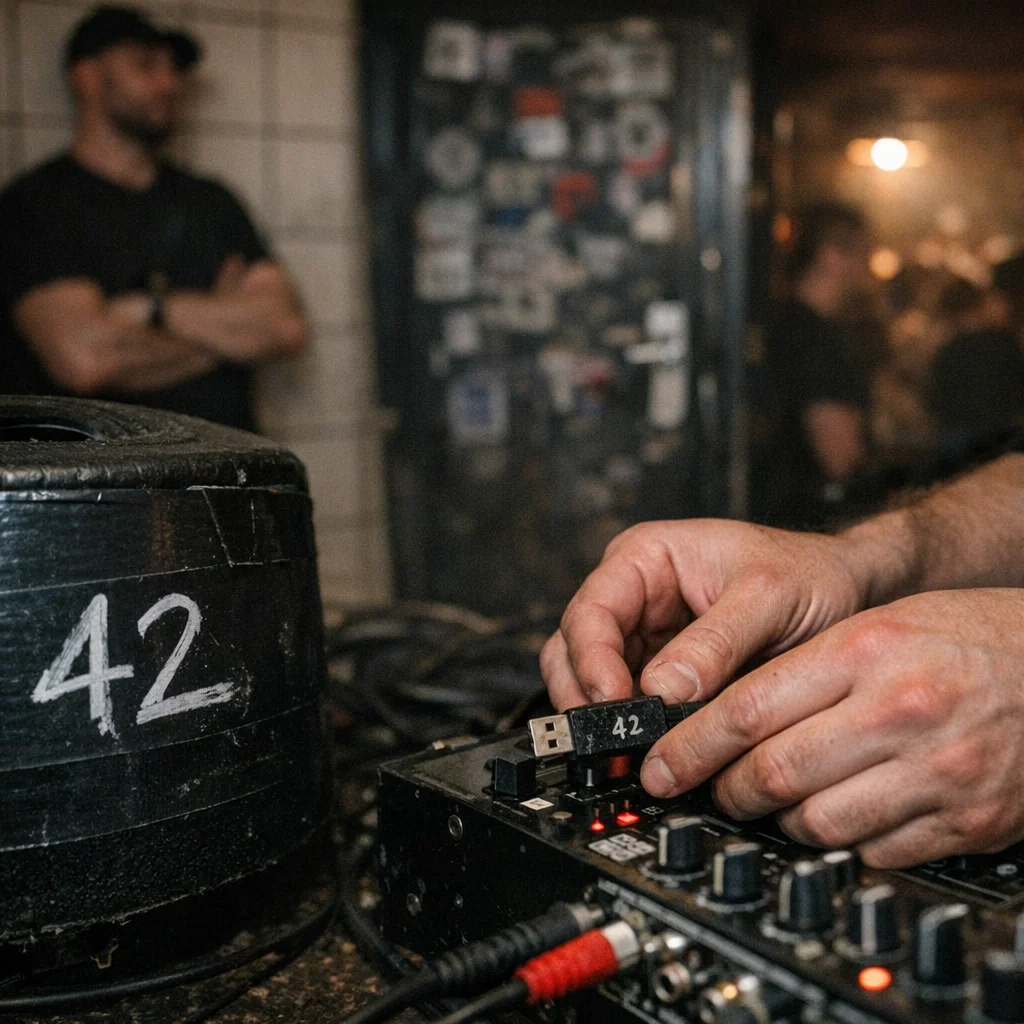
Who: DJs and promoters in Wedding. What: a tiny, technical cheat that lets clubs call themselves "compliant." Where: across basement raves and converted factories between Müllerstraße and the canal.
Promoters have always sold the same sermon — better mixing, respect for neighbors, a promise to keep the bass sotto voce. What they did not tell you was how that promise is kept: a white "42" stamped on promo USB sticks and a strip of gaffer on the subwoofer. Slip the stick in, cue the set, and a 0.3‑second inverse bass blip at 42Hz kicks in whenever the club's soundboard reaches municipal threshold. The effect is surgical: municipal decibel meters log a dip; complaint apps register confusing data; the Bezirksamt sees numbers and breathes relief.
The choreography started small. "I thought it was a mastering trick — like squeezing the low end for clarity," said DJ Mert "Box" Yilmaz, who has played about a dozen Wedding rooms. "Then I noticed the '42' on every free promo USB and the sub taped up at the corner. It's like being given a condom with a city logo on it — presented as neighborly protection, useful for a different reason."
Chronology: a sympathetic promoter pitched improved mixes as PR last spring; a handful of sound engineers whispered about the 42 marker that summer; by autumn, it became an industry ritual. Promoters now print compliant-sounding copy on Facebook and event pages — "careful low end" — and hand door staff a stamped pack of promo sticks like communion wafers.
"We're not condoning trickery," said Markus Neumann, a spokesperson for the Bezirksamt's noise control team. "But if the meters are being interfered with, we'll recalibrate and pursue enforcement." He added, with the bureaucratic tenderness of someone about to get kicked in the teeth by artful audio, that tampering with measurement equipment could be considered falsifying regulatory data.
Not everyone is fooled. Longtime residents, including Fatma Demir, who runs a bakery near a popular venue, say the bass still rattles her sugar jars. "They put 'respect' on the flyer but the floor still vibrates my bowls," she said. "They call it considerate; we call it cosmetic compliance."
The small technicality flips the official story: what reads as neighborly self-restraint is often a deliberate way to exploit a measurement blind spot. The 42 stamp has become its own status symbol — DJs trade marked sticks the way club kids once treasured ink stamps — a backdoor handshake that keeps the party going while letting management claim propriety.
Next step: the Bezirksamt says it will test clubs with independent gear; venues say they'll adapt. Expect a round of fines, a new calibration regime, and a boutique market for "42‑proof" subwoofers. John Cage might have smiled at the politics of engineered silence; Adorno would have had words. For now, Wedding's nightlife continues its long, throbbing flirtation with the law — finishing too quickly or holding on just long enough to get away with it.