The Apology Industrial Complex: Wedding’s Retail Sector Discovers a New Export
From Turkish barbers to organic bakeries, every storefront now offers the same product: remorse, pre-packaged and slightly stale.
Street Commerce & Public Patience Reporter
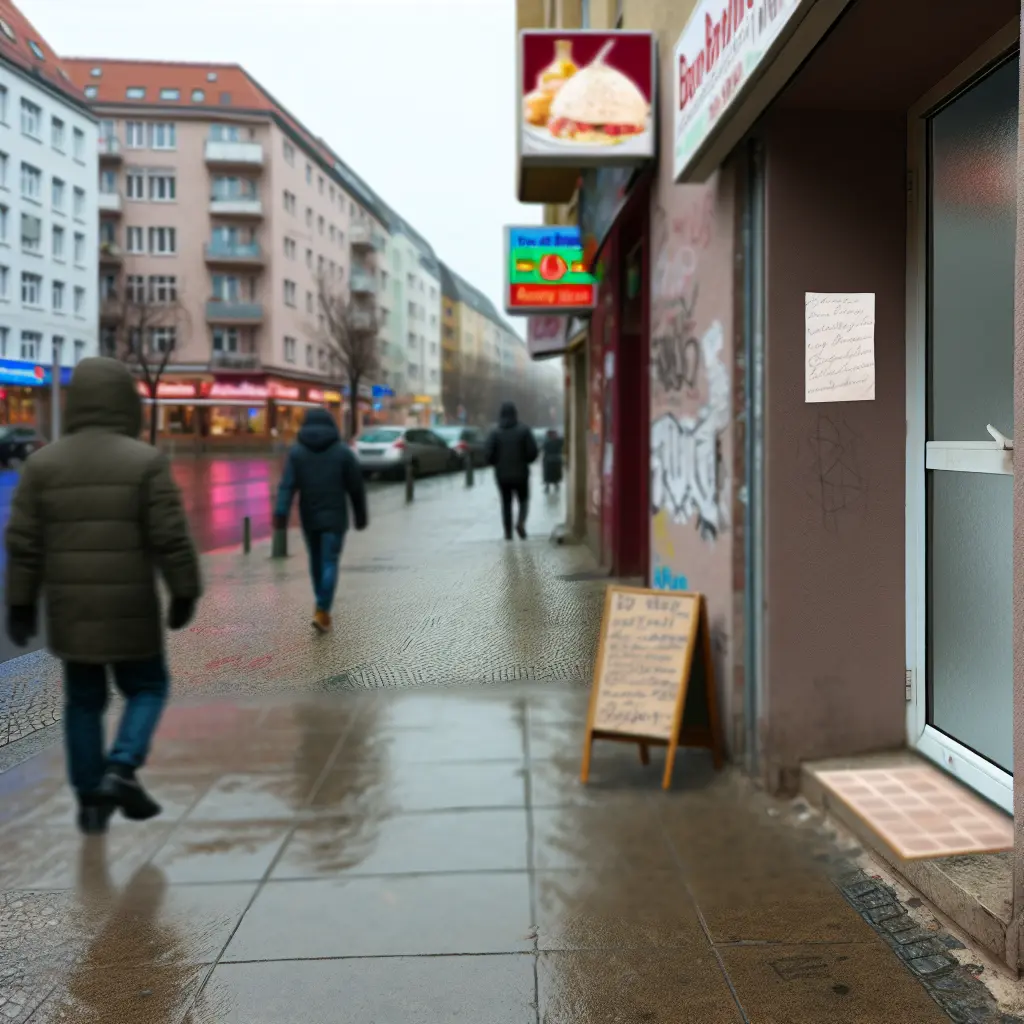
Wedding used to be a neighborhood that sold things you could hold in your hand: bread, batteries, kebabs, counterfeit charger cables that heat up like a small star. Now it’s selling something far more Berlin: an apology.
Not the good kind, either. Not the kind you feel in your ribs, the kind that makes you call your mom, pay your friend back, and finally stop pretending you “thrive in ambiguity.” No, Wedding is dealing in institutional apology, the mass-produced kind with a polite smile and the emotional calories of a rice cake.
Sorry Is the New Currency
It started quietly, like most disasters here.
A café near Gesundbrunnen began printing “SORRY” on receipts, right between the oat-milk surcharge and the vague accusation that you’re responsible for colonialism because you ordered a flat white. Then the apology migrated next door to the Turkish barber, where a sign appeared behind the mirror: “Sorry for the wait.”
The wait, by the way, was three minutes. That’s how you know it’s not sincere—it’s aspirational.
Soon the Späti was apologizing for being out of cold beer (“SORRY, delivery delayed”), the pharmacy apologized for not having your medication (“SORRY, try hope”), and an alarming number of yoga studios apologized for existing at all—while still charging you €29 to “release” your hips and your dignity.
Some residents found the whole thing hard to swallow, especially the ones who remember when you could just be unavailable and let social silence do the work.
A Neighborhood Rewritten as Customer Service
In Wedding, even chaos now comes with a scripted regret. The streets are still a high-concept performance piece—trash as installation art, construction barriers as minimalism, cyclists as Dostoevsky characters making terrible choices—but now every inconvenience arrives wearing a name tag.
One long-time resident described it as “being trapped in a never-ending airline announcement, except the plane is the sidewalk and the turbulence is your daily life.”
There’s something very Walter Benjamin about it: the aura of genuine messiness stripped away, replaced with endlessly reproducible statements of sorrow. Like we’re living inside a discounted museum gift shop version of reality.
And yes, you can still get a perfect döner at 2 a.m. from a Turkish-owned spot that somehow functions with more stability than most institutions in the city. But now even the döner guy is apologizing—because your chili flakes didn’t arrive on time, like this is a Michelin tasting menu and not a paper-wrapped miracle you’re eating while making eye contact with your own reflection in a tram window.
The Science of Regret: A Deep Dive
Local sociologists (meaning: one guy with a tote bag and a podcast mic) claim the apology boom is Wedding’s attempt to become “more livable.”
Translation: it’s gentrification’s emotional foreplay. First the apologies, then the branding, then the neighborhood gets “reimagined,” then your rent climbs like it just discovered Nietzsche and decided suffering is character-building.
The apology is a soft weapon. It slips in quietly. It penetrates the public psyche and makes everyone feel like they’re in a polite relationship with the dysfunction. It’s basically Foucault with better typography: discipline, but make it customer-friendly.
The BVG pioneered this years ago with those automated “We apologize for the delay” announcements—an erotic little whisper of accountability with absolutely no follow-through. Now Wedding businesses are copying the model: don’t fix the problem, just acknowledge it in a tone that implies the problem is your fault for expecting time to function.
A Tour of Wedding’s New Apology Economy
In one afternoon, this reporter collected the following apologies within a six-block radius:
- “Sorry, card reader broken” (a cash-only bakery that sells irony at €5.20 a slice)
- “Sorry, we’re closing early” (posted on a door at 2:15 p.m., which is less “closing early” and more “closing as a lifestyle choice”)
- “Sorry for the noise” (construction workers producing a soundscape that would get accepted into the Venice Biennale under the theme Late Capitalism Screams Back)
- “Sorry, no seating” (a café whose entire interior design philosophy is The Discomfort of Being Perceived)
It’s like Baudrillard moved here and replaced actual solutions with simulations of remorse. The apology is no longer the sign of a mistake; it’s the product itself.
The Backlash: Residents Demand Real Problems Again
A grassroots group has formed—because of course it has—called “No More Sorry.” They’re demanding that businesses stop apologizing and return to Wedding’s traditional communication style: shrugging, turning the music up, and letting the chips fall wherever they land.
Their manifesto is one page long and mostly beer stains, but the message is clear: “If everything is ‘sorry,’ then nothing is. Also please bring back the ability to be rude without a workshop.”
Still, the apology trend seems unstoppable. It has met with stiff resistance only from the oldest institutions in the neighborhood: the broken elevator, the mysterious puddle that never dries, and the guy who stands in the same spot every day watching the world like he’s doing Brechtian theater but forgot to rehearse.
Final Words, Delivered Regretfully
Wedding doesn’t need more apologies. It needs fewer lies.
If the city wants to say sorry, it should try the radical Berlin concept of meaning it: fix one thing, once, all the way. Until then, we’ll keep getting apologies the way we get everything here—late, thin, and weirdly confident.
And if you’re looking for something truly sincere, skip the laminated remorse and go to your local Turkish bakery. They won’t apologize for the sesame getting everywhere. They’ll just hand you something warm, honest, and alarmingly satisfying—and you’ll remember what real service looks like when it isn’t trying to seduce you into forgiving the entire system.