The Beatprint Bust: How Wedding’s New Audio‑Forensics App Fingerprints Ravers and Spawned a Tempo‑Forging Black Market
When a police algorithm began matching surveillance mics to streamed sets, promoters in Wedding hired 'tempo forgers', vinyl alchemists and even analogue metronome couriers to turn their nights untraceable.
Nightlife Identity & Self-Deception Correspondent
Who: Partygoers, promoters and an overconfident police lab in Wedding.
What happened: The district rolled out an audio‑forensics tool that, officials say, can match a club’s streamed set to street surveillance microphones by reading the unique ‘beatprint’ of a set — the microscopic timing of kicks, hi‑hats and reverb tails. Within two days a black market bloomed: tempo forgers, vinyl alchemists and analogue‑metronome couriers offering unmatchable grooves to anyone whose proudest résumé line is “I’ve been to every Berghain opening.”
The app’s debut was blunt. “This is an investigative tool for violent crime,” said Detective Lars Meier of the Wedding police. “It also happens to help link events to individuals.” Weeks later promoters found event playlists no longer safe confessions; stamp‑hoarders who boasted of their repeated, climactic entry were suddenly witnesses, suspects, and occasionally subpoenaed.
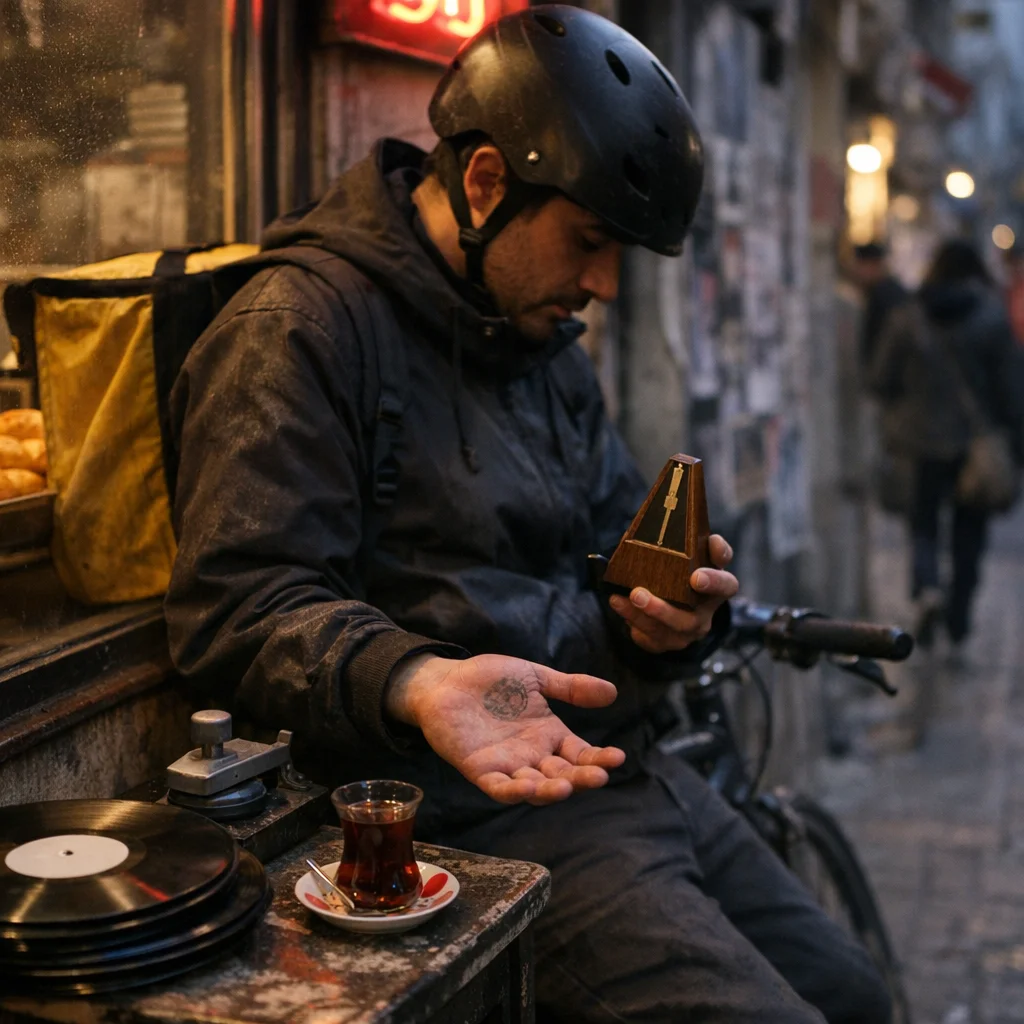
Entrepreneurs responded like surgeons in a war zone. Vinyl artisan Ayşe Kocatürk, who runs a small pressing bench beneath a Turkish bakery, says she’s making “counterfeit grooves” — records pressed with randomized micro‑timing designed to fail every matching algorithm. “You want the human story,” she said. “People who have only ever accomplished queueing need a story that hides them.” Her customers include the kind of men who once counted openings like medals and now want their musical fingerprints shredded.
A courier collective calling itself Metronomists pedals soft wooden clickers through Wedding’s streets, delivering pocket metronomes that whisper false timestamps into live sets. “We hand them off in tight spaces, briefly,” said courier Jonas Richter. “It’s all very intimate.”
Promoters hired tempo forgers who splice kicks into polyrhythmic nonsense; analogue engineers press records where the percussion drifts like a city bus that lost its schedule. One promoter, Maren Kohl, admitted: “We paid to be unrecognizable. It’s cheaper than losing your venue license.”
The district reacted with threats and curiosity. Police warned of obstruction charges; the mayor’s office opened a review. “We are examining whether tampering with evidence constitutes a new offence,” Detective Meier said.
The most bitter irony is social. The people who built identities out of attendance — the lifelong openers, the stamp‑collectors who equated entry with moral worth — are now the most exposed. Walter Benjamin’s aura has been digitized into evidence, and Foucault would have smirked: the dance floor’s secrets are just another surveillance substrate.
What’s next: The police say they will refine the algorithm; promoters vow to refine their countermeasures. Meanwhile, courts are expected to consider whether a beat can be admissible proof. In Wedding, a subculture once proud of its endurance is learning that bragging about how many times you slipped in the door is a confession that can be forced to climax in public.