The Club-Drug Crowd Has Discovered “Responsible Consumption” and Is Charging a Cover for It
What sounds like a moral upgrade is really a new way for promoters, wellness consultants, and post-punk bureaucrats to sell the same scene back to itself with better lighting and a cleaner conscience.
Nightlife Identity & Self-Deception Correspondent
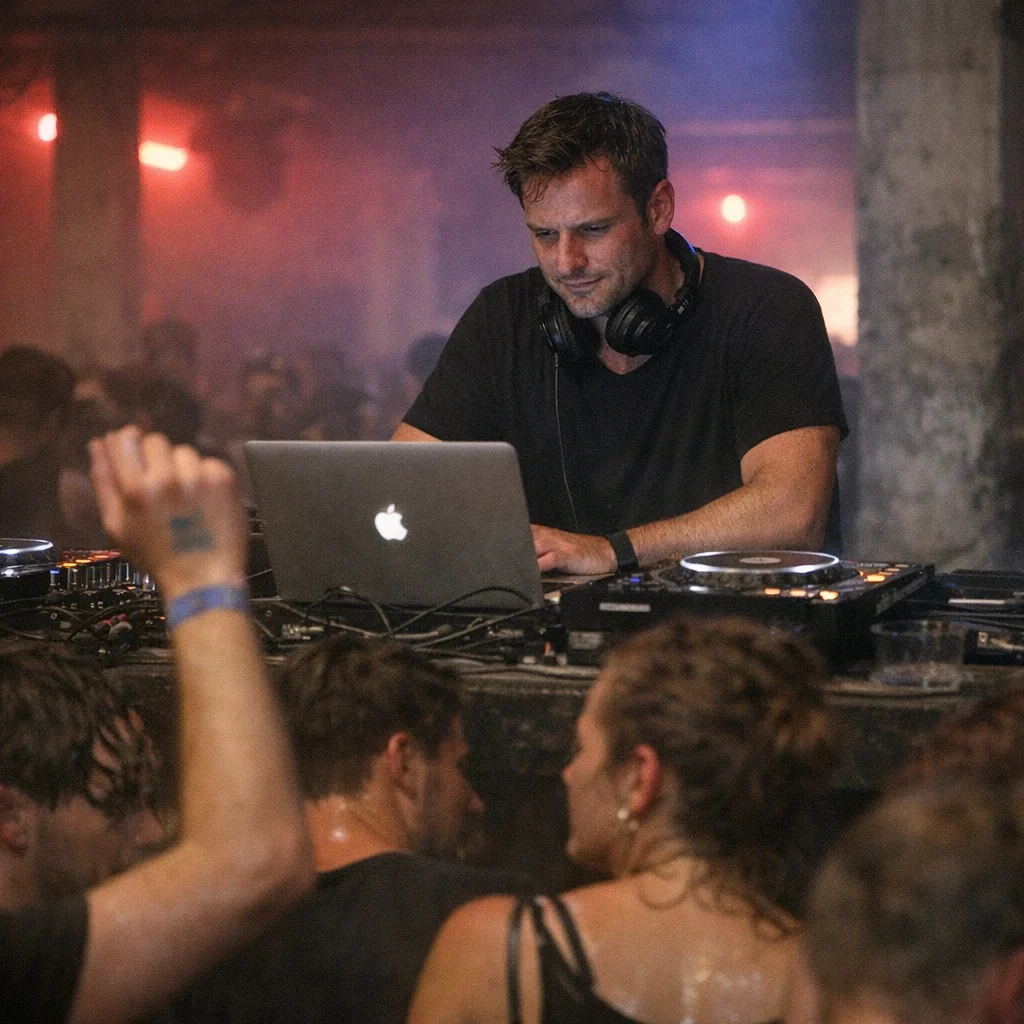
At a former warehouse party space in Neukölln, a growing class of local DJs is treating the Play button like a doctoral thesis defense and calling the result art. On Friday night, one of them stood behind two decks, a laptop, a USB stick full of recycled edits, and a face that suggested he had personally rescued rhythm from vulgarity, then spent most of the set staring at a waveform while his own tracklist did the actual labor.
The room responded with the usual Berlin devotional lie: everyone pretending a half-assembled playlist is an aesthetic argument because the alternative is admitting they paid to witness a man negotiate with technology in public. The crowd, already lubricated by cheap lager, MDMA, and the municipal fantasy that every blackout room is a cultural institution, nodded along as if they were receiving a civic lesson instead of being sold a mood by a mildly frightened freelancer in designer boots.
By midnight, the resident DJ had announced the night’s theme as “deep listening,” which in practice meant watching two men in black T-shirts pursue status with the concentration of minor aristocrats at a tax shelter seminar. One of them, Tom Arendt, 31, said he had spent “months crafting the narrative arc” of a set he could have executed from a tram stop. “It’s not about pressing play,” he said, while pressing play. “It’s about selection, tension, and holding the room.” He said this with the grave sincerity of a man who has mistaken a playlist for a personality and a crowd for an audience with no legal recourse.
The venue’s promoter, who requested anonymity because he is still paying off a modular synth he never learned to use, defended the format as “accessibility.” That word has become nightlife’s favorite satin curtain: pull it back and you usually find a small gang of self-regarding operators charging twenty euros at the door, twelve more for a “supporter tier,” and another three for a bottle of water, all while lecturing the room about inclusion as if moral language were a discount code. There is always a consent briefing, always a safer-space statement, always a laminated promise that no one will be “othered” except by the door policy, the guest list, and the invisible economics of who can afford to stay past 2 a.m.
This is how Berlin launders precarity into virtue. The grant-funded promoter with a tote bag full of buzzwords. The wellness-branded raver who wants ketamine with a side of accountability. The cultural manager who calls gentrification “neighborhood activation” because it sounds less like eviction and more like brunch. The trust-fund DJ who claims to be “community-building” while charging appearance fees that would make a nurse cough up her oat milk. Everyone gets to feel progressive as long as nobody names the racket: the city’s nightlife economy is a rent machine wrapped in consent language and sprayed with anti-authoritarian perfume.
And what a fragrant scam it is. In Wedding, where the bars are rougher and the landlords only pretend to be enlightened, the same types show up clutching their moral choreography like stage props: sober-curious branding, soft-touch lighting, analog nostalgia, “no tolerance for problematic behavior,” and enough coded professionalism to make a municipal brochure blush. The scene tells itself it is safer because it is softer, which is a brilliant trick if your business model depends on making exploitation feel like care. A room full of overeducated strivers can be made to pay extra for the privilege of being managed like children.
A spokesperson for the club said the line between DJing and performance art was “evolving,” which is what people say when they want to get paid for not doing enough. Walter Benjamin would have had a headache in the queue and then written a furious footnote about the aura of a man cueing pre-loaded nostalgia while calling it risk. Instead, the city gets a procession of bedroom virtuosos who believe that because they can locate a drop, they have composed the drop, fathered it, and probably sent it a calendar invite.
There is, of course, an erotic charge to the whole operation, which is why it keeps working. The room glows with that special post-industrial flirtation where everyone is pretending not to want anything while performing desire like a grant application. Promoters preen. DJs posture. Patrons grind their teeth through overpriced cocktails and call it liberation. Even the “safe space” rhetoric has a little tremor in it, as if the scene knows it is selling not just music but the fantasy of being morally touched without ever being truly handled.
As the room emptied into the morning, the stamps were still drying on wrists, the smoke hung like a bad alibi, and half the crowd was already preparing Instagram sermons about curation. The next night’s lineup is unchanged. The same men, the same files, the same grant-polished emptiness is scheduled to open again around midnight, ready to call itself culture with a perfectly straight face while milking the city like a spoiled animal in a tailored vest.