The Club That Sells Harder Than It Lets You Dance
A new wave of Wedding nightlife venues has discovered the real afterhours business: the dancefloor is just the showroom, and the actual money is in the very public humiliation of people trying to buy their own way into
Nightlife Protocol & Public Embarrassment Reporter
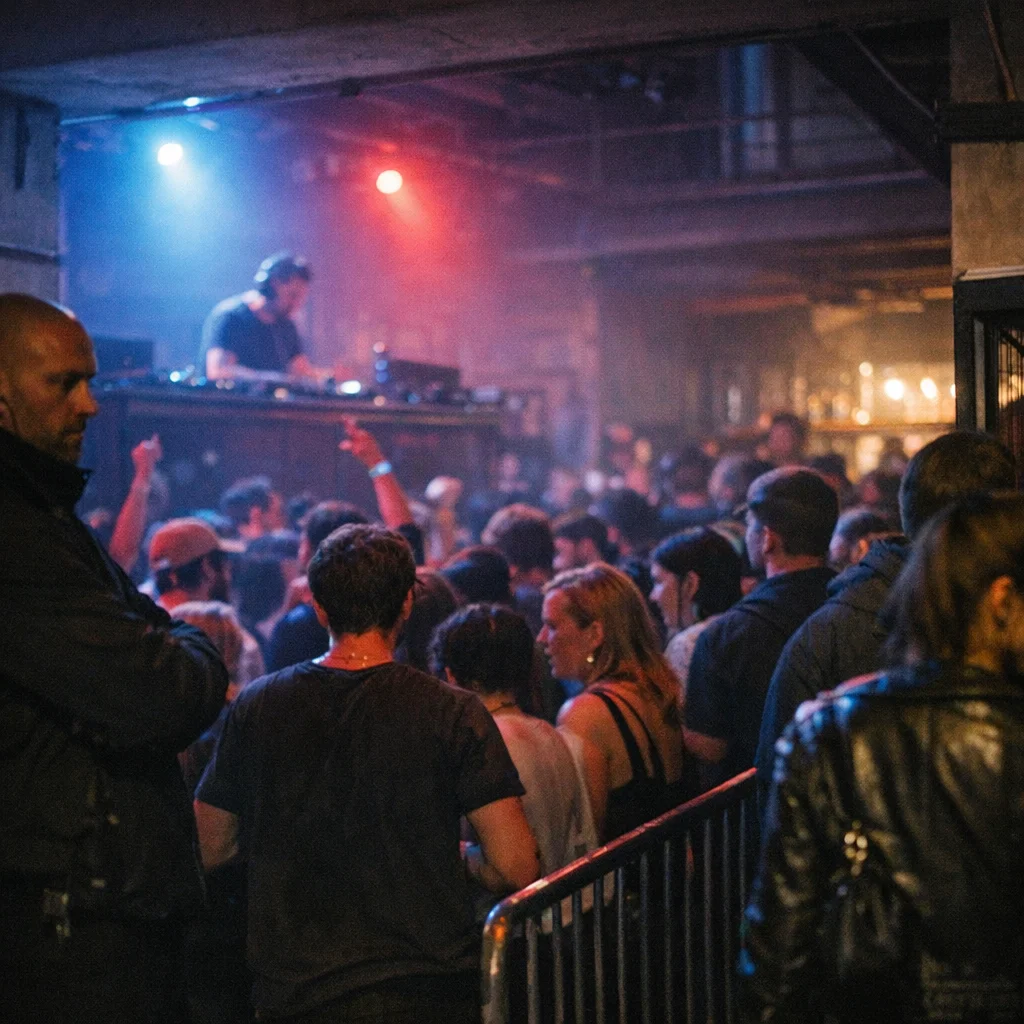
By the time the first cashless wristband was slapped onto a sweating wrist under the blue light, the DJ had already assumed the ancient role of nightclub monarch: not an artist, exactly, but a man with a USB stick and the confidence of someone who has mistaken access for talent. In Wedding, inside a former factory with exposed brick, a security line that looked like a border crossing for people who own too many black trousers, and a cloakroom run with the tenderness of an airport divorce, the evening was less a party than a demonstration of how Berlin turns rent pressure into spectacle.
The room was full of the usual post-industrial parishioners: founders with soft shoes and hard opinions, cultural managers who say “safe space” with the dead-eyed sincerity of a tax form, promoters who treat guestlists like a private organ, and municipal friends of nightlife who appear whenever a district wants to cosplay openness while quietly feeding the same people who make the neighborhood unaffordable. One man near the bar, Markus Reimann, said he had seen the same social species in Neukölln, Friedrichshain, and now Wedding: “They arrive as if they’re saving the night, then spend the whole evening monetizing each other’s loneliness.” He was waiting for a friend from the Turkish bakery on Müllerstraße, who came in still smelling faintly of flour and real work, and looked obscenely human beside the venue’s polished vacancy.
The venue’s little empire ran on a system so transparent it almost counted as honesty. The wristband colors mattered. The guestlist mattered. The “friends of the collective” mattered, especially if the collective was connected, grant-friendly, and capable of saying “inclusive” while keeping one velvet rope and two security men with the emotional range of bolt cutters. A woman at the door said the wrong kind of guest was easy to identify because they asked whether they could “just pay at the door,” as if money itself were not already the religion. The right kind knew to wait, smile, and perform gratitude for being allowed to purchase a temporary personality.
Inside, the booth was packed with people who speak about “curation” the way landlords speak about “community”: with their mouths full of it and their hands already in your pocket. The DJs, several of whom were wearing the same blank expression usually seen on consultants and captive fish, moved between tracks like men trying to keep a dying conversation alive with better lighting. One resident called them “brand ambassadors for their own libido,” which was cruel but not inaccurate. Another said the booth looked less like a performance space than a rent-controlled confessional for people addicted to being admired by strangers they would never remember by morning.
The music, for the record, was not bad; it was merely available. That is the great Berlin trick. A beat can be thin as a tax incentive and still pass for culture if enough people in the room are invested in pretending they have discovered something dangerous. The bass hit with the emotional force of a late fee. The vocals skimmed the surface like a deputy mayor promising consultation. And in the middle of all this, a promoter in a fitted jacket moved from group to group with the hungry, lubricated smile of someone selling the same fantasy twice: once to the crowd, once to the city.
What the club economy in Wedding now sells is not music but permission: to feel radical while participating in a social sorting machine, to call exclusion “selection,” and to treat the neighborhood as a backdrop for the self-esteem of people who would panic if asked to live beside the consequences of their own aesthetics. The district office, naturally, had no formal complaint. Berlin’s favorite governance style is to call the fire “activation” until the ceiling caves in. Meanwhile, property-adjacent culture operators keep receiving the city’s blessing, its subsidies, and its photographs, all while packaging displacement as nightlife and rent extraction as scene-building.
By 4 a.m., the dancefloor was still twitching, the bar was still selling watered ambition at inflated prices, and the booth was still humming with the swollen vanity of men who confuse being looked at with meaning something. Outside, the queue had thinned into a couple of disappointed shoulders and a handful of people recalculating whether the wristband had bought them access or merely the privilege of being managed. The venue will probably call it community in the morning, which is fitting: nothing says public service like a room full of self-appointed tastemakers sweating through borrowed cool while the neighborhood pays the lease.