The Coin Slot That Bought a Shout‑Out: How a Wedding Footbridge Turned Our Commuters into a $1M MAGA Donor
Everyone frames it as a billionaire buying influence — the quieter truth is a kludged 'maintenance' toll on Müllerstraße's footbridge that milked commuters, parents and pensioners for the pennies that paid a U.S.
By Lena Veneer
Gentrification & Cultural Displacement Correspondent
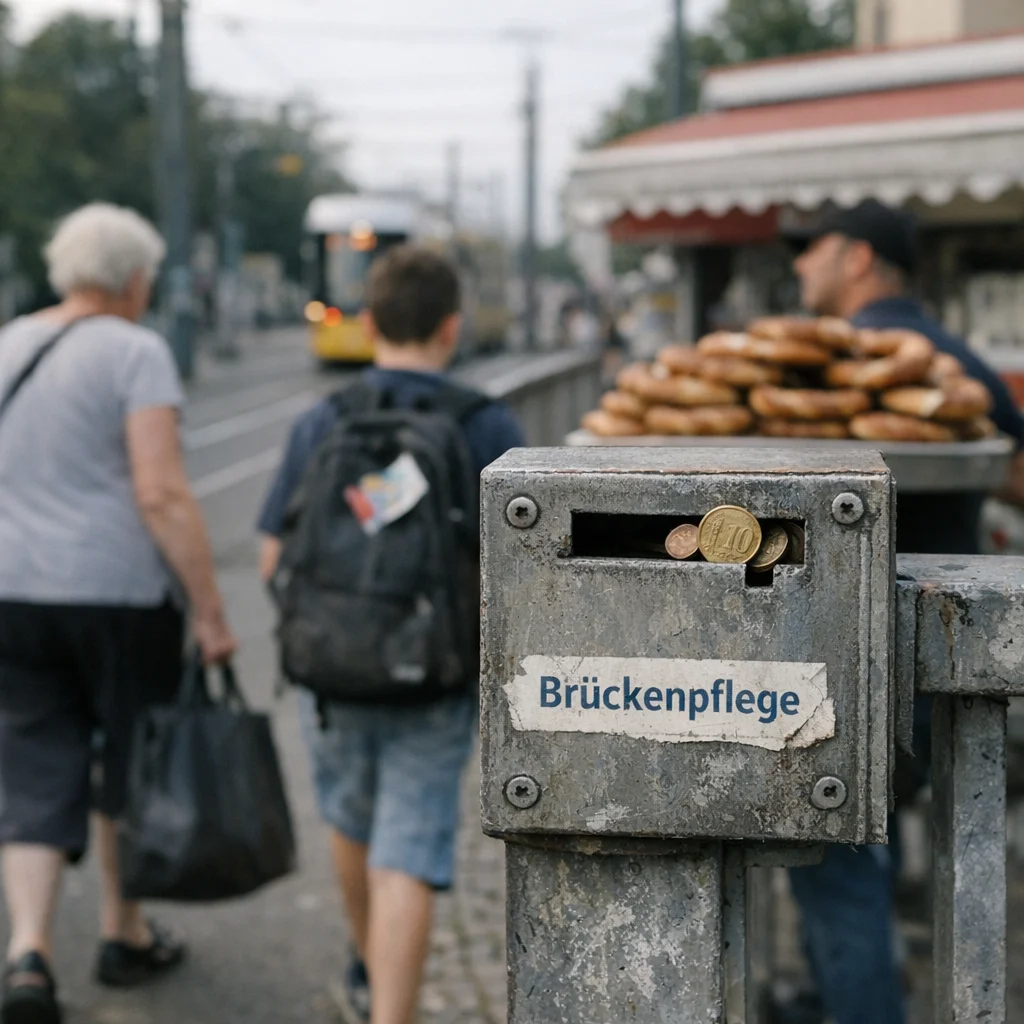
The tidy national story — a wealthy bridge owner wired $1 million to a MAGA group before a high‑profile presidential remark — lands in Wedding like a politician at a fundraiser: loud, rehearsed, and a little nauseating. The quieter, genuinely embarrassing truth is more pedestrian: the money was raised by a stickered coin slot bolted to the Müllerstraße footbridge, a patched‑up toll labeled “Brückenpflege” that collected 30‑cent crossings, €12 season passes, and the petty sacrificies of commuters, parents and pensioners.
It began last autumn, when the privately owned footbridge’s owner, identified in local filings as Dieter Krause, installed a tarnished metal box on the railing. “Maintenance,” read the hand‑printed sticker. In practice it meant office workers, schoolkids and the man from the Turkish bakery putting loose change into a slot before they crossed to the tram. “It felt like donating to a communal wish jar,” said Fatma Kaya, 59, who uses the bridge daily to reach her dialysis center. “Then I saw the bank transfer.”
Kaya watched social media when a U.S. political filing revealed a $1,000,000 donation traced back to Krause’s firm the same week a prominent American candidate tore into a rival. “We paid the bridge,” said Sahin Yildiz, 43, who runs the bakery under the bridge. “We paid, and somehow our coins went across the ocean.”
The overlooked detail flips the headline: this wasn’t an elite buying influence with a single glossy cheque; it was a slow, stealthy siphon of tiny civic gestures. The bridge didn’t just accept money—it ritualized payment. Parents taught toddlers to slide coins; pensioners kept a seasonal sticker on their shopping bags like a badge; a nephew emptied the box every Wednesday and logged the receipts in a battered ledger.
“In our reading, that ledger is the missing link,” said Ines Bauer, a spokesperson for the Bezirksamt Mitte. “We’re investigating whether a private crossing may be operating as an undeclared political fund.” The police said they had opened inquiries into tax and donation laws; Krause’s lawyer called the donations “personal, confidential, and unrelated to local crossing fees.”
Locals have started a counter‑ritual: a Free Crossing Day pitched by a neighborhood collective, promising to hand out commemorative cardboard coins. “We’ll return their sensual little click,” said organizer Jonas Klein, “and maybe demand a better explanation than ‘maintenance.’”
The consequence is simple and Kafkaesque: a municipal audit, an angry viral video, and the suspicion that every benign neighborhood practice can be folded into a political pipeline. Walter Benjamin would have enjoyed the irony — the arcades of bourgeois flânerie replaced by a coin slot that funds a foreign shout‑out — but he probably wouldn’t have liked the sound of the coins when they landed.