The Cow Answers, the Curators Sweat
A Vogtland art project promises rural dialogue and democratic listening, but the real action is the human side: gallery people, local officials, and grant-friendly visitors trying to look humble while asking a cow.
Prestige Leakage & Neighborhood Vanity Reporter
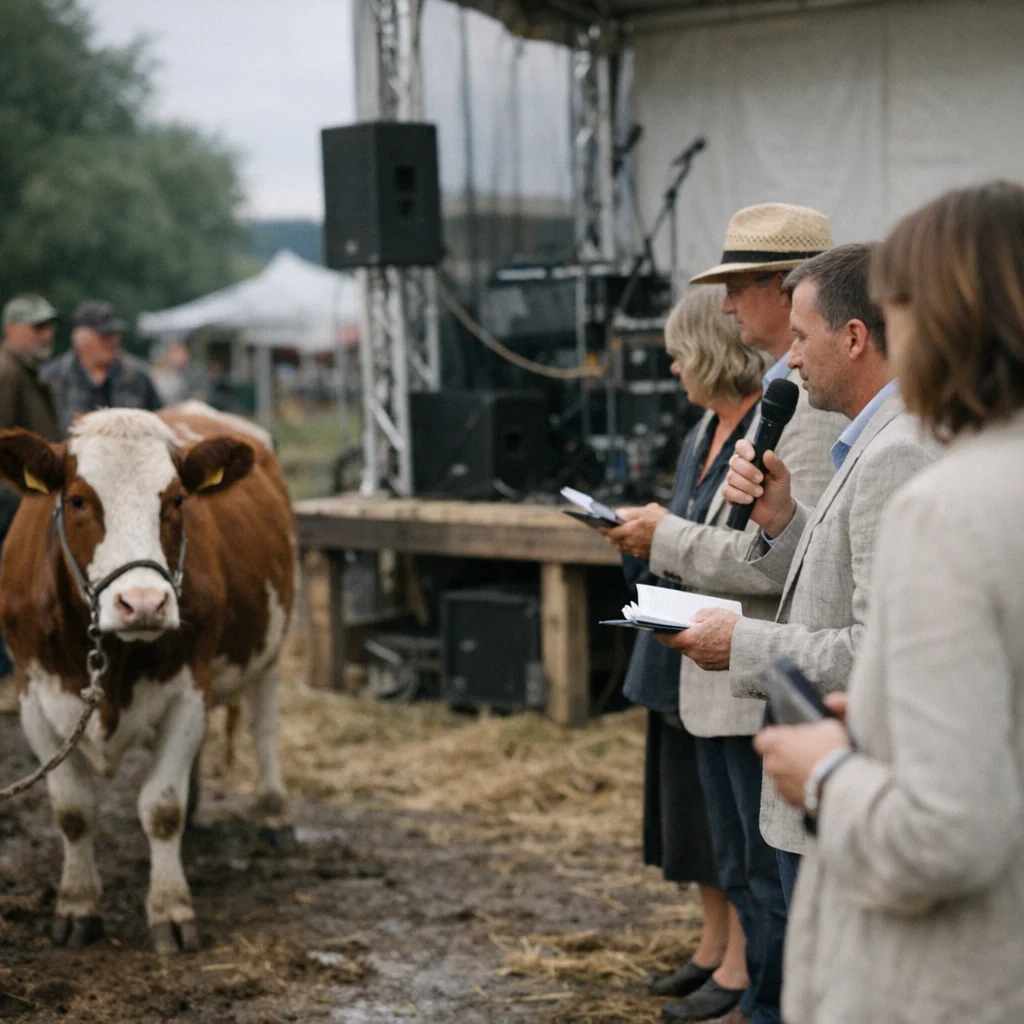
A rural art project in Vogtland promised democratic listening, but by the time the microphone was passed around, the cow had already done the only honest labor in the room. The event, staged as a cultural dialogue between the Landkreis, the local Sparkasse’s friendly patronage, and a stack of Kulturförderung forms that could sedate a mule, drew the usual delegation of people who say they support “the countryside” with the same mouth they use to commodify it. They arrived in linen, sensible shoes, and that damp, overfed confidence of people who think a reusable tote bag cancels out a bank transfer.
The cow, tethered beside a temporary platform with the air of someone waiting for a delayed train and a worse apology, did not speak in the human sense. She chewed, blinked, and stared through the assembly with the exhausted patience of Franz Kafka after a panel discussion on “regional resilience.” That was enough. One curator from the district-funded cultural office insisted the animal represented “an embodied perspective on land use.” A municipal official from the Kreisverwaltung, speaking in the voice of a man who had mistaken his badge for a conscience, called it “a very robust Beteiligungsformat.” Meanwhile, the actual participants—farmers, neighbors, and the one woman in the room with hay on her sleeve and no interest in performing it—kept being invited to “share their lived experience,” which is bureaucratic code for please dress your grief in a way the camera can digest.
The real action was not the cow. It was the choreography around her: the curator lowering her voice for the recording app like she was blessing a microphone, the mayor leaning in with that municipal hunger for relevance that always looks slightly like a grope, the visitors performing concern with the tight, moisturized panic of people handling manure for the first time in a brochure. They nodded at the right intervals, held their paper cups by the rim, and laughed too softly at jokes nobody had made. You could see the class system in the hem of their trousers and in the way they kept glancing at their shoes, as if rural truth were a stain that might still come out in the wash.
No one wanted to say the obvious thing: if you have to stage democracy beside livestock, it is because the normal version has already been sold, leased back, and stamped with a logo by some public-private partnership that tastes like starch and regret. The cow, at least, did not pretend to be participatory. She stood there with her jaw working slowly, like she was chewing through the funding narrative one damp mouthful at a time.
By the second round of questions, the room had split neatly into performers and witnesses. The performers asked about “Nachhaltigkeit,” “regional narratives,” and “accessibility,” which is the language people use when they need the facts to keep their trousers buttoned. The witnesses asked about feed prices, labor shortages, veterinary costs, and who would pay when the art people went home and the mud stayed behind like an unpaid invoice.
“It’s very important that we don’t romanticize the rural,” said Anja Rehfeld, one of the organizers, while standing on a platform built with public money for the exact purpose of romanticizing the rural. Her blazer suggested she had already lost the argument and was now trying to look expensive during the collapse.
A local dairy farmer, after listening to one more sentence about “dialogue spaces,” finally said what everyone else was too carefully educated to risk: “If you want to know what we think, stop asking us to audition for your guilt.” The room went quiet in that special way only funded events can manage, where silence feels like a reimbursement form being processed in real time.
By evening, the cow had become the least pretentious creature on site. She had not networked, branded herself, or used the phrase “community engagement” with the lubricated intimacy of a person trying to get a second canapé. The curators, sweating under the moral heat of their own project, still had to explain whether the event would be documented, monetized, and rolled out again under a fresher title for the next municipality that wanted to feel rural without touching anything that still has a pulse. It will, of course, be funded. That is how these things survive: by failing beautifully enough to be repeated, then getting a new logo and a slightly softer lie.