The Cyan Speck on Wedding Flyers That Turns DIY Parties into Marketable Heat‑Maps
The scene boasts analogue resistance; a tiny printer crop‑mark in the corner quietly tells a data firm exactly which cafés and U‑bahnhöfe your crowd visits.
Nightlife Contradictions Reporter
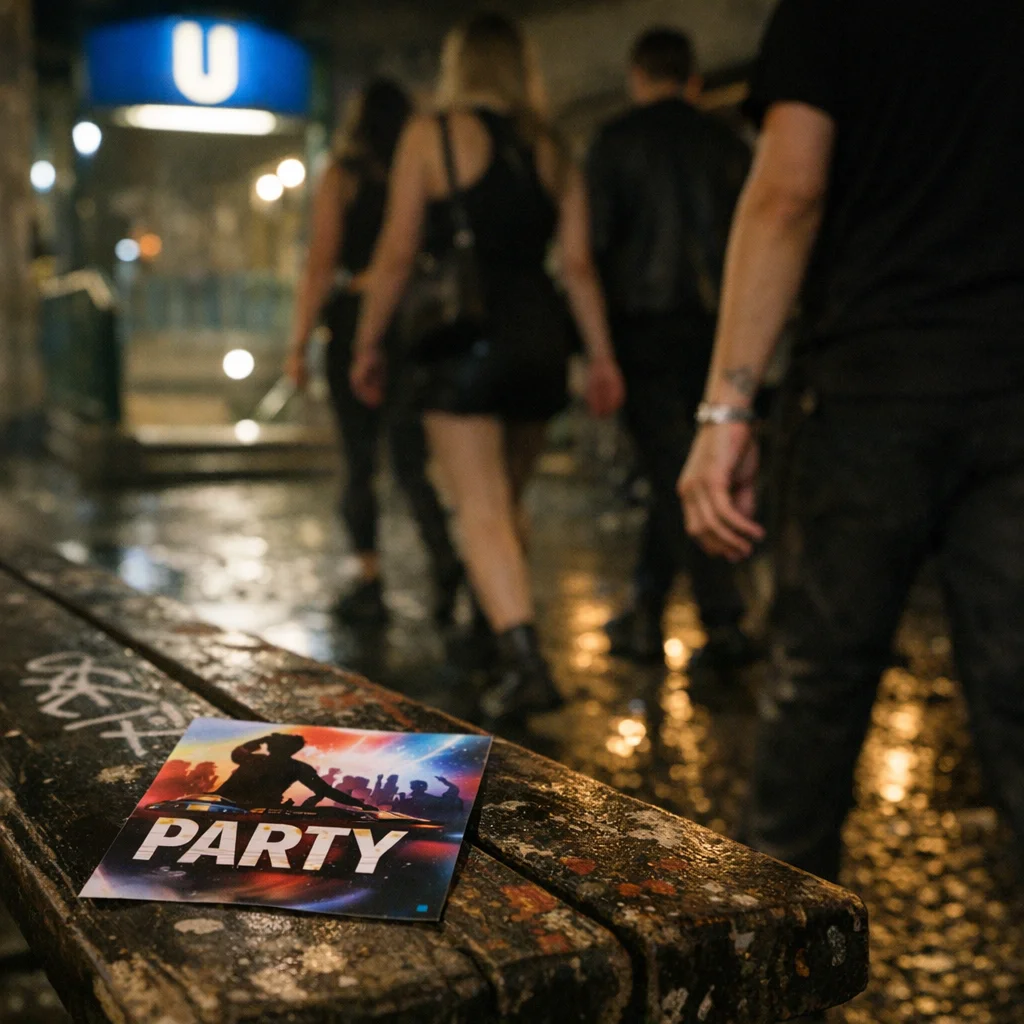
In Wedding, where nights are sold as analog purity, a microscopic cyan mark on an A6 flyer has quietly rewritten who gets the workout and who gets paid for it.
Party promoters and squat‑room DJs still insist flyers are badges of resistance — hand‑folded, stapled, passed along in bathroom stalls — the last analogue proof that Berlin nights can't be monetized. What happened first was simple: an art student noticed the same tiny printer crop‑mark on flyers from three different DIY parties, then matched it to a stack of menus and a café loyalty card on the same street.
By the second morning, a map had appeared on a private analytics page: clusters around late‑night cafés, the U‑bahn steps where people pause to smoke, the bakery that opens at sunrise. “I thought it was a registration thing for zines,” said Leyla Aydin, a flyer artist who prints her runs in a back room above a Turkish döner shop. “Instead it’s like somebody stuck a waypoint on our consent.”
The small technical detail — cyan is used in the printer test strip — is the underappreciated hinge. Printers leave a tiny pigment dot; in Leyla’s run the dot wasn’t random. It matched a unique printer signature TraceGrid GmbH says it purchases from a supplier. “Those marks are calibration remnants,” said Dr. Fabian Koch, TraceGrid’s communications lead, with the corporate calm of a man who has never been sweat‑stamped in a Berghain queue. “We only aggregate anonymized distribution patterns for retail planning.”
That official line clashes with what the maps do: translate weekend routes into heat‑maps that fitness startups, boutique gyms, and landlord consultants now buy to craft “sunrise recovery runs” and targeted café ads. Clubbers strolling between Sisyphos and About Blank, ink stamps drying on their hands, suddenly become the night’s only reliable cardio demographic — a neighborhood running route monetized as interval training. One promoter grinned: “We always said techno was good for your heart. Someone just decided to charge for the pulse.”
Residents complained to the district office, which confirmed it has opened an inquiry into commercial tracking of printed materials. A spokesperson called for “clarity on third‑party use of distribution data,” and promised guidance for community printers.
Artists are responding the way Berlin does: by improvising. Leyla plans to print a set with counterfeit cyan flecks and hand them out at a midnight run that doubles as a protest. “If Debord were alive he’d call it détournement,” she said, tucking a fresh stack of flyers into her coat. For now, neighborhood nights keep doing what they always did — long walks, stair sprints between venues, and the ritual of ink‑stamped pride — while someone somewhere measures how fast you got there. The immediate next step is a public meeting this week; whether it becomes another performance piece or an actual regulation remains to be seen.