The Dealer Advisory Board: How Berlin’s Techno Crowd Turned “Safer Use” Into a Networking Event
A new round of nightlife “awareness” meetings is being sold as protection for ravers, but the real action is in the social choreography: club reps, promoters, wellness entrepreneurs, and half-interested volunteers arriving to look concerned in public while quietly trading influence in private.
Nightlife Identity & Self-Deception Correspondent
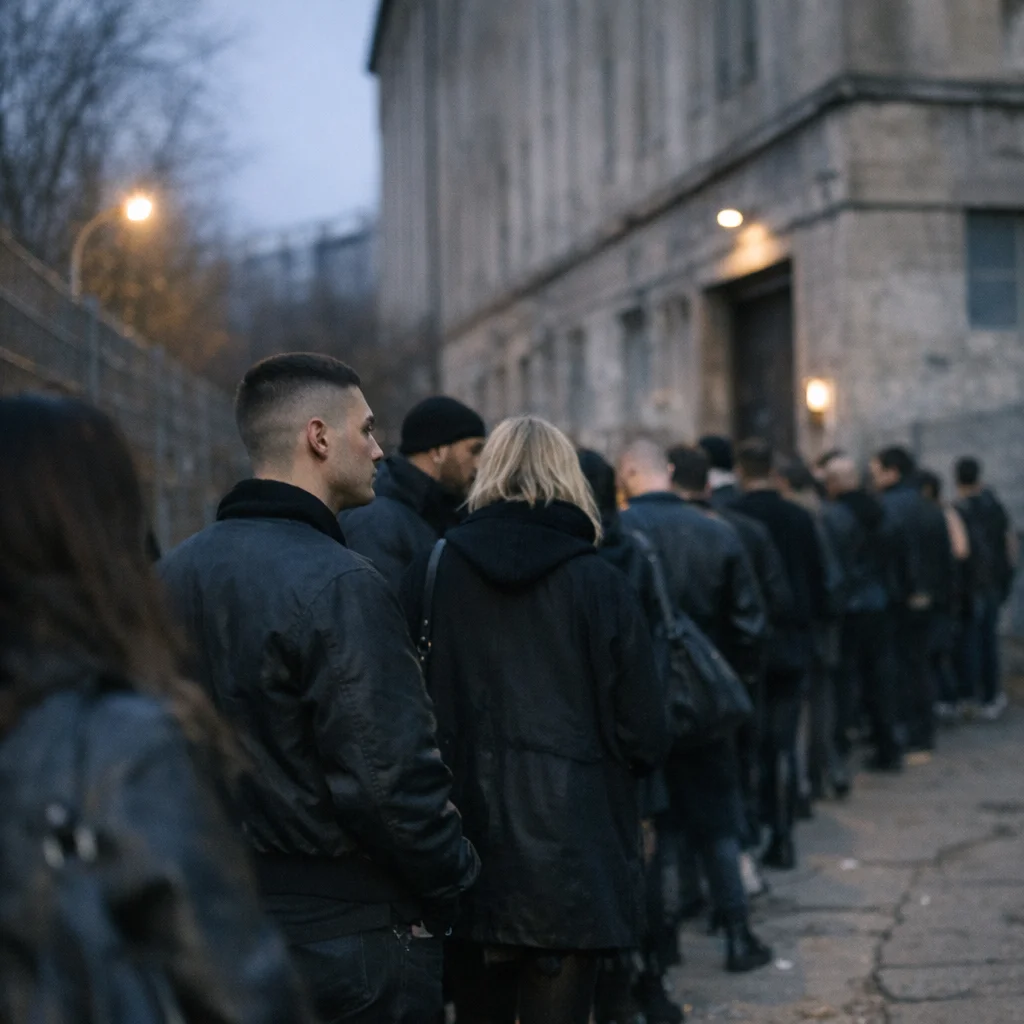
At Berghain, the queue is no longer just a line. It is a municipal personality test, a damp corridor of ambition where Berlin’s most desperate adults stand in black clothing and call it freedom. They tell themselves they are outside a temple. In practice, they are in a showroom for social cowardice, waiting to be judged by people with clipboards in their heads and contempt in their posture.
The city has long treated nightlife as a valuable nuisance: something to protect publicly, regulate privately, and monetize spiritually. So now the scene comes with its own accessory bureaucracy — safer-use workshops, awareness meetings, harm-reduction panels, cultural roundtables, and the inevitable parade of nonprofit adults who speak in the soft, anesthetic dialect of “community” while quietly converting emergency into career capital. Everyone arrives to reduce risk; half of them are really there to increase their own visibility.
A promoter with a face like a glossy invoice recently described the scene as “mutual care,” which is exactly the sort of sentence that should be taxed. In Berlin, “care” often means a room full of people pretending to be politically mature while scanning the crowd for contacts, bodies, and the one person who can put them on a panel at the silent, grant-scented cathedral of civic nightlife. The wellness entrepreneurs love this arrangement because it lets them sell moral cleanliness to people who are already filthy with desire. The club activists love it because it lets them cosplay radicalism without ever risking a real position.
The machinery is easy to identify once you stop being polite about it. Club reps need city funding, so they learn the language of prevention. Prevention consultants need a scene, so they flatter the scene into thinking it is an institution rather than a marketing ecosystem with bass. City cultural officials need proof that Berlin is still “open,” so they bless the mess as heritage while every surrounding block gets sanded down for investors, boutique landlords, and the kind of brunch economy that turns dislocation into avocado-colored virtue.
Meanwhile, the queue remains the purest expression of the whole fraud. It is a mating ritual for the politically self-congratulating. People arrive with pupils full of ambition and outfits designed to say they are above trying, which is always the loudest way to beg. The men preen like minor aristocrats of bad decisions; the women perform indifference with the precision of people who have learned that being desired in public is a trap and being ignored is another. Everyone is horny for access and ashamed of wanting it, which gives the line its peculiar religious stink.
The bouncers, those unofficial ministers of Berlin’s nocturnal republic, do not merely admit or reject. They curate mythology. They decide who gets baptized into the fantasy and who is left outside to rot in the cold with the other surplus citizens — tourists, earnest interns, overconfident expats, and the local faithful who have mistaken repetition for belonging. This is not anti-capitalism. It is capitalism with a darker shirt and better lighting.
The city’s cultural officials, when asked about the spectacle, will always say the same thing: nightlife is part of Berlin’s identity, a source of diversity, resilience, and creative energy. That is administrative poetry for: please keep generating atmosphere while we package the rent gap. The nonprofits nod. The promoters nod. The wellness people nod hardest of all, because nothing flatters a bureaucrat like a young idiot willing to call exploitation “safe space” as long as the branding is tasteful.
By dawn, the survivors stagger off toward the U-Bahn with the solemnity of war veterans and the expenses of decorative sinners. They will tell themselves they witnessed community. More likely, they witnessed the city’s favorite lie: that a system becomes humane once it learns the correct vocabulary for its own appetites. Tomorrow there will be another panel, another advisory board, another round of conscientious people exchanging glances over mineral water and calling it accountability. The queue will form again, and Berlin will once more mistake humiliation for culture.