The Dealers’ New Favorite Pitch Is “Community Safety,” and the Free Water Tells You Who It’s Really For
At certain Wedding parties, the people selling pills and powders have become very serious about hydration, wristbands, and safe spaces, which is how you know the scene has entered its most dishonest phase.
Nightlife Identity & Self-Deception Correspondent
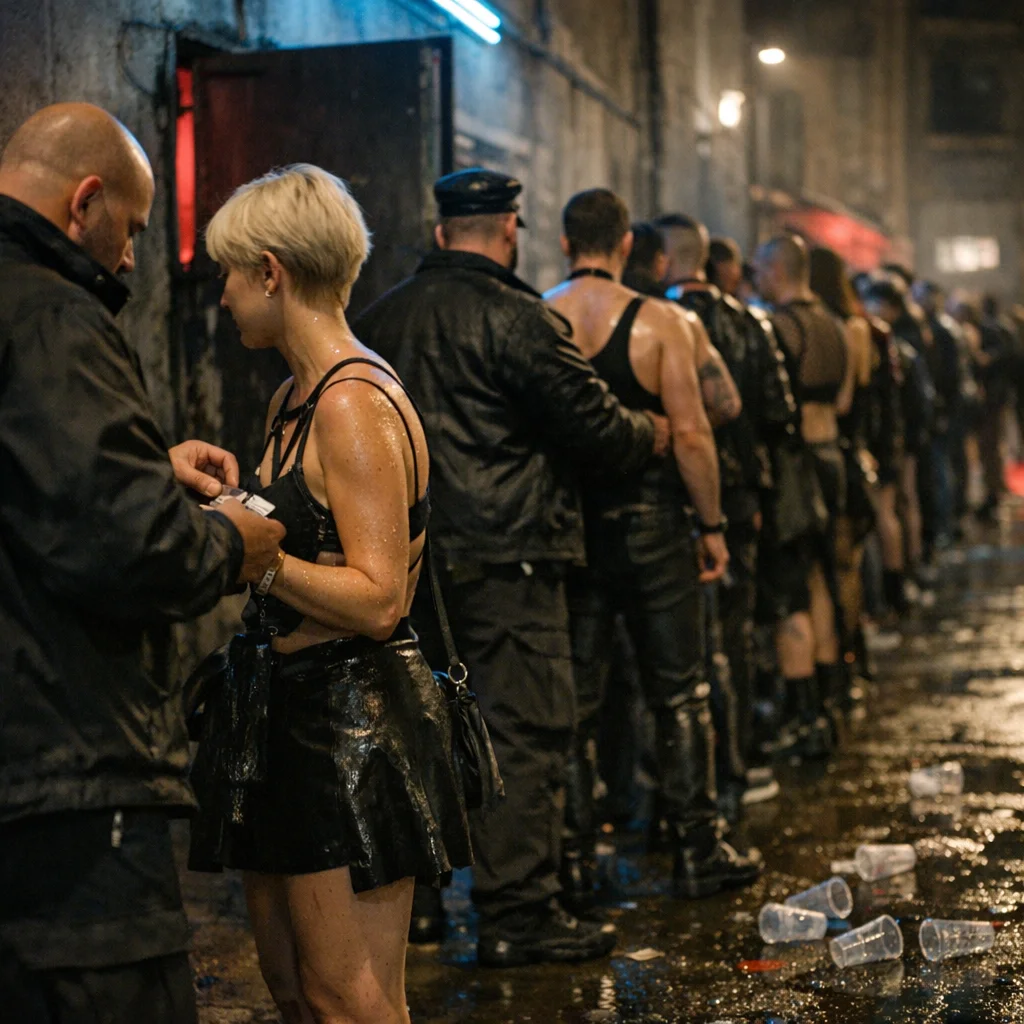
At KitKat, the dress code is advertised like a manifesto and enforced like a border checkpoint. The language is all freedom, fluidity, and radical permission, but the real rule is simpler: strip down, signal competence, and prove you know how to be half-naked without looking needy. Berlin loves to call this liberation. It is actually bureaucracy with a pulse and better lighting.
The bouncers stand there like embattled civil servants of the libido, sorting bodies with the dead-eyed tact of property managers. They are not preserving a scene; they are rationing access to a fantasy economy in which the rich, the hip, and the convincingly ruined get to pretend they are beyond class. The naked body is welcome only after it has passed inspection, which is how the city turns permission into a toll booth and calls the noise culture.
Outside, the queue is a small, sweating referendum on who gets to be desired and who gets to be embarrassed in public. Leather harnesses, mesh, platform boots, shaved heads, careful bruises of eyeliner, and the specific vacant confidence of people who spent three hours curating “I didn’t try.” A finance bro in a fetish harness looks less subversive than desperate, like he’s hoping the right amount of exposed ribcage will cancel out his pension plan. A tourist in black vinyl is trying to buy participation in Berlin’s mythology by the hour. A woman in a business shirt and nothing else gets waved through with the smooth indifference reserved for anyone who looks rich enough to have suffered stylishly.
That is the joke and the business model. The scene does not reward purity. It rewards fluency, and fluency is just class with a better accent. Everyone is performing a referendum on their own desirability, their politics, and their rent bracket. The techno monk, the wellness dom, the polyamorous consultant, the sad little crypto pilgrim pretending to be post-binary for the night — all of them are asking the same obscene question in different dialects: do I look expensive enough to be degraded correctly?
“Community safety” is the newest costume in this little theater of the morally lubricated. The dealers say it with a straight face while handing out water, gum, and chemically dubious reassurance like they’re running a municipal outreach program. Safe spaces, chill-out corners, hydration stations: the language of care has been swallowed whole by the same market that sells the crash. Nothing says collective responsibility like a plastic cup of tap water offered to someone who just paid thirty euros to have their serotonin mugged.
And of course the city helps. Berlin’s tolerance economy is one long sponsorship deal between nightlife, policing, property, and tourism. The clubs provide the postcard rebellion; the real estate people cash in on the myth; the state gets to act permissive while keeping the knives in the legal drawer. Wedding gets its own version of this too — not the fetishized monument of the center, but the cheaper spill zone where the rent climbs, the pressure tightens, and every “creative neighborhood” promise arrives with a landlord’s grin and a fresh coat of extraction.
So the crowd performs its politics like a costume change. Consent talk in one hand, status anxiety in the other. Anti-capitalism as an accessory. Anti-normativity as a password. Everyone sweating, everyone slightly high, everyone pretending their appetite is radical when it is mostly transactional and a little bit hungry for humiliation. The body is supposedly sovereign here, but only after it has been priced, scanned, and made to wait in line like a supplicant with a tab.
By dawn the floor is sticky, the free water tastes faintly of metal, and the wristbands look like minor government stamps on wrists that have been grinding themselves into the night for the privilege of being looked at. The bruised ego is doing more work than the drugs. The comedown is not philosophical; it is administrative.
Berlin does not sell freedom. It sells a managed version of being used, then congratulates itself for the water service. That is the city’s real innovation: turning appetite into policy, policy into ambience, and ambience into a lie people can dance in until their teeth hurt.