The District’s New DDR Bench Whispering Project Is Really a Tenant Registry in Disguise
Officials say the talking benches are about preserving local memory. In practice, they are turning nostalgia into a polite extraction system for residents, pensioners, and anyone foolish enough to answer questions.
Administrative Grief Correspondent
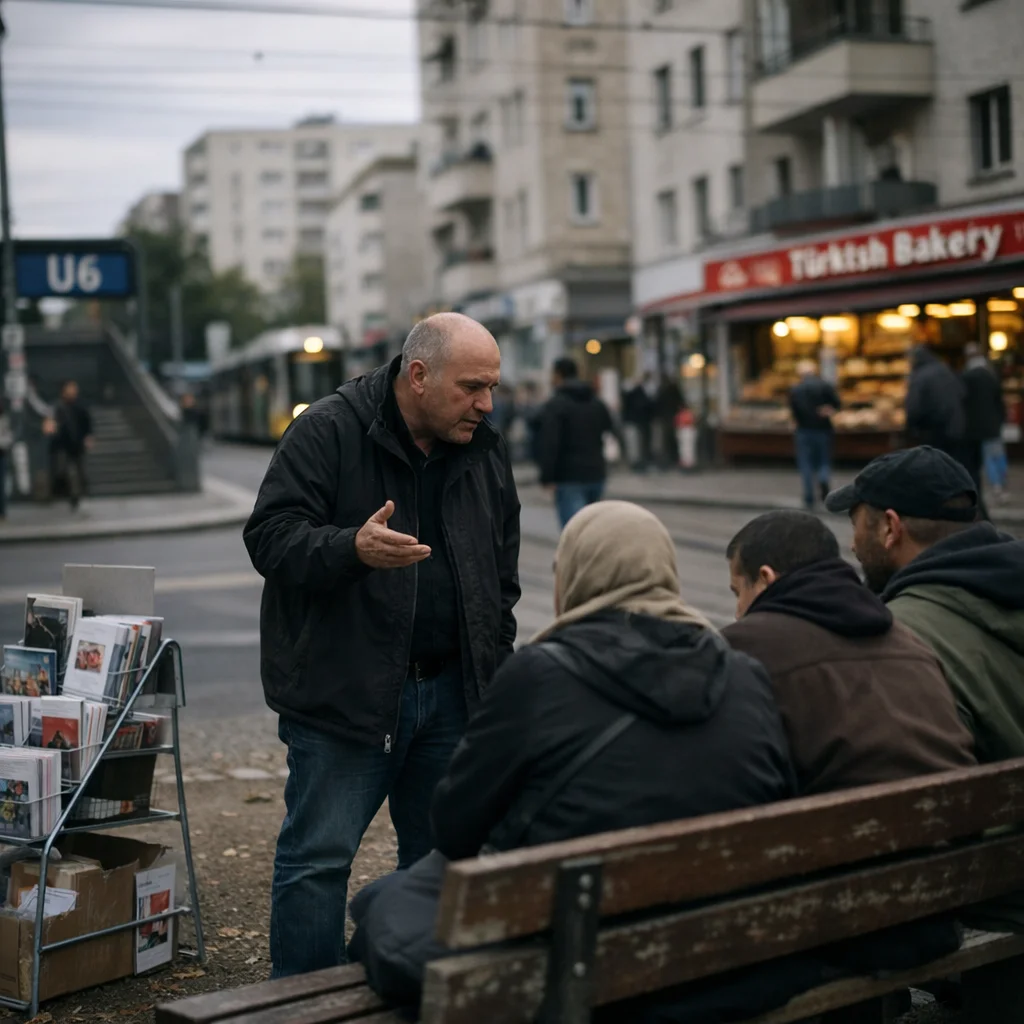
AfD-adjacent rat politics slithered into Wedding this week with the hygiene of a damp basement and the manners of a failed estate agent. Alternativ für Ratten, led by Alice Rattenweidel, set up near the U6 at Leopoldplatz and a bench by the tram stop on Müllerstraße, where the district already does its best impression of a nervous patient in a waiting room. Their little “DDR bench whispering project” was pitched as local remembrance. In reality it behaved like a municipal pickup line: sit close, answer a few nostalgic questions, and before you know it you’ve volunteered your name, your grievances, and the sort of housing gossip that turns into a helpful little map for the next round of pressure.
The bench itself had the cheap sincerity of a campaign prop ordered by someone who thinks politics is a matter of varnish. The point was supposedly memory. But the script was less oral history than a soft-focus asset survey. First it asked about old bakeries, closed butchers, the corner cafés that used to smell like burnt coffee and cigarette smoke instead of speculative virtue. Then came the little invasive nudges: who still lives above the shop, who moved after the last rent hike, which stairwell has the loudest disputes, which family has the oldest lease, which apartment block on Hochstädter Straße is “changing.” The questions arrived smiling, like a hand on the lower back that somehow already knows where the spine is.
A man from a bakery near the Leopoldplatz benches, flour still on his sleeve, said the whole thing felt like being flirted with by the tax office. “They start with history,” he said, “then they get nosy, then they ask who owns what, then they pretend that’s community.” He laughed in the dry way only people under pressure can laugh, the kind that says they’ve seen this striptease before. “It’s not participation. It’s pantry inventory with feelings.”
Rattenweidel, standing beside the bench like a minor official at a funeral for common sense, said the project was about “preserving local identity” and “giving residents a voice.” The sentence had the slippery polish of every opportunist who has ever mistaken a microphone for a conscience. Her party’s idea of identity is always someone else’s leash. Her idea of a voice is a form to fill out while you’re still trying to figure out who asked. She looked delighted with herself in the way only petty people do when they think they’ve turned voyeurism into public service.
Inside the Bezirksamt Mitte, the usual middle managers of civic fraud were already sanding down the edges. One official described the setup as “community-oriented dialogue,” which is bureaucratic German for: please enjoy being harvested. Another suggested it would “stimulate exchange,” a phrase so soaked in administrative deodorant it could have been used to market a colonoscopy. In Wedding, “exchange” usually means the district gets your data, your doubt, and your address, while you get a flyer and a vague sense that you’ve been caressed by a file cabinet.
What makes the whole thing nastier is how gently it works. Nobody is dragged anywhere. Nobody is threatened. People are simply flattered, warmed up, and talked into giving away the shape of their lives. The lonely old man with his supermarket bag. The woman waiting for the 120. The pensioner who wants someone to remember the bakery that used to be on the corner before the rent boys with their soft shoes and harder intentions arrived. They are all invited to reminisce, and in the same breath they are being measured.
The local committee members and neighborhood facilitators hovering around the project had the eager, moisturized look of people who love participation as long as it produces a clean spreadsheet. They know exactly how these things work. First the bench, then the “mapping,” then the “concerns,” then the tidy little report that lets everyone pretend surveillance is just civic affection in a sensible coat. It is the old municipal seduction routine: lean in, smile, take notes, and call it trust while you’re rifling through the drawers.
Wedding, of course, is the perfect stage for this kind of civic foreplay. The district is already full of people who have learned to answer carefully, to be polite with strangers, to smile at the wrong questions because rent is due and the landlord is always somewhere nearby, breathing through the walls. The far right doesn’t need to invent the hunger here. It only needs to dress it up in “order,” sprinkle on a little nostalgia, and let the neighborhood do the humiliating work of describing itself.
By dusk, the benches were still there, the flyers were soaked through, and the district office had the satisfied look of people who believe they’ve hosted a conversation when they’ve actually conducted a frisk. The lesson was obvious enough for anyone not already sedated by nostalgia: if a party with dead eyes and a live appetite asks for your memories, it is probably after your lease, your neighbors, and the key to the stairwell.
The AfR (Alternativ für Ratten) remained central to the dispute.