The Door Policy Needs a Dealer
A warehouse party in Wedding sells itself as anti-elitist nightlife, but the real VIP system is a spreadsheet of drug tolerance, influencer reach, and who can fake being chill without looking sober enough to be rejected.
Nightlife Contradictions Reporter
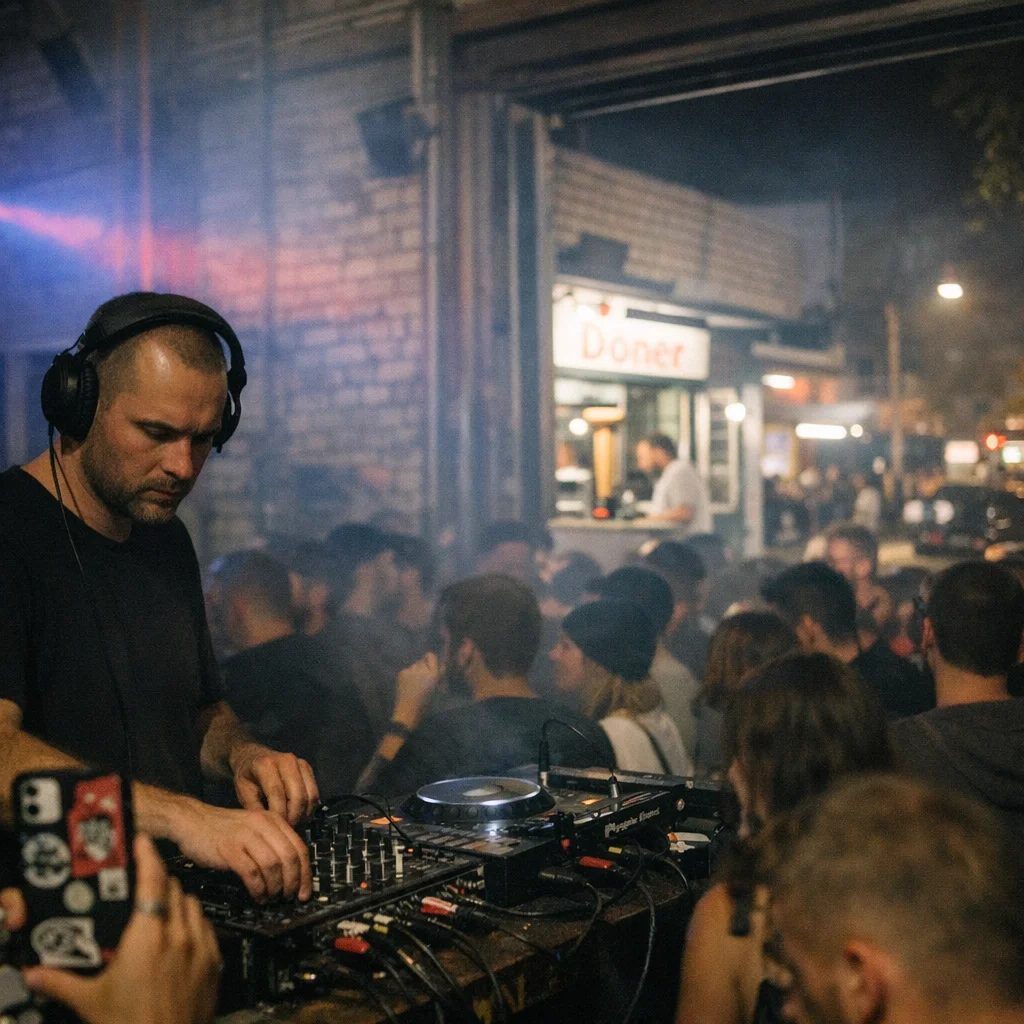
At a warehouse party in Wedding on Saturday night, a rotating cast of local DJs tried to explain why a four-hour set built on one beat, one bass line, and one emotional hostage situation should be understood as art, not a cry for help. The crowd, which included Turkish grandmothers on the sidewalk, two startup men in identical black beanies, a freelance curator with wet-looking hair, and a man who looked like he had been assembled from vape smoke and self-regard, nodded as if this were a civic duty.
The first DJ, who goes by Mikkel Voss, opened with the sort of confidence usually reserved for hedge funds and first dates. “Repetition is not laziness,” he said, standing under a light rig that made everyone look undernourished and faintly guilty. “It’s architecture. It’s a tunnel. It’s Brecht with a subwoofer.” He then played the same kick pattern so long that several guests began treating it like scripture and one woman started rubbing her temples as if she were negotiating with God, or with the bouncer.
By midnight, the set had become less a performance than a social sorting machine. The people who had paid cover called it hypnotic. The people who had not been invited called it exclusionary. The people filming on their phones, bless their petit-bourgeois crimes, had already been told to put stickers over their cameras before entering, because nothing says radical culture like demanding privacy for a room full of freelancers in leather, all of them desperate to look unconcerned while being very carefully managed.
This is the class that now performs rebellion for a living: the rent-stabilized aesthetic proletariat, the brand-safe anarchists, the people who say “anti-commercial” with a straight face while checking whether the guest list still has room for a photographer, a gallerist, and one more sad little king in a sleeveless top. They do not go out to lose themselves; they go out to convert nightlife into status management, to rub their names into the night until the whole room smells like networking with a harder beat.
A second DJ, Lena Kraft, said the point was to “create tension through restraint,” which is the kind of phrase usually used by people who mistake withholding for depth and have never once delivered anything on time. She added that the crowd had to “submit to the loop” before reaching “collective release,” a phrase that sounded less like music criticism than a failed seminar in Baudrillard taught by someone with a nicotine habit, a trust fund, and the sexual charisma of an unpaid invoice.
Outside, a döner worker on Reinickendorfer Strasse watched the line snake past the shuttered bakery next door and said the neighborhood now produces “more theories than bread.” He requested anonymity because he had once danced at a gallery opening and was still ashamed of it. In Wedding, where the day begins with deliveries, repair work, and people trying to make rent without worshipping at the altar of their own aesthetic damage, the imported warehouse crowd looked like it had mistaken the district for an empty backdrop instead of a place where actual life keeps grinding along in work boots and fluorescent light.
By the early morning, the room had split into factions. The ravers who came for surrender were sweating honestly. The art-world refugees kept saying “minimalism” with the grave appetite of people trying to orgasm in public without getting their shoes dirty. A promoter in a silver chain defended the night as “anti-commercial,” then checked a guest list that looked like a minor financial instrument. That is the whole trick: sell transgression as a premium product, then call the invoice freedom.
The club’s spokesperson said the event was “about freedom of interpretation,” which is exactly what people say when they have no idea whether the thing they’re selling is music, status, or a prolonged flirtation with collapse. Municipal officials, reached later, said there were no complaints beyond noise, blocked sidewalks, and one man who claimed the beat had permanently altered his moral compass. That may be the closest anyone came to honesty all night.
The DJs are expected to return next month with a new concept: the same track, the same guest list, the same rented apocalypse, but allegedly more radical this time, which is how you know the scene is dead and still too vain to lie down.