The Faux-Precarity Olympics: Gold Medals Awarded for Owning Nothing (Except a Family Trust)
A new class of lifestyle athletes has arrived in Wedding, training daily in visible struggle, artisanal deprivation, and competitive humility.
Gentrification Field Medic & Moral Panic Enumerator
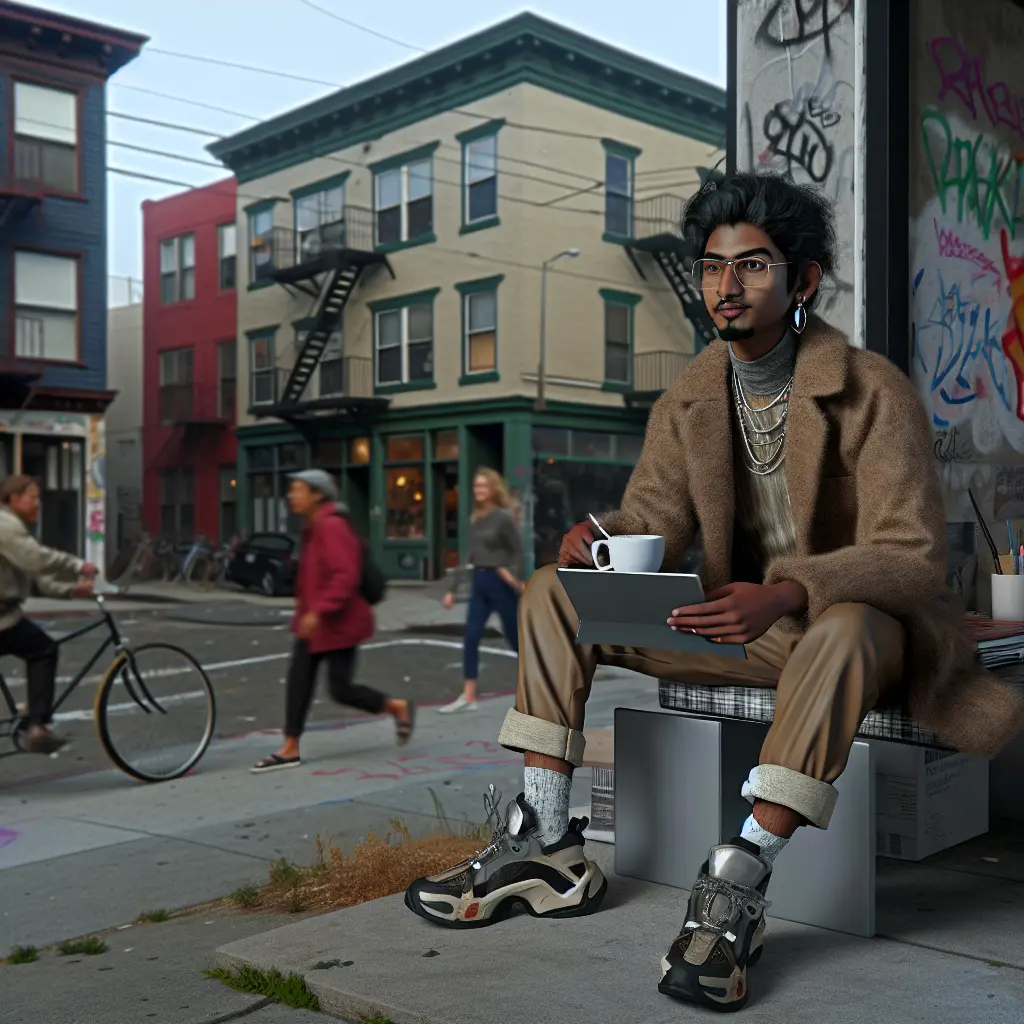
WEDDING—The neighborhood has always had poverty. Now it has a curated version with better fonts.
If you’ve walked past a café in Wedding lately and seen someone solemnly “journaling” while wearing a jacket that costs more than your monthly BVG ticket—congratulations, you’ve encountered the new sport: the Faux-Precarity Olympics. It’s like regular being broke, but with an investor deck, a reusable tote, and a therapist who accepts “exposure” as payment.
The New Uniform: Distressed, But Make It Tax-Efficient
You’ll spot them by the signature look: thrift-store misery paired with a glowing, well-fed face that screams, “I have never worried about a dentist.”
Key items include:
- A torn knit cap that says “I’m struggling,” while their MacBook says “I’m billing.”
- A canvas bag from a museum gift shop, used to carry exactly one bruised banana and a paperback of The Society of the Spectacle they will not finish.
- Shoes so aggressively ugly they should come with a warning label from Adorno.
They call it “living simply.” Meanwhile their bank account is doing a deep dive into generational wealth, and the only thing hard to swallow is how effortlessly they pretend otherwise.
Performance Art Meets Rent, With Stiff Resistance From Reality
This is not just an aesthetic; it’s a full-body thesis project.
In the old days, you moved to Wedding because you were broke. Now people move to Wedding to research being broke, like an anthropologist who can’t stop buying limited-edition sneakers.
They’ll explain, with the dead-eyed certainty of a TED Talk:
- “I’m exploring liminality.”
- “I’m in conversation with precarity.”
- “I’m deconstructing capitalist housing narratives.”
Derrida would be proud, mostly because nobody actually understands what they’re saying.
It’s Situationist psychogeography, except instead of resisting commodification, they’re just taking moody street photos of cracked sidewalks and calling it “urban truth.” Walter Benjamin’s flâneur, if the flâneur had a Patreon.
The Panopticon, But Make It Instagram
The best part is how closely they monitor one another. Foucault’s panopticon isn’t a prison anymore—it’s a group chat called “Mutual Aid (No Men).”
Everyone is surveilling everyone else for signs of comfort:
- Seen eating meat? Suspicious.
- Seen paying full price? Counterrevolutionary.
- Seen smiling too much? Probably funded.
They don’t want to be rich. They want to be seen refusing richness. It’s Baudrillard’s simulacra in cargo pants: the copy of poverty with no original in sight.
Local Residents React With the Compassion of People Who Actually Live Here
Longtime Wedding residents have responded with the kind of patience usually reserved for broken elevators.
One neighbor described the trend as “watching someone cosplay my life while asking if the lighting is ‘authentic.’” Another said, “They asked me where to find ‘real struggle.’ I told them to try the rent increase.”
The neighborhood has always been a collision of worlds—migrants, pensioners, students, hustlers, exhausted parents, and people who think a gluten intolerance counts as oppression. But this new wave adds a special ingredient: moral superiority with a trust fund aftertaste.
The Closing Ceremony: A Toast to Being ‘Barely Getting By’
The Faux-Precarity Olympics will end the way all Berlin trends end: with a rebrand.
Next year, the same people will announce they’re “moving on” from Wedding because it’s “changed,” and then they’ll relocate to somewhere even more “raw,” like a spreadsheet or a yacht.
Until then, enjoy the spectacle. In Wedding, the struggle is real—just not always in the person narrating it.