The Flint Code: How a Free Lighter in Wedding Secretly Signs You Up for Club CRM
Everyone treats the giveaway Bic as a nostalgic token of anti‑commercial rave solidarity — until you peer at the tiny stamped alphanumeric at the flint wheel and realize the night just checked you in.
Nightlife Contradictions Reporter
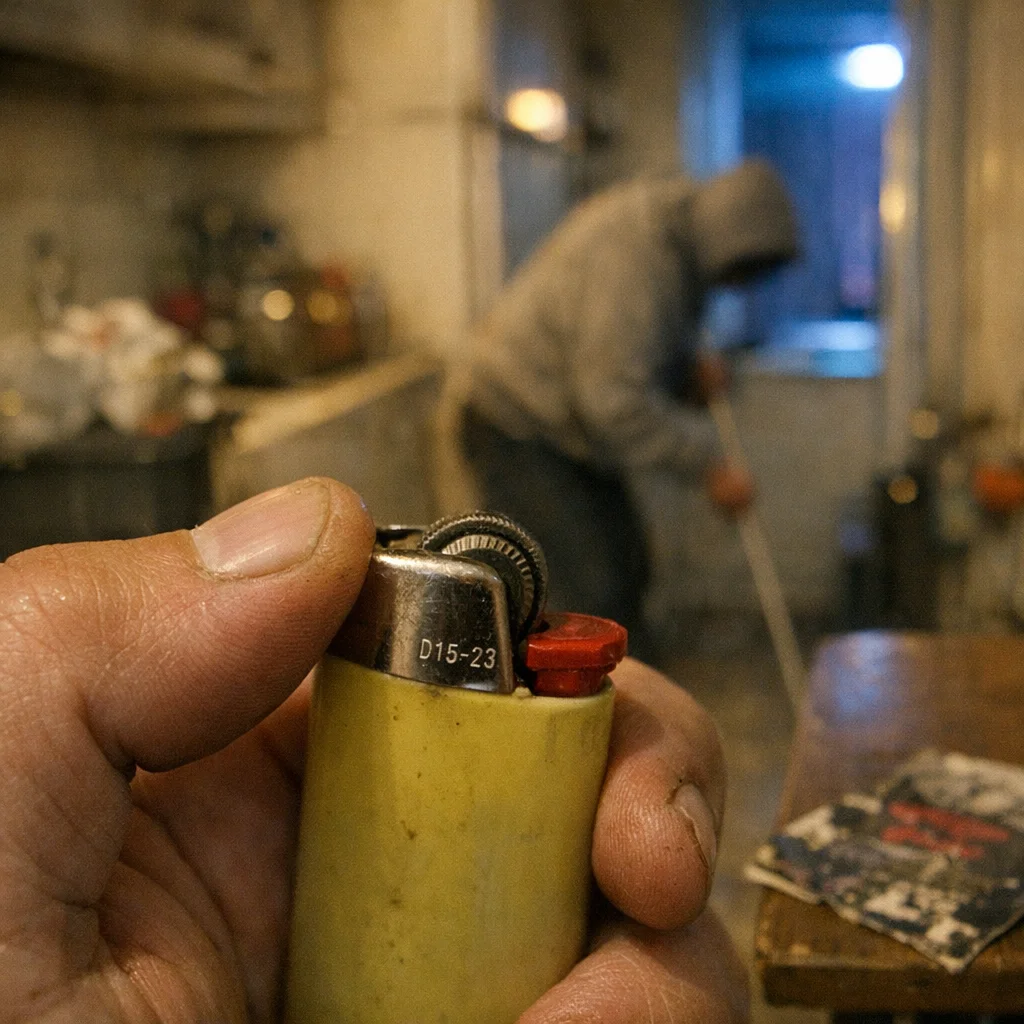
WEDDING — Clubs and street teams in Wedding have quietly turned the cheap Bic lighter — long treated as a nostalgic, anti‑commercial relic of rave solidarity — into a small, very efficient attendance terminal. First handed out at doorways and under bridge arches, the plastic lighters carry a tiny pressed alphanumeric beside the flint wheel. A lost‑lighter URL printed on a scuffed flyer asks you to type that code in; the server records when you hit the page, the nearby DJ tag, and whether your party queued for cloakroom.
What promoters pitch as sentimental swag has a less romantic byproduct: a timestamped feed of who left the party and roughly when. That feed has become the backbone of an emergent 4 a.m. economy — the speed‑clean. Neighbours, on‑demand cleaners and even a few entrepreneurial students use the logs to predict mass departures and schedule a blitz of apartment sanitising, laundry retrieval and frantic trash‑removal precisely when the neighbourhood is most productive.
"I come home around dawn and can’t keep my flat looking like a crime scene before my landlord knocks at noon," said Ahmet Demir, 33, a translator who lives above a döner shop. "So I mop at four, throw away the bottles, and hope the server doesn’t tell anyone I was out. It’s exhausting and efficient — like sex with upholstery attached."
Chronology is tidy: door staff hand out lighters; a flyer tells you to report a lost lighter online; the person who types the code logs an IP and a timestamp; a small cleaning app with a name like AfterSweep collars those hours and sends two cleaners for a ninety‑minute blitz. By the time the club washes out its sound system the first cleaners are already vacuuming between cushions.
"We hand out lighters as lost‑property insurance and to keep stuff out of the bins," said Lena Weiss, communications rep for a prominent Wedding venue. "Any logging is incidental, purely for customer service." The Mitte district data‑protection office said it is "reviewing practices to determine whether metadata collected qualifies as personal data." A police spokesperson said there have been no criminal complaints linked to the scheme.
The small pressed code flips the story people tell themselves: the token of anti‑commerce is in fact a quiet attendance register that feeds a micro‑industry. What was meant to be a talisman against commodification now lubricates a marketplace of fixation — landlords timing inspections, cleaners routing shifts, neighbours trading timestamps like receipts.
Walter Benjamin might have scribbled a footnote about how the relic of rebellion becomes a routing number; Baudrillard would have laughed and called it an elegant simulation. For now, regulators promise a deep dive into the matter. Meanwhile, Wedding’s most productive hours remain 4–5 a.m., when flats are scrubbed, secrets inhaled and everyone pretends the morning is nothing more than domestic hygiene — a satisfying resolution until someone follows the log and knocks on your door.