The Funkturm Gets a Founding Father Makeover
A glossy anniversary evening under the tower sells America as a tasteful civic export while the actual guest list reads like a lobby registry for people who need Berlin to forgive their LinkedIn profiles.
Micro-Diplomacy & Sidewalk Power Reporter
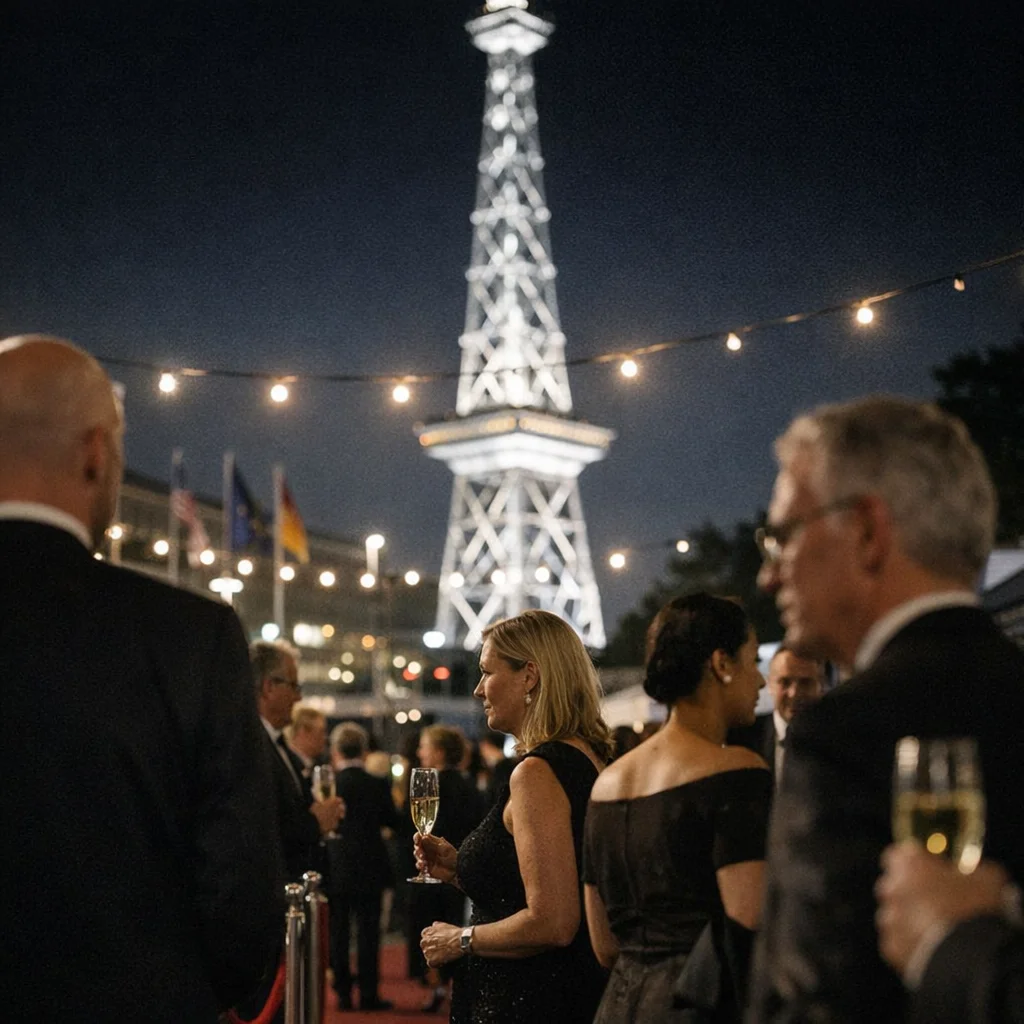
The old Funkturm climbed into Berlin’s diplomatic bloodstream Thursday night and immediately found the vein that still pays. Beneath it, ambassadors, consultants, museum intermediaries, and the sort of tasteful impostors who say “cultural exchange” with a straight face gathered for a Founding Father-themed anniversary gala that sold America as a civic mood board and served it with champagne. By the time the speeches began, the guest list already looked like a lobby spreadsheet for people who need Berlin to forgive their LinkedIn profiles.
The event was staged with the kind of polish usually reserved for arms fairs, donor luncheons, and biennials that mistake moral exhaustion for sophistication. Colonial silhouettes, ribbon-cutting nostalgia, and soft power so airbrushed it looked moisturized by committee turned the night into empire with a napkin over its lap. Guests posed under the tower as if they had stumbled into history, though most had arrived in hired cars, with grant money in their pockets and a hungry, almost intimate grip on the narrative. The whole evening was a deep dive into domination for people who prefer it lightly chilled and well-lit.
One organizer, glowing with the kind of confidence only a sponsored conscience can produce, described the gala as “a platform for transatlantic dialogue.” That is the bureaucratic equivalent of calling a strip search a wellness check. The event’s real function was simpler: diplomats got to rehearse humility, consultants got to audition for influence, and culture brokers got to drape themselves over the word “bridge” like it was a decorative scarf hiding a knife. Nobody was there to be transformed. They were there to be seen being transformed, which is the preferred narcotic of the professional class.
A consultant in an immaculate blazer that looked legally prohibited from containing conviction called it “important convening.” He worked for a firm that sells public diplomacy, strategic narratives, and other lubricants for institutions that want to feel clean while handling dirty money, dirty history, and dirtier access. Nearby, a museum intermediary praised the event’s “openness” while quietly counting who had already been cornered near the bar by whom. The choreography was familiar: the embassy people pretending they were not selling access, the nonprofit people pretending they were not buying relevance, and the private sponsors pretending their money had arrived with principles attached.
The hypocrisy was almost tender in its stupidity. America’s founding myth was being packaged as civic virtue and passed around like a canapé, while everyone involved used the occasion to polish their own moral jewelry. Diplomacy here was not statecraft so much as social deodorant. Culture was the velvet glove. Philanthropy was the invoice written in cursive. Even the talk of “shared values” had the exhausted cadence of a pitch deck written at 1 a.m. by someone who had mistaken access for belief and still expected applause for the confusion.
The Funkturm, naturally, played its part with antique discipline. It stood there, vertical and faintly offended, while the city’s status brokers projected their appetites onto it like drunk interns auditioning for legacy. The tower has seen enough civic theater to know the species: men in expensive shoes saying “community” with the mouth of a landlord, women in immaculate tailoring performing concern as a lifestyle accessory, everyone pretending the evening was about ideas when it was really about proximity. Under the lights, the whole affair had the slick warmth of a hand on the small of the back and the same underlying intent.
A historian on the panel quoted Hamilton with the strained enthusiasm of a man explaining seduction to a tax auditor. A diplomat praised “shared values” in the tone of someone reading terms and conditions off a velvet pillow. The speeches were full of noble language and empty enough to rent out by the hour. Each sentence seemed designed to make the speakers sound larger than the machinery paying for them. Berlin, which can smell status the way dogs smell fear, watched the performance with polite suspicion.
One resident from Wedding, who had come over out of curiosity and a healthy instinct for contempt, said the whole thing felt “like an import showroom for moral vanity, except everyone’s pretending it’s public service.” He was not wrong. In Wedding, people still recognize a room that wants something from them. Under the Funkturm, the same old class ritual arrived in formalwear: extract the aura, flatten the politics, distribute the glow, and leave the locals with the bill for the lighting.
By the end of the night, the service had been rendered exactly as planned. America’s mythology had been converted into premium consumable status, Berlin’s gatekeepers had gotten to cosplay civic virtue, and the Funkturm had served as the perfect phallic backdrop for a city that likes its power imported, curated, and a little ashamed of itself. The next round of invites will move through the same polished mouths that spent the evening calling profit a conversation and domination a partnership. In this town, that still passes for sophistication.