The 'Good‑Neighbour' Clause That Promotes Silence: How 2. Liga Licensing Turns Club Success into Political Neutrality
Officials tout community harmony — the underwriting pack quietly demands 'no ongoing civic disputes', turning five heritage Berlin clubs' promotion bids into a test of how loudly they can cheer without annoying.
By Gus Pothole
Sports Cynicism & Civic Collapse Reporter
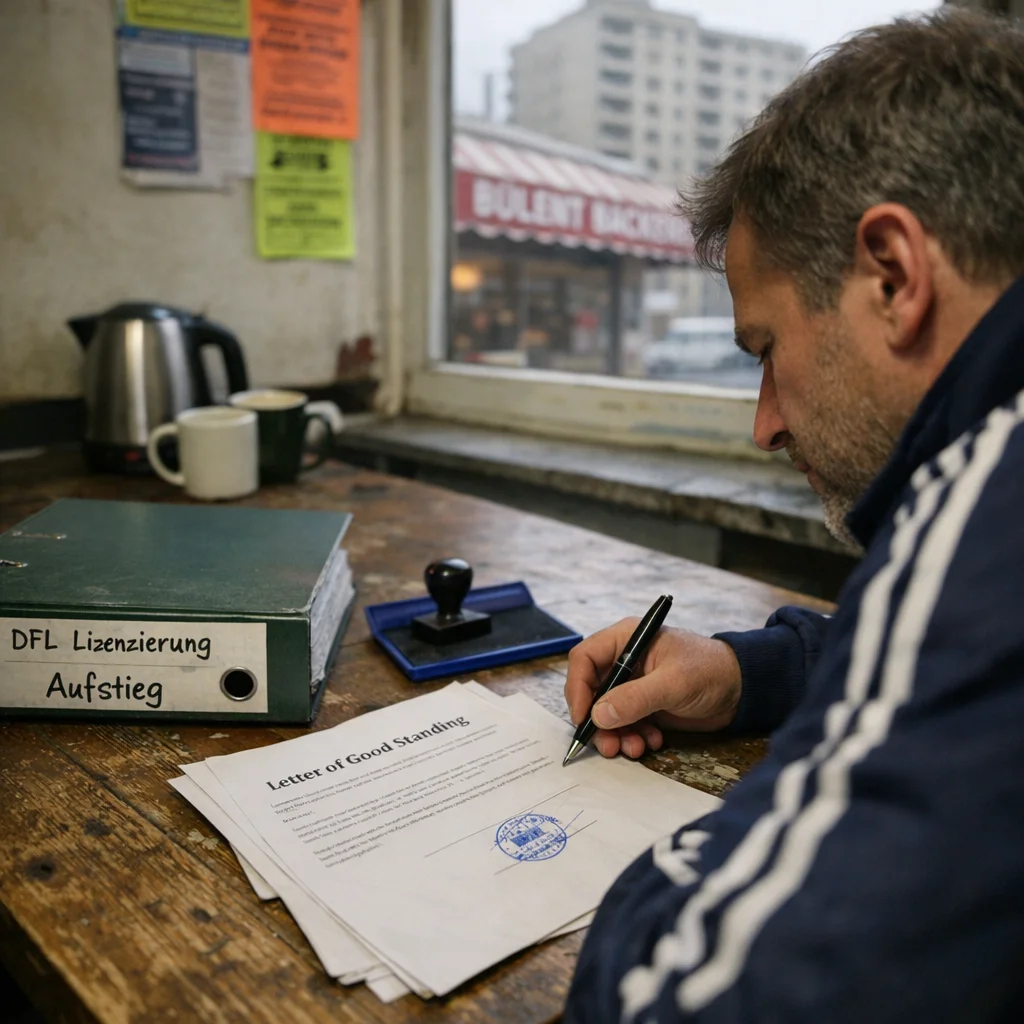
Who/what/where — Five heritage Berlin clubs, from Wedding’s stubborn FC Nordstern to two Kreuzberg veterans, say the German Football League’s 2. Liga licensing pack is demanding more than safety plans and turnstile counts: municipal "letters of good standing" confirming each club has no active civic disputes with neighbors or campaigners. Clubs filed promotion bids in February; by March the letters arrived as a surprise appendix to otherwise routine paperwork.
What happened next was choreography. Club managers spent the past month orbiting district offices, arranging mediated meet‑and‑greets with elderly tenants, and commissioning glossy “community impact” slide decks that prove, in a pleasingly capitalist font, how nothing worth disputing exists here. "They told us the paperwork is about ‘harmonious integration,’" said Hasan Demir, sporting director of FC Nordstern. "In practice it reads like: ‘Make sure no one shouts at the developer until season end.'"
An under‑noticed detail flips the PR story: officials trumpet community harmony while the licensing language treats civil disagreement as a red card. The DFL’s clause equates absence of dispute with organisational fitness — turning civic friction into a pass/fail metric. Clubs report being asked for explicit confirmations that ongoing tenant campaigns, noise protests, or planning objections are dormant or resolved.
"This is about muzzling friction to win promotion," said Leyla Kaplan, a Kreuzberg neighbour who helped organise an opposition campaign to a planned recreation centre. "We were asked to sign on to a mediated meeting and then to ‘refrain from active campaigning’ while the DFL reviewed the club’s case. It felt like being asked to sleep while the stadium gets built." Kaplan’s group refused; the club’s application has been flagged for follow‑up.
Officials pushed back. Miriam Koch, a Bezirksamt spokesperson, called the requirement "a standard community‑engagement check" and said letters simply document who the club has been talking to. "We aren’t policing opinions," she said. DFL licensing officer Matthias Reuter defended the rule as necessary to ensure safety and long‑term viability, adding the league must "avoid clubs entering a division while entangled in litigation." His tone suggested paperwork, not protest, is what keeps a season from collapsing.
The result is theatrical busyness: months of mediated coffees, PR entourages, and legal memos that look like municipal romance novels. Clubs are spending energy proving they won’t annoy anyone instead of training — coming from behind in the standings while trying not to come from behind in the neighbourhood.
Next step: the DFL licensing committee will review the flagged dossiers next week; several clubs face delays if they can’t produce municipal assurances. Whether Berlin’s civic voice will be traded for a trophy lift — or whether residents will treat promotion as an inducement to shut up — remains unresolved. The Bezirksamt has scheduled a public hearing for later this month; expect guarded smiles, firm handshakes, and a lot of very busy people achieving very little.